Global business is changing its perspective: Ukraine is no longer perceived solely as a recipient of humanitarian aid but is transforming into an attractive market for private investment. This is evidenced by the results of the post-war reconstruction conference held in Gdansk, Poland, and subsequent analysis by The New York Times.
Journalist Andrew Kramer notes a fundamental shift in the mood of forum participants. Instead of endless discussions about the volume of international aid, the business elite is increasingly discussing investment prospects. Ukraine is viewed as one of Europe's largest future markets, with a trajectory aimed at EU membership.
Investment as a Geopolitical Choice
According to Kramer, such capital investments are not just a commercial calculation but a strategic bet that Ukraine will not allow Russia to realize its ambitions and will preserve its sovereignty. The business community's willingness to invest signals a change in attitude toward the country: from perceiving it as a victim to viewing it as a partner.
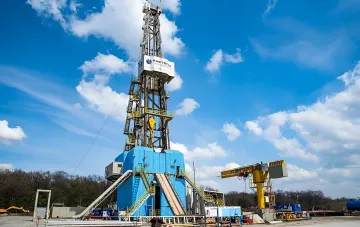
A striking example of this approach was the decision by the US Export-Import Bank. The agency opened a credit line of $300 million for Ukraine's "Naftogaz." These funds are intended for purchasing American construction equipment and services necessary for the development of the oil and gas sector. This is particularly relevant given that Ukraine possesses some of the largest proven natural gas reserves in Europe, valued at approximately $300 billion.
Tech Giants' Personal Interest: The Google Example
Representatives of the tech giant Google have also joined the investment race. Former CEO Eric Schmidt, along with his wife Wendy Schmidt, invested in commercial real estate in Kyiv. According to Forbes, the volume of their investments ranges from $55 to $70 million.
The couple acquired shares in funds owning shopping centers managed by a Ukrainian investment company. Furthermore, Eric Schmidt showed interest in the defense industry, investing in Ukrainian companies involved in drone production.
Energy Leap and New Challenges
The European Bank for Reconstruction and Development (EBRD), the largest institutional investor in the country, is also ramping up its activity. The bank announced the attraction of over $570 million in new investments.
Against the backdrop of ongoing Russian attacks on coal generation, the EBRD is preparing to finance projects in the field of carbon-free energy, helping the country modernize infrastructure and reduce dependence on vulnerable energy sources.
Ukrainian business itself is also seeking ways to attract capital. DTEK presented a "White Book," outlining proposals for the restoration and modernization of Ukraine's energy sector. The document contains specific recommendations for expanding private business participation in the industry's development.
Nevertheless, the author of the publication notes that the influx of new private investment remains limited for now. Although companies that operated in Ukraine before the full-scale war, including McDonald's and Nestle, continue to expand their presence, the mass arrival of new capital is still ahead.