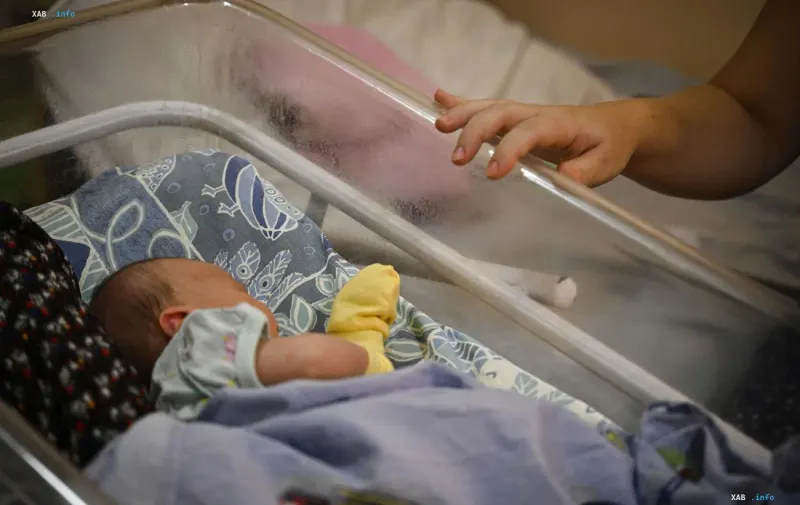
The birth rate in Ukraine continues to decline rapidly amid the full-scale war, forced migration, and profound uncertainty about the future. For the first half of 2026, an average of only 0.8–0.9 children are born per woman, compared to 1.14 before the full-scale invasion. This is evidenced by data from the Ptoukha Institute for Demography and Social Studies of the National Academy of Sciences of Ukraine and official civil status registration statistics.
Birth Rate Anti-Records in Figures
During the first six months of 2026, 73,292 newborns were officially registered in the country. This figure shows a 16% decrease compared to the same period last year and is almost half the statistics of the first half of 2021, when 133,457 children were born. Experts emphasize that this refers to an average demographic coefficient rather than a forecast for each individual family.
The sharpest drop in the number of newborns is recorded in frontline regions, where birth rates in some areas have plummeted several times over. However, the decline has also affected relatively safe western and central regions of the country, such as Lviv, Vinnytsia, and Ternopil oblasts. Kyiv remains the leader in the number of registered births, with 8,352 children born in six months.
Mortality Exceeds Fertility Fourfold
The decline in the birth rate is part of a large-scale demographic crisis accompanied by a sharp reduction in the population. According to the Opendatabot platform and the Ministry of Justice of Ukraine, 259,853 deaths were recorded in the country between January and June 2026. Thus, the number of deaths exceeded the number of newborns by nearly four times.
The total population in the government-controlled territory of Ukraine, according to mid-2026 estimates, has dropped to about 28.5–29 million people. The main drivers of population decline remain high mortality, natural population decrease, and the mass exodus of citizens abroad due to ongoing hostilities.
The Threat of Post-War Migration
Demographers identify the risk of additional population outflow after the end of the war as a separate serious threat to the country's future. Many Ukrainian women with children have been living in European countries for several years, having managed to integrate into the local environment and find jobs, while their children attend foreign schools.
There is a scenario in which, after travel restrictions are lifted, some men will travel abroad to reunite with their families. The scale of this potential migration will directly depend on the pace of economic recovery, security levels, and prospects for a normal life in Ukraine.
Scope and Consequences of the Demographic Crisis
The critical drop in the birth rate and the fourfold excess of mortality over fertility create long-term risks for the restoration of labor resources and the state's economic stability. State institutions and the expert community emphasize the need for comprehensive post-war programs to support families and return compatriots, but the current situation continues to worsen under the pressure of unresolved socio-economic and security challenges.