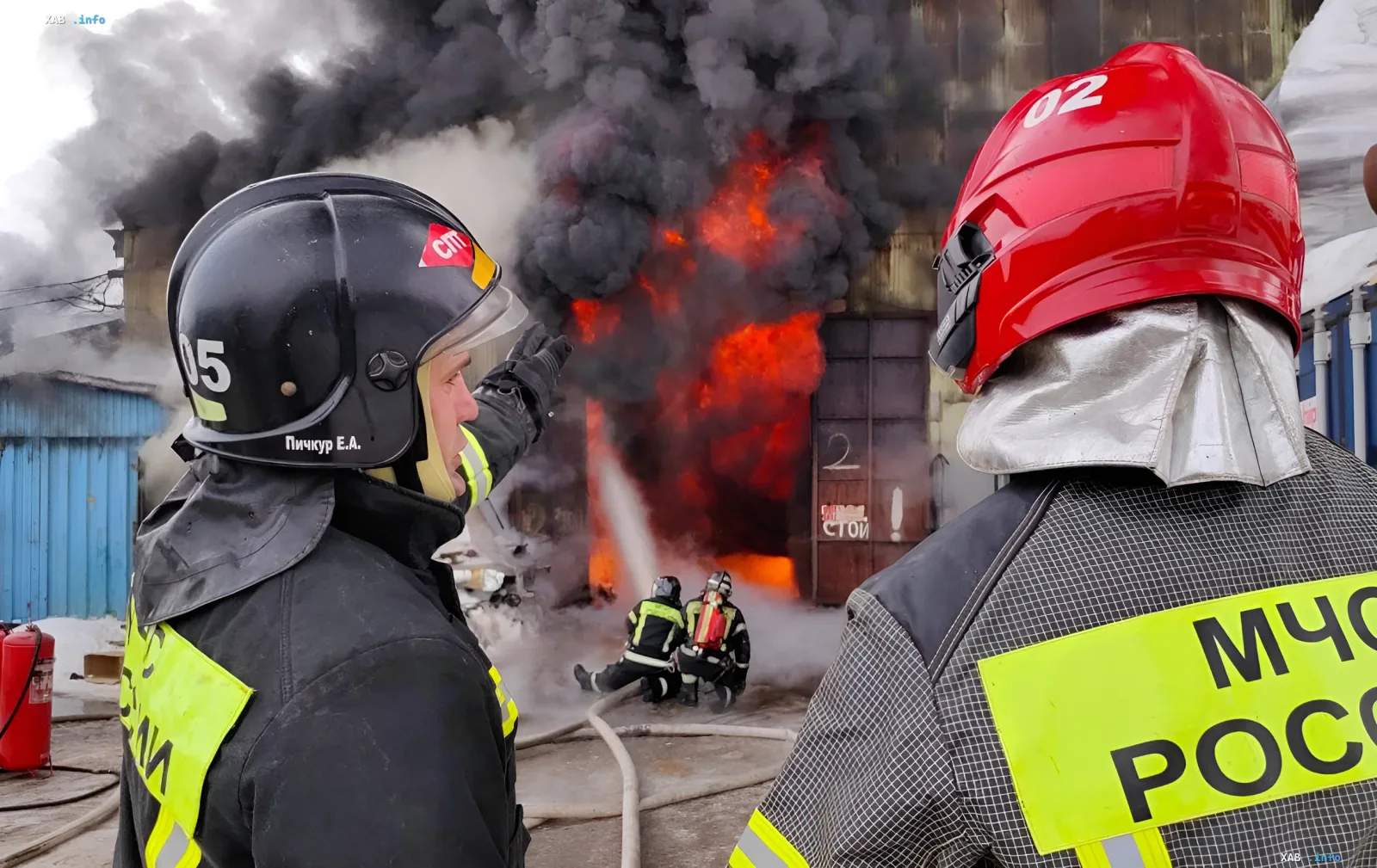
In the temporarily occupied parts of the Donetsk and Luhansk regions, a large-scale blackout occurred as a result of a drone attack. According to reports, a fire was recorded at the thermal power plant in the city of Shchastye in the Luhansk region — a facility that, by estimates, covers around 80% of the occupied region's electricity needs. Fire and rescue crews worked at the emergency site, attempting to contain the flames and the thick cloud of smoke rising over the plant.
What is known about the strike
Immediately after the attack, significant areas of occupied Donetsk and Luhansk regions were left without electricity. Ukrainian media, citing operational data, report that the strike hit the energy facility in Shchastye, and the consequences — the power outage — affected both occupied regions. Firefighting units, including crews in Russian EMERCOM uniforms, carried out extinguishing work directly on the plant's site. The exact scale of damage to the equipment and the timeline for restoring electricity supply were not officially disclosed at the time of writing.
Strategic significance of the plant
The Luhansk thermal power plant, also known as the former Voroshilovgradskaya GRES, is located in the city of Shchastye near Luhansk. It comprises six operating and two decommissioned power units, which, according to available data, have already exhausted their design life. Despite the wear, the plant supplies around 80% of the occupied region's electricity needs, making it a critically important node in the power system of the Russian-controlled territories of Donbas.
The opaque fate of the asset after the occupation
Before the full-scale invasion, the enterprise was part of "DTEK Vostokenergo." After the occupation of the region, the Russian administration reported the "nationalization" of the plant and an intention to invest more than 2.1 billion rubles in its reconstruction. However, as early as 2024, according to available information, the plant ceased to exist as an independent entity and was transferred to the ownership of a newly created joint-stock company. The occupation administration never disclosed the identities of the supposed "investors" nor commented on the opaque scheme of transferring a multi-billion asset to a private company whose owners are hidden behind a registrar.
The broader context of strikes on occupied territories
Strikes on facilities in the occupied territories of Donbas had occurred before. In particular, as early as May, the Air Force of the Armed Forces of Ukraine used Storm Shadow missiles to hit a key facility in the Luhansk region — a command post and communications hub of Russian forces, which, by design, was meant to weaken the occupiers' command system. Against the backdrop of the prolonged occupation, other regional facilities are also falling into disrepair: for instance, the home stadium of Donetsk's "Shakhtar" has effectively turned into a dump, having stood unattended for 12 years.
Contradictory data
There are several inconsistencies in open sources and the statements of the parties that are important to take into account. First, the occupation administration's own rhetoric contradicts the actual fate of the asset: it was first reported that the plant had been "nationalized" with multi-billion investments in reconstruction, then the plant was transferred to a private joint-stock company with undisclosed owners, while no official explanation of the transfer scheme followed. Second, some reports on social media and in certain publications (including about drones that attacked the Tavricheskaya TPP in Crimea) refer to a different, separate facility and should not be conflated with the incident in Shchastye. Thus, readers should distinguish between two different events and bear in mind that details about the scale of damage to the Shchastye plant remain partially unconfirmed at the time of publication.