Pressure through access restrictions
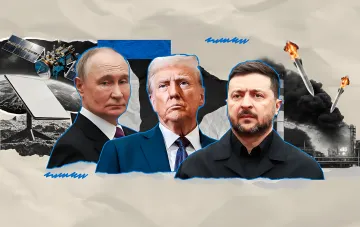
According to RBC-Ukraine, Ukrainian authorities view restrictions on US support—specifically, the narrowing of access to intelligence data and Starlink satellite network capabilities—not as a technical or logistical measure, but as a tool of political pressure on Kyiv. An interviewee in government circles described these steps as an attempt to force Ukraine to make concessions on Donbas without receiving clear security guarantees in return. According to his assessment, Washington is insisting on the withdrawal of Ukrainian troops from the region but offering nothing in return, which is perceived in Kyiv as an ultimatum without commitments from the US side.
Demands regarding Donbas and fear of a chain reaction
As the same source notes, there is a fear in Kyiv that even accepting demands regarding Donbas will not stop the Kremlin's further claims. "The Americans say: leave Donbas, without offering anything in its place. They don't understand that the Russians will later say: 'give up' Kherson and Zaporizhzhia. For Trump, this is just a deal, it doesn't matter that it's at our expense," the publication quotes a government source as saying. Thus, the Ukrainian side sees a logic of bargaining in Washington's actions, in which Ukraine acts as the weaker party, and the main burden of potential concessions falls on it.
Strikes on the rear instead of front-line breakthrough
At the same time, according to the source's assessment, the immediate situation on the front causes less concern in Kyiv than constant Russian strikes on the rear, primarily on the capital. The source notes that the targets of the attacks are changing: after strikes on warehouses and data centers, Russia has focused on energy infrastructure, and in the future, bridges, power and water supply systems, and other industrial facilities could be at risk. It is these strikes, according to the sources, that become the main instrument of pressure when military advancement at the front is insufficient to achieve political goals.
Winter 2026–2027 as the main risk
According to RBC-Ukraine's interviewees, the risks ahead of winter 2026–2027 are higher than in the previous season, partly due to a worsening situation with missile defense, including protection against ballistic missiles. Some sources predict that this winter could be the most difficult of the entire full-scale war: the Kremlin, in their opinion, is counting on the destruction of energy infrastructure to cause Ukraine more problems than the Russian army could create through its successes at the front. This, they say, explains Moscow's unwillingness to agree to a real energy truce—as long as strikes on the rear remain a key instrument of pressure, Russia is not interested in voluntarily giving them up.
The factor of the US elections and the lack of front-line results
Some sources link the current pressure to the US political calendar: after the midterm congressional elections scheduled for November 3, pressure on Kyiv may weaken because the White House will no longer have an election deadline. At the same time, the interviewees are skeptical about the prospects for a lasting truce before the elections or even before spring, noting that Russia has not yet achieved a decisive result at the front—the capture of the entire Donbas. According to one source, it could take Russia months or more than a year to attempt to establish control over the region, and it is precisely the lack of such a result that pushes Moscow to increased pressure through strikes on the rear.
Strategy of resilience and a spring window
Under these conditions, some of the publication's interviewees believe Ukraine's main task is to get through the winter period and not allow Russia to achieve its desired result through strikes on energy. After the end of the heating season, according to their logic, one of the main tools of Russian pressure will temporarily lose some of its effectiveness, which may force Moscow to re-evaluate the prospects and cost of continuing the war and open a new window for negotiations in the spring. At the same time, other sources, as RBC-Ukraine notes, do not expect a quick change in dynamics, which underscores the uncertainty with which Kyiv approaches the coming months.