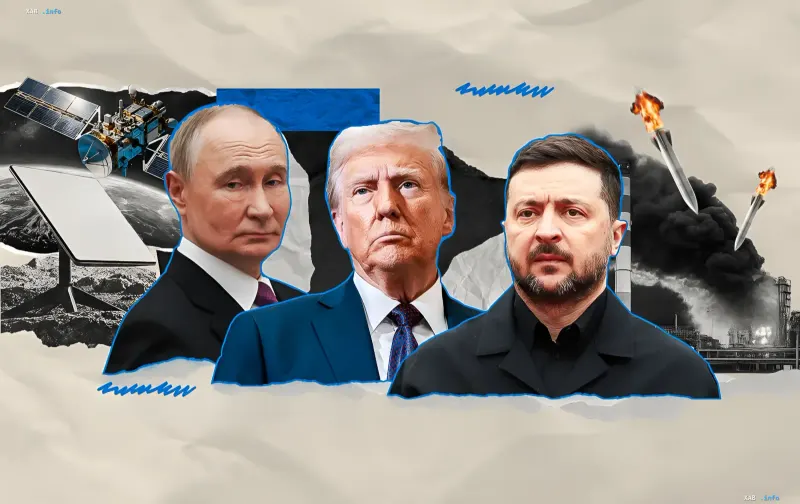
Ahead of the US midterm congressional elections scheduled for November 3, Donald Trump’s administration has sharply changed its tone toward Kyiv, restricting intelligence sharing and access to Starlink satellite communications while simultaneously trying to appease Moscow. Meanwhile, Russia, failing to achieve a breakthrough on the front lines, is betting on winter terror against Ukraine’s energy infrastructure. It is against this backdrop that the Ukrainian delegation held further talks with the US team in Miami on October 9, where the Kyiv team was additionally reinforced by European participants.
Miami, October 9: Modest Expectations and Moscow’s Rejection of a Truce
According to those involved in the negotiation process, expectations for the Miami meeting were frankly modest. Russia, sources noted, refused to agree to even limited truces, let alone achieve any stable peace. One informed source in the Ukrainian government pointed out that Moscow had begun linking even an energy truce to the lifting of sanctions against it. The American side, by contrast, appeared more inclined toward the opposite approach. Kyiv also counted on the Graham-Blumenthal sanctions bill, passed by Congress in mid-September, coming into effect at least partially in mid-October.
The “Diesel Agreement” and the U.S. Policy Pivot
As Western media found out, the most resonant development was the so-called “diesel agreement” with the Kremlin, thanks to which Russia unexpectedly received support from across the ocean for its struggling economy, although strategically, hypothetical revenues from diesel sales to the US will not have a significant impact on its economic state. According to Western media, this agreement became just the tip of the iceberg of the new US approach to dealing with Russia. An informed source in the Ukrainian government explained that the Americans “firmly believe” that by pampering Russia, they can bring it to the negotiating table and achieve a truce or peace, while Kirill Dmitriev, head of the Russian Direct Investment Fund, is reportedly actively proposing joint development of Arctic wealth.
What the U.S. Is Ready to Offer Russia
Among the proposals that, according to Western media, Americans are ready to make to Moscow are the resumption of Russian gas sales to Europe, a certain “framework security agreement” that Europeans allegedly must conclude with the Russian Federation, and the quite pragmatic interest of American negotiators in the frozen foreign assets of Russia’s Lukoil. According to the publication’s sources, the motivation for such a pivot, aside from the probable financial interests of Trump’s inner circle, is obvious: the upcoming congressional elections.
Congressional Elections as a Policy Driver
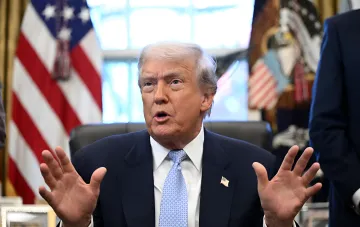
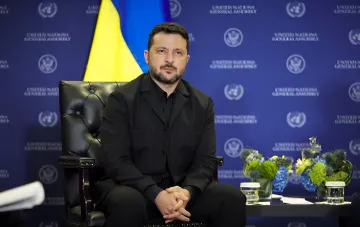
Despite Trump’s claims about how well things are going in the US under his leadership, how the war with Iran is “almost won,” and how pollsters “sold out to Democrats,” the Republican Party's chances of retaining both houses of Congress remain low. According to the Race to the White House project, the probability of retaining a majority in the House of Representatives is 11.5%, and in the Senate, 27.6%. Against this backdrop, the sharp pivot toward Russia was logically accompanied by verbal attacks on Ukraine and personally on Volodymyr Zelenskyy: arguments emerged about “Zelenskyy's unwillingness to make a deal,” the need for Ukrainians to “elect a new president,” the amounts that Trump claims Zelenskyy swindled from Joe Biden, and the claim that Barack Obama is to blame for everything.
The “Tomahawk” Episode and Parallels with Last Spring
There was also a novelty: Trump claimed that Ukraine allegedly actively traded American Tomahawk cruise missiles on the open market—missiles which, the publication notes, it never actually received from the US. The US president backed up his words, in particular, by referencing an interview with Zelenskyy’s former press secretary Yuliia Mendel. The situation began to resemble the events of early last spring following the Oval Office scandal, with the difference that this time it was difficult to fault Zelenskyy or the Ukrainian team for improper behavior. Kyiv urged restraint from premature, emotional assessments and advocated maintaining a composed stance.
The Winter Scenario: Is There a Prospect for a Truce?
Thus, behind the stormy public showdowns between Kyiv and Washington lies a deeper logic: Trump’s attempt to appease Moscow ahead of the congressional elections and simultaneous pressure on Ukraine. For Kyiv, the key question remains what to expect in winter, when Moscow relies on attacks on energy infrastructure, and whether there is any realistic prospect of a truce. According to available data, Russia continues to condition any concessions on the lifting of sanctions, making a sustainable peace in the foreseeable future extremely difficult.