US Director of National Intelligence Jay Clayton stated directly in an interview with ABC News' This Week that Vladimir Putin is not a friend of America when it comes to Ukraine. Responding to the host's question, Clayton emphasized: "He is not a friend of America in Ukraine. Absolutely not. Absolutely not." At the same time, according to him, Donald Trump's use of the word "friend" in the context of the summit in China was entirely appropriate — but in a completely different key than how it is interpreted in Moscow.
Context of the Shenzhen Summit
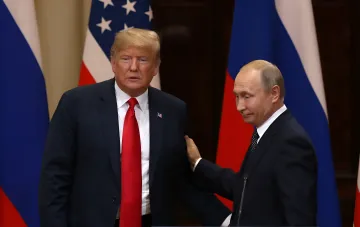
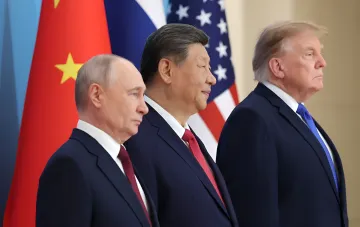
On November 19, a meeting between Donald Trump and Vladimir Putin took place in Shenzhen. At the beginning of the conversation, the US leader called the Russian president his friend and expressed hope that the talks would bring "many wonderful things." Prior to the interview with Clayton, on Saturday, Trump posted a joint photo with Putin on social media with the caption "My friend." The Kremlin reported after the talk that the leaders discussed the war in Ukraine, though no particularly important statements were made.
US Intelligence Sets Priorities
Jay Clayton explained that the word "friend" coming from Trump was appropriate in the context of a meeting among the three largest nuclear powers discussing mechanisms to prevent a nuclear incident. It was precisely within this diplomatic circle, according to the Director of National Intelligence's assessment, that addressing someone as "friend" did not contradict Washington's position. However, as Clayton emphasized, this does not mean friendly relations between the US and Russia as a whole — especially against the backdrop of the ongoing war in Ukraine.
Strikes on Ukraine on the Day of the Meeting
On that same day, November 19, Ukraine was subjected to a massive attack by ballistic and cruise missiles, as well as jet-propelled drones. EU High Representative for Foreign Affairs Kaja Kallas drew attention to the fact that the strikes on Kyiv, which damaged several embassies, coincided in time with Putin's appearance on the red carpet in Shenzhen. This fact became an additional argument in the discussion of whether the rhetoric of "friendship" at the summit corresponds to real actions on the battlefield.
What This Means for Future Negotiations
Clayton's statement captures Washington's internal position: Trump's public rhetoric about friendship with Putin does not cancel out the harsh assessment of Russia's actions in Ukraine. For Kyiv and European partners, this is essentially confirmation that the US administration does not intend to revise its position on the conflict under the pressure of diplomatic rhetoric. At the same time, the absence of "particularly important statements" from the Kremlin after the Shenzhen meeting indicates that no breakthrough in the negotiation process was achieved.