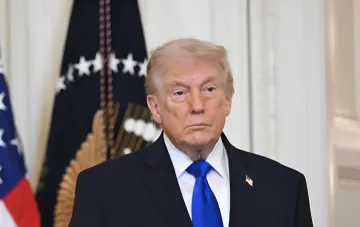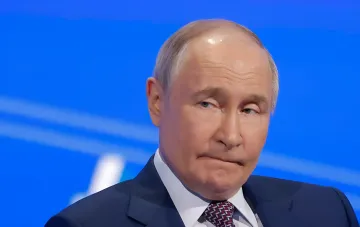
At a press conference on November 20, 2026, U.S. President Donald Trump commented on Vladimir Putin's current situation, stating that the Russian leader is 'having a hard time right now.' According to the U.S. president, the reason is that Russia is waging a war which, in his estimation, 'was supposed to last one day, but has been going on for five years.' Trump added that 'many people have died on both sides' and expressed the opinion that 'this war will end.'
'I cannot speak for America'
Responding to journalists' questions about whether he considers Putin a friend of the United States — considering, in particular, Russia's closeness to Iran — the head of the White House separated his personal position from the state's position. 'I cannot speak for America. As for me, I have a very good relationship with Putin,' Trump stated, emphasizing that this relationship is 'truly wonderful.' In the same context, he noted that Russia has 'a lot of nuclear weapons' and ranks 'second after us' in quantity, calling this 'very good.'
Context: Meeting in Shenzhen
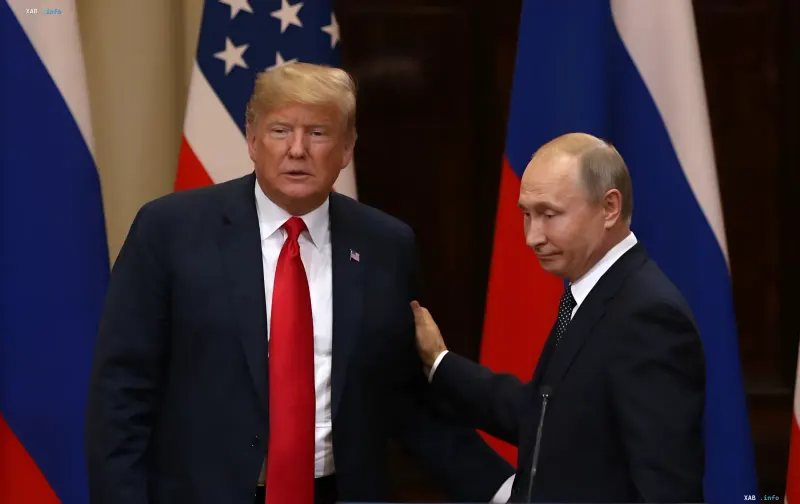
The statements came against the backdrop of a recent contact between the two leaders: on November 19, 2026, Donald Trump and Vladimir Putin held a meeting in Shenzhen, China, on the sidelines of the APEC summit. During the negotiations, the head of the White House publicly called Putin his 'friend' and expressed hope that their meeting would bring 'a lot of wonderful things.' At the November 20 press conference, Trump also reported that the Russian leader assured him of his intention to end the war with Ukraine through diplomatic means.
Protection from the ICC Arrest Warrant
In addition, the American leader stood up for Putin regarding the arrest warrant issued by the International Criminal Court. Trump stated that the court has 'gotten out of control,' possesses 'fake power,' and cannot arrest heads of state. These remarks became part of the general tone of his comments about the Russian leader at the press conference.
Kyiv's Reaction
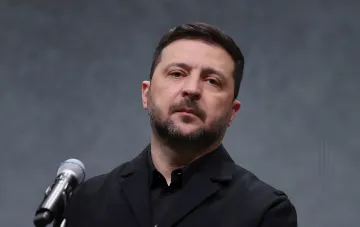
In Kyiv, Trump's words about 'friendship' with Putin were met with criticism. Ukrainian President Volodymyr Zelenskyy reproached the American leader for such formulations, emphasizing that for Ukrainians and most people in the world, the Russian leader is someone who attacks civilian and critical infrastructure daily. According to Zelenskyy, such compliments only make the Kremlin feel unpunished and continue its aggression.
Thus, Trump's comments on November 20, 2026, combine an assessment of the protracted nature of the conflict, an emphasis on personal relations with the Russian leader, and public support for Putin on the issue of the ICC warrant, which caused a divergence in assessments between Washington and Kyiv.