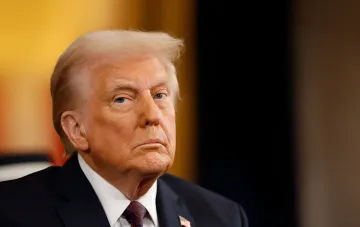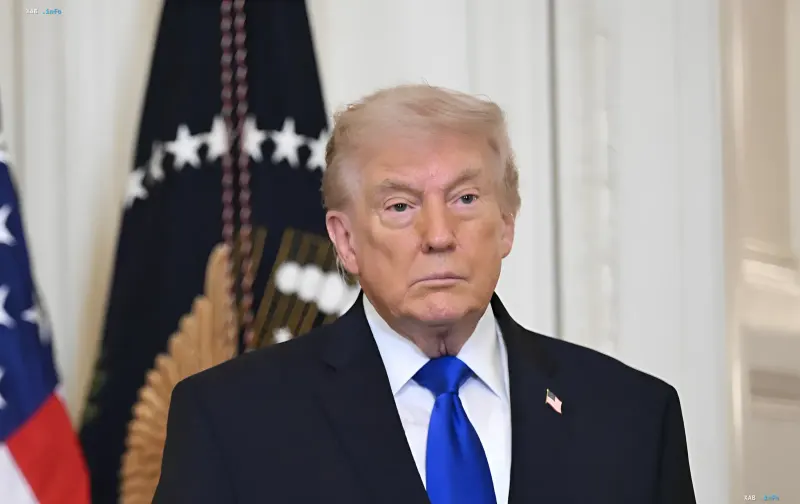
US President Donald Trump has publicly defended Vladimir Putin while criticizing the International Criminal Court in The Hague. Speaking to reporters, the American leader called the ICC a "fake power" and stated that the court lacks the real enforcement strength to prosecute sitting heads of state. According to him, Russia and Putin personally are especially dissatisfied with how the court is handling cases against the Russian leadership, although Trump noted that other nations share this discontent as well.
"Fake Power": Key Statements by Trump
At the center of Trump's remarks is the thesis that the International Criminal Court has no real executive power behind it. "A fake power, because there's no power behind it... And they think they can go and arrest leaders of countries, but they can't do that," the American leader stated. Thus, Trump effectively outlined his position on the case involving the current Russian president and emphasized that, in his view, the judicial rulings from The Hague cannot be enforced against heads of state.
China and the Court's "Overreach"
Separately, Trump claimed that China has allegedly agreed for the first time to condemn the abuse and overreach by the International Criminal Court. In the US leader's view, the ICC has "gotten out of control." These statements fit into a broader context of Washington's public rhetoric, which has recently distanced itself consistently from international criminal justice institutions and criticized their mandate.
Context: Putin's Arrest Warrant and the Question of Immunity
It was previously reported that Vladimir Putin does not have immunity before the International Criminal Court in The Hague, meaning he can be held legally accountable. It was on this basis that the court issued arrest warrants for the Russian president as well as Russia's Presidential Commissioner for Children's Rights, Maria Lvova-Belova. Trump's statement that the court "cannot arrest country leaders" is essentially a political assessment of this warrant and an attempt to legitimize its non-enforcement.
Deportation of Children as the Basis for the Warrant
According to data cited by the publication, following the occupation of parts of Ukraine, Russia has actively deported children to its territory—often under the guise of "recreation"—after which they are not returned. In total, estimates suggest about 19,500 children have been removed. Putin, in turn, has claimed that Russia did not kidnap Ukrainian children, but rather tried to rescue them from shelling. These very actions became one of the key grounds for the ICC leadership to issue the arrest warrant.
US Sanctions Against ICC Officials
In parallel with public criticism, Washington has moved to practical measures: the US imposed sanctions against ICC President Tomoko Akane and senior trial lawyer Abdoulaye Seye. Later, the US administration promised to step up efforts to undermine the court's operations. Combined, these steps form a cohesive picture: Trump's rhetoric about a "fake power" is reinforced by sanction pressure on specific officials of The Hague court.