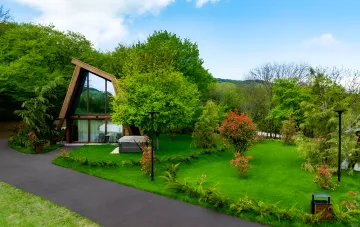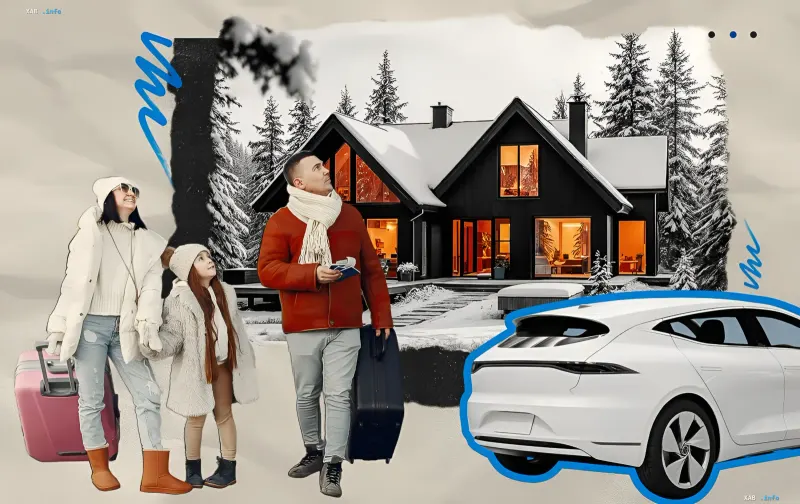
The risk of prolonged winter power outages, which limits access to heat and water in apartment buildings, is fundamentally reshaping demand in Ukraine's suburban rental market. To the traditional summer peak of interest in private homes, 2026 has added an unprecedented surge in demand in the middle of the cold season. According to LUN data, this rise in interest was recorded at the start of 2026, when, against the backdrop of freezing temperatures, shelling and blackout threats, tenants were urgently looking for housing with backup heat and power. Marianna Bigunets, Commercial Director of the construction company GAZDA, notes in a comment to RBC-Ukraine: "Now the consumer is trying to understand how they will live during possible outages: will there be water, heat, lighting and other life-support systems? Under adverse conditions, an apartment building becomes a 'cage' for its residents."
What is driving demand for autonomous housing
OLX Real Estate statistics show that for the first time in 2025, safety and autonomy factors entered the top-13 criteria for choosing rental housing. According to Viktor Kovalenko, Director of the consulting company RealExpo and head of the Zagorodna.com portal, the main demand for such properties is driven by families, remote workers, entrepreneurs, and city dwellers looking for an alternative during the most difficult period of the heating season. At the same time, Kovalenko emphasizes that there is no talk of a mass move from apartments into any private homes, since a house requires substantially higher costs for heating and maintenance. A competitive edge goes to compact, energy-efficient and truly autonomous properties adapted for year-round living.
Price dynamics: from summer peaks to winter anomalies
The cost of renting suburban houses in Kyiv Oblast depends noticeably on the time of year. According to Lyudmyla Kyryukhina, Head of LUN Statistics, prices rise most clearly in summer, when people head out to nature. As of August 2026, the median price of renting a house in Kyiv Oblast reached a two-year high of $2,500 per month, 25% higher than the figure for August 2025. At the same time, over recent years the sharpest price anomalies in the suburban rental market were recorded precisely during critical outages: in summer 2023 and winter 2025. The previous peak in rental rates was recorded in February 2026, when the median price reached $2,200 per month, after which, against the backdrop of a stabilization of the energy situation, prices began to fall.
Market polarization: two segments instead of one
According to Viktor Kovalenko's forecast, if power, heat or water supply disruptions recur in autumn and winter 2026, demand for autonomous suburban houses could rise significantly, and rental rates for this segment near Kyiv could increase by around 5–10%. The expert predicts a de facto split of the market into two segments: ordinary houses and houses with real autonomy. It is for the latter that tenants will be willing to pay more, and it is in this segment that a local shortage is most likely to emerge. Pavlo Rebeika, a suburban real estate expert at the D-22 agency, points out that prices for the most autonomous properties have long reached their peak and have remained at a high level since previous crises, so a moderate seasonal increase of 10–15% is expected in autumn. By contrast, houses without backup power or with basic heating will lose ground: due to weak demand, owners will have to revise prices downward and offer discounts.
Contradictory data
Experts disagree on the scale of the upcoming price increase. Viktor Kovalenko forecasts a 5–10% rise in rental rates for autonomous houses in the event of recurring power supply disruptions, while Pavlo Rebeika expects a moderate seasonal increase of 10–15% even without a sharp blackout scenario. The difference is explained by differing methodologies: Kovalenko assesses the increase relative to current rates under conditions of crisis demand, while Rebeika assesses it relative to already inflated base prices formed by previous crises. In addition, the RBC-Ukraine article mentions that safety factors entered OLX's top-13 criteria in 2025, whereas the price data is given as of August 2026, creating a time gap between demand statistics and current prices.
What to check in a house's engineering before renting
Before signing a rental agreement for a suburban house amid growing blackout risks, the tenant needs to verify the presence and functionality of backup systems: a generator or inverter unit with an autonomous power source, water storage tanks, a heating system that does not depend on the centralized power grid, as well as insulation and the energy efficiency of the structures. It is precisely these parameters that determine whether the property can provide full autonomy in the event of prolonged outages, and it is precisely for these that in 2026 tenants are willing to pay a premium over the basic segment of suburban rentals.