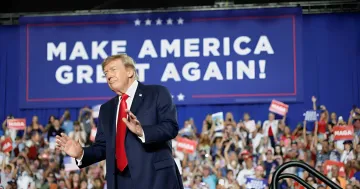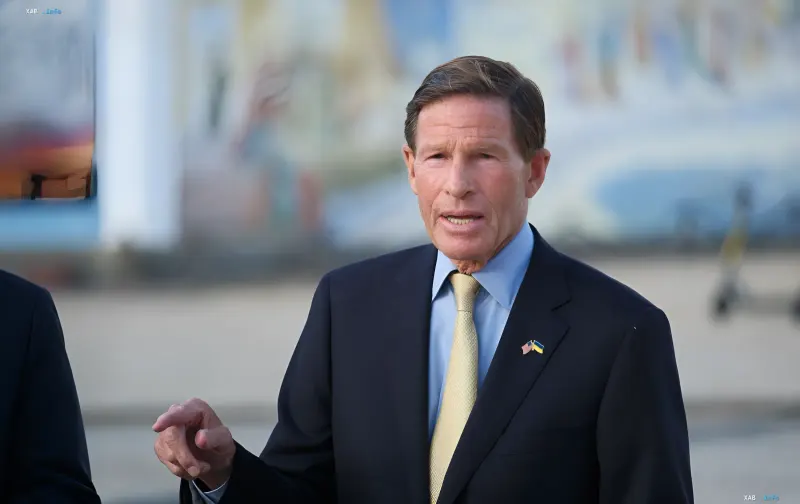
Democratic Senator Richard Blumenthal, who co-authored the bill on 'hellish sanctions' against Russia with Lindsey Graham, has publicly criticized US President Donald Trump for refusing to impose these restrictions. This is reported by RBC-Ukraine, citing Blumenthal's statement on the social network X. According to the Democrat, the decision of the White House chief contradicts the will of the majority of Americans and their representatives in the US Congress.
Call for Republicans to Join Condemnation
In his appeal, Blumenthal stated that Trump 'confirms once again that he is siding with a bloodthirsty thug and those who facilitate the Russian war machine, and against the majority of Americans, their representatives in both houses of Congress, and our European allies.' The Democrat also appealed to his Republican colleagues, urging them to join in condemning what he called 'a vile and cowardly act.'
Suspension, Not Cancellation: How Trump's Decree Works
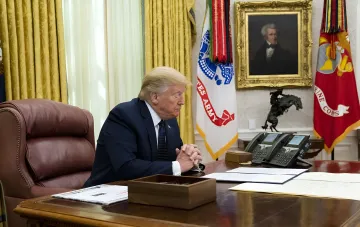
It will be recalled that Donald Trump signed a decree suspending 'hellish sanctions' against Russia—large-scale tariffs, restrictions, and sanctions promoted by the late Senator Lindsey Graham for purchasing Russian energy carriers. To do this, Trump used the sanctions repeal provision embedded in the very law that Graham championed as a tool to punish Russia for the war in Ukraine. The law also provided for the expansion of sanctions against Iran.
Formal Introduction and Actual Freezing
According to the text of the directive, it formally introduces tariffs but simultaneously halts their enforcement. This means that Trump retains the ability to use these restrictions at another time if he deems it necessary. Thus, the sanctions mechanism is not abolished, but rather transferred to a suspended status.
National Security or Sucking Up to Putin
Blumenthal stressed that Trump's decision has nothing to do with US national security and is exclusively related to his pandering to Vladimir Putin. According to the Democratic senator's assessment, the suspension of restrictions ignores the position of the majority of Americans and their representatives in both chambers of Congress, as well as the position of European allies, which, he said, makes Washington's move internally contradictory.