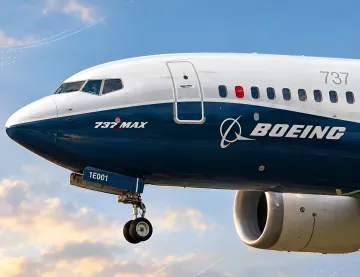

The US Federal Aviation Administration (FAA) has concluded that a software issue discovered in the flight computers of Boeing 737 MAX aircraft does not pose a threat to flight safety. This official ruling removes one of the final and most significant hurdles standing in the way of the long-awaited certification for the largest variant in the popular aircraft family, the Boeing 737 MAX 10, paving the way for its commercial deployment.
Background and Nature of the Software Glitch
Previously, the American aviation regulator was forced to temporarily suspend the certification process for the MAX 10 variant to conduct a detailed, thorough additional analysis. The identified technical problem affected version U14.1 of the onboard software and, under a specific and relatively rare combination of circumstances, could lead to the unexpected disengagement of the automatic vertical flight path control. This design feature was first discovered by the Canadian airline WestJet nearly two years ago during a test flight prior to the aircraft's official entry into service, when the VNAV vertical navigation system unexpectedly deactivated during approach.
Risk Assessment and Go-Around Scenario
The FAA expert panel studied all potential risks in detail and concluded that even if such a hardware glitch occurs, pilots retain full control of the aircraft at all times, and all critical information displayed on instrument panels remains clear and unambiguous. Particular attention from the agency's specialists was drawn to a potential go-around scenario, where the crew aborts a landing, rapidly increases engine thrust, and climbs back up. According to the regulator's assessment, the recorded software feature could indeed temporarily increase the overall workload on the flight crew during such a demanding maneuvering procedure.
Boeing's Measures and Certification Outlook
Despite the positive conclusion issued by the regulator, Boeing announced that it will continue active work on a comprehensive software update. The corporation's engineers are also developing a specialized formalized procedure that will allow flight crews to quickly and effectively reactivate automatic vertical navigation should similar glitches occur. It is worth noting that identical software is used on another variant, the Boeing 737 MAX 7, which successfully passed FAA certification back in August, meaning the regulator's current decision automatically extends to those questions as well.
Economic Significance for the Corporation
Since there are no longer any substantial obstacles hindering the official certification of the Boeing 737 MAX 10, the long-awaited approval from the FAA could take place in the very near future. Authoritative industry experts and analysts predict that the US agency is capable of issuing the final authorization document before the end of the current month of October. For the Boeing corporation, this milestone holds critically important strategic and financial significance: the MAX 10 variant is the most spacious version of the family and boasts a colossal order backlog. According to preliminary estimates by financial firm Jefferies, leading global airlines have contracted nearly 1,500 such aircraft, with major customers including giants such as United Airlines and Alaska Airlines.