
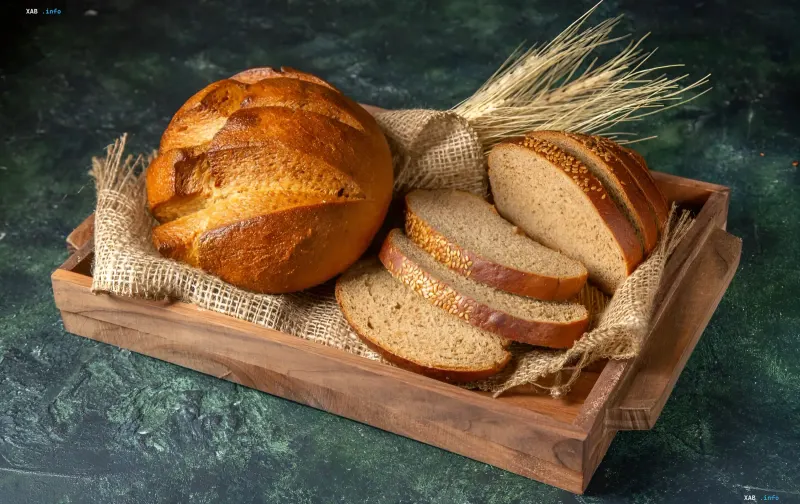
In August 2026, when summer heat often forces people to think about ways to extend the shelf life of food, the question of bread storage remains one of the most discussed in everyday life. Many instinctively put the remaining loaf in the refrigerator, believing that low temperature is the best enemy of mold. However, according to data published by the Styler project (RBC-Ukraine), this method has a critical drawback: cold accelerates the staling process, making the crumb dry and hard within just one day.
The Paradox of Cold: Fighting Mold at the Expense of Texture
The scientific explanation for this phenomenon lies in the structure of starch. During storage, retrogradation occurs — a change in the structure of starch molecules, which causes the bread to become hard. Studies show that this process proceeds significantly faster at refrigerator temperatures (around +4°C) than at room temperature. Thus, by putting bread in the cold, the consumer wins the battle against mold fungi but loses in preserving taste qualities and the elasticity of the crumb.
Experts note that the refrigerator can be justified only under specific conditions: if the room has extremely high humidity or temperatures at which mold develops in a matter of hours. In such cases, cold becomes a forced measure that allows the product to remain safe for consumption, even if its texture deteriorates. However, for most cases in a temperate climate, this is a suboptimal solution.
Packaging Rules and Risks of Cross-Contamination of Odors
If the decision is made to store bread in the refrigerator, proper packaging is critically important. Bread has high porosity and acts like a sponge, absorbing odors from surrounding products — from cheese to fish. Without reliable sealing, an aromatic loaf may acquire an unpleasant aftertaste of "yesterday's dinner." Moreover, the dry air of the refrigerator contributes to rapid moisture loss.
There is a common myth that bread must be wrapped first in paper and then in polyethylene. Styler points out that this is not a universal rule. The main thing is not to create excess moisture inside the packaging. Freshly baked bread must be completely cooled before packaging: a hot product in a bag will create condensation, which, on the contrary, will become an ideal environment for the reproduction of bacteria and mold.
Freezing as the Gold Standard and Tips for the Breadbox
For long-term storage, if you do not plan to eat the bread in the next 2–3 days, the only effective method remains freezing. Unlike the refrigerator, the freezer practically stops the process of starch retrogradation, preserving freshness and taste for weeks and months. It is recommended to slice the bread before freezing so that you only thaw the necessary amount.
For storage at room temperature, it is important to follow simple rules: keep the breadbox away from heat sources (stove, radiators) and humidity. A simple home hack recommended by experts is placing a small container of salt in the breadbox. Salt acts as a natural absorbent, drawing excess moisture from the air and preventing premature mold growth, although it does not replace regular cleaning and quality packaging.