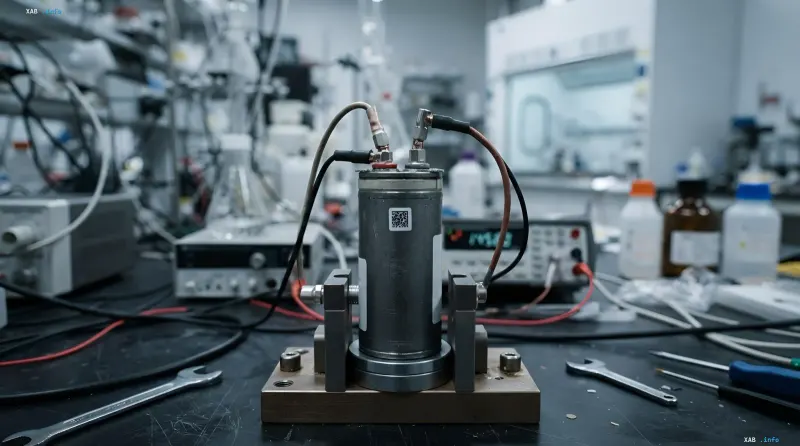
Researchers from Vanderbilt University and the University of Maryland have developed a novel lithium-sulfur battery chemistry that allows sulfur to participate in an additional reaction, storing significantly more energy. In experimental cells, the specific energy density of sulfur alone exceeded 1,700 Wh/kg, paving the way for next-generation energy storage solutions.
Core Technology and Three-Electron Reaction
In conventional lithium-sulfur batteries, each sulfur atom exchanges two electrons during charge and discharge cycles. Scientists managed to unlock previously unused material potential by using chlorine to force sulfur into a reaction involving a third electron. This simultaneously increased capacity by roughly 58% and raised the average working voltage from 2.05 to 2.54 V.
Reversibility and Stability Solutions
The primary challenge was ensuring the reversibility of this new chemical reaction without degrading the electrolyte. Using molecular modeling, the researchers selected a specialized electrolyte that keeps sulfur-chlorine compounds localized within the positive electrode, preventing unwanted side reactions at the lithium anode. Single-layer pouch cell tests showed 78% capacity retention after 100 cycles.
Contradictory Data
While the active sulfur material demonstrates over 1,700 Wh/kg, the projected specific energy density of a complete battery stack accounting for all structural components is estimated at approximately 477 Wh/kg—about 37% higher than traditional counterparts. Critics note that commercialization is still distant due to current reliance on excess electrolyte and metallic lithium in prototypes.