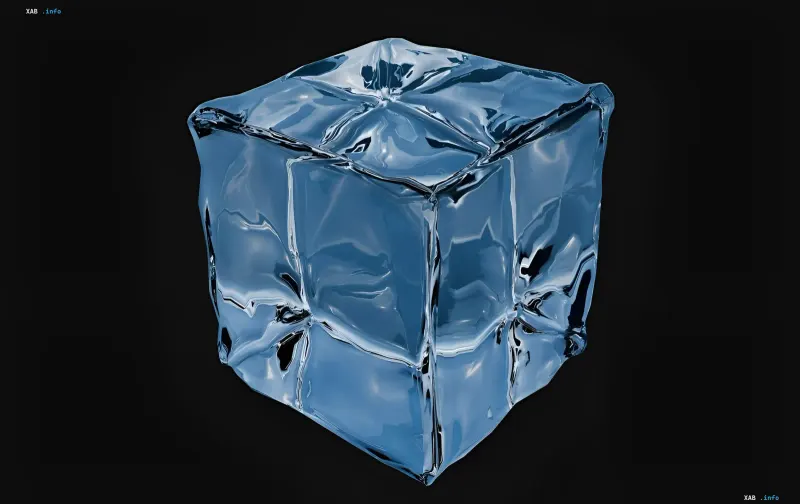
Scientists have achieved a breakthrough in materials science by creating an innovative type of ice called BioPykrete, which is 10 times stronger than regular ice and comparable to traditional concrete. This unique development belongs to a group of researchers from the Hebrew University of Jerusalem led by Professor Ido Braslavsky.
Background and the Evolution of the Pykrete Idea
The concept of strengthening ice by adding various impurities is not entirely new in the scientific world. Back during World War II, researchers actively experimented with so-called pykrete — a composite material consisting of frozen water and wood pulp. The main advantage of that material was that it melted much slower than ordinary ice, but its mechanical properties remained limited. The modern Israeli team decided to rethink this historical concept at a fundamentally new technological level, turning to nanotechnology and molecular engineering.
Innovative Composition and Molecular Glue
To obtain ultra-strong BioPykrete, scientists combined water with cellulose nanocrystals — microscopic and rigid structural elements that naturally provide strength to plants. During the controlled freezing process, these particles form a robust spatial network. A key technological achievement was the creation of a special artificial protein acting as a molecular glue. One part of this protein structure binds tightly to ice crystals, while the other binds to cellulose, forming a reliable molecular bridge that doubles the material's strength metrics.
Properties, Testing, and Future Applications
Laboratory tests have demonstrated outstanding results: BioPykrete not only withstands colossal compressive loads but is also capable of absorbing 70 times more energy before destruction than pure ice. Unlike brittle ordinary ice, the new composite has the ability to deform and bend, making it safer.
Controversial Data
Despite impressive laboratory strength and plasticity metrics, there are certain disagreements within the expert community regarding the timeline for the practical implementation of BioPykrete. Some researchers believe that the material could find application in polar construction in the coming years, while skeptics point to the lack of large-scale field tests. In addition, the question remains open regarding the composite's behavior under real temperature fluctuations, where freeze-thaw cycles could gradually degrade the molecular network of the artificial protein.
In the future, the new material is viewed as an eco-friendly and biodegradable alternative to traditional construction mixtures, especially in the harsh conditions of the Arctic and Antarctica. Transporting heavy concrete and steel to these regions involves enormous financial and logistical costs. Nevertheless, the development remains at the concept stage, and researchers have yet to conduct lengthy tests on shape stability under constant pressure.