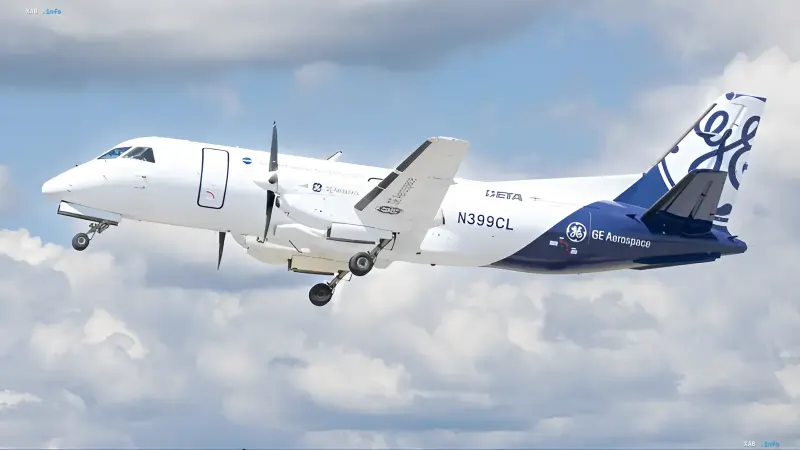
The aviation industry has taken a step towards a new era. Through joint efforts by GE Aerospace, NASA, BETA Technologies, and Boeing's Aurora Flight Sciences division, a historic test flight was conducted. For the first time, a hybrid-electric aircraft reached an altitude of over 9,000 meters — a level typical for modern passenger airliners. Developers call this flight a milestone in aviation history, proving the viability of high-voltage power systems in a rarefied atmosphere.
Victory over the Physics of Rarefied Air
Operating electrical systems at high altitudes has always been a complex challenge for engineers. Onboard networks use voltages of several kilovolts, which in a rarefied atmosphere can lead to corona discharges. Additionally, thin air cools components less effectively, creating a risk of overheating. Previously, power components of the hybrid engine were tested in barometric chambers, but only a real flight could provide comprehensive data on the behavior of these innovative solutions.
Saab 340B: A Flying Laboratory
A modified twin-engine turboprop Saab 340B was chosen as the test platform. This aircraft became a true flying laboratory. During a series of tests, engineers managed to conduct a continuous flight with the hybrid system operating for more than two hours. The public debut of the aircraft took place on July 20, 2026, at the prestigious Farnborough International Airshow in the UK.
Architecture of the Hybrid Installation
On board the Saab 340B is a megawatt-class hybrid system operating at several kilovolts. The aircraft configuration is unique: one of the standard GE CT7 turboprop engines retained the traditional scheme, while the second was combined with an electric power section. The equipment was placed in a special inverted nacelle on the right wing, designed to provide enhanced ventilation for high-voltage components.
The system included:
- Motor-generators, power converters, and invertors from GE;
- Electronic controllers;
- Reductors manufactured by Avio Aero;
- Dowty propeller;
- Unison heat exchangers;
- Torque sensors and high-voltage cabling.
Batteries for the system were supplied by BAE Systems, while the nacelle was manufactured and integrated by Aurora Flight Sciences.
Synergy of Turbine and Electric Motor
Unlike fully electric aircraft, the experimental Saab uses a gas turbine, battery pack, and motor-generator as a single energy system. The electric machine can transmit additional power to the propeller shaft, which is particularly relevant during takeoff and climb. This allows for the optimization of the gas turbine engine's operating mode. In other modes, the system architecture allows for power redistribution and energy recuperation.
According to BETA Technologies, electric support for the gas turbine significantly improved the aircraft's rate of climb and high-altitude performance.
The Path to Commercial Application
The installation was developed under the NASA Electrified Powertrain Flight Demonstration program, for which GE received a contract back in 2021. Preliminary tests of the power system on the NASA Electric Aircraft Testbed took place in 2022, where operation at pressures corresponding to altitudes up to 13,000 meters was verified.
The current flight finally confirmed the possibility of operating such equipment on real aircraft within the altitude range of commercial aviation. GE views this technology as the foundation for future hybrid powerplants for regional and narrow-body aircraft, including open-fan engines. It is expected that electric turbine support will reduce fuel consumption by up to 20% and reduce associated operating costs, although the company has not yet disclosed exact savings figures based on these specific flights.