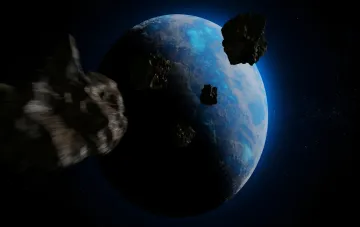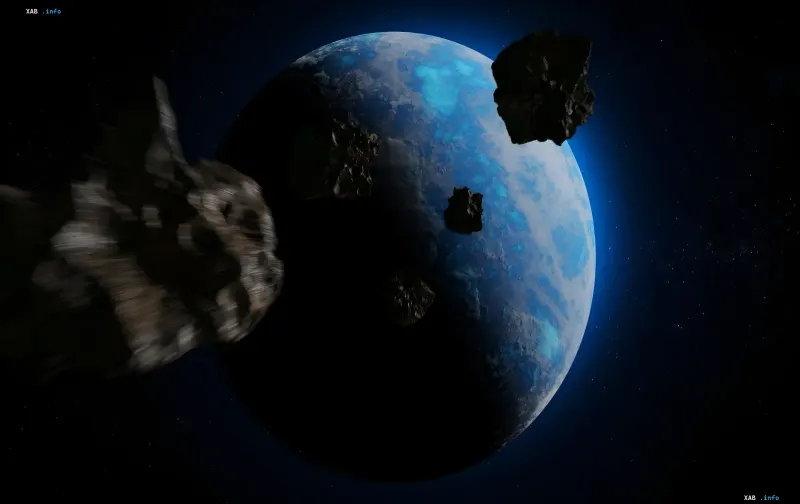
In 2029, humanity will witness a unique cosmic event. Asteroid Apophis will fly by Earth at an extremely close distance, visible to the naked eye. According to scientists' forecasts, up to 90 percent of the planet's population will see this phenomenon, turning an astronomical event into a global spectacle.
Who is Apophis?
The name of the celestial body refers to the ancient Egyptian god of darkness and chaos, giving the event a certain mystical hue. However, behind the scary name lies an object with a peanut-like shape and a diameter of about 450 meters at its widest point. Initially, this asteroid originated from the Main Belt between Mars and Jupiter, but now it moves along an orbit between Venus and Earth, completing a full orbit around the Sun every 10.5 months.
Flyby details: distance and safety
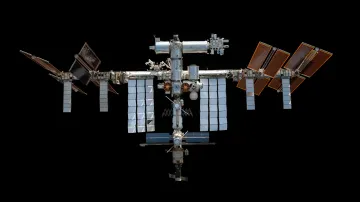
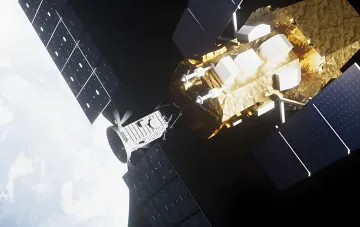
According to the Planetary Society, the minimum distance between Apophis and our planet will be about 30,600 kilometers. To understand the scale: this is significantly further than the orbit of the International Space Station, but closer than the height of geostationary satellites. Despite the proximity, scientists assess the probability of the asteroid colliding with Earth during this flyby or within the next 100 years as zero.
Nevertheless, Earth's gravitational field can change the object's orbit or cause structural changes on its surface. This is why the international community plans detailed monitoring of the event. In particular, the NASA spacecraft OSIRIS-APEX will approach the asteroid to conduct scientific research.
Global visibility: who and when will see Apophis
The flyby will last about seven hours. During this time, the asteroid will look like a moderately bright point, slowly moving across the constellation at a speed comparable to that of an artificial satellite. The UN General Assembly has already declared 2029 the International Year of Asteroid Threat Awareness and Planetary Defense.
The possibility of observation depends directly on geographical location and time of day. Scientists have presented new maps visualizing visibility zones:
- Start of flyby: Up to 4.5 billion people in Australia and most Asian countries will be able to observe the object.
- Peak phase: In the middle of the trajectory, Apophis will be visible to almost 5.7 billion people in East Africa, Southern Europe, Asia, Australia, and the Middle East.
- Final stage: At the moment of maximum approach, about 1.9 billion residents in eastern South America, North Africa, and Europe will see the asteroid.
North America will be the only continent where the asteroid will not be visible in the night sky. For successful observation in other regions, it will be necessary to find a cloudless sky and a place with a low level of artificial lighting.