The mission to rescue NASA's legendary Swift space observatory has encountered a critical obstacle. The robotic tug LINK, intended to lift the scientific instrument to a safe altitude, has lost control of its position in space. NASA engineers are now racing against time to stabilize the situation before the observatory ultimately falls to Earth.
Uncontrolled Rotation and System Failure
Over the weekend, the LINK spacecraft, launched only a few months ago, began rotating uncontrollably, losing its orientation in space. Preliminary investigations revealed a serious scale of failure: two of the three reaction wheels responsible for stabilization stopped functioning. Additionally, a partial loss of functionality in the cold gas thruster system was recorded.
Despite critical failures, the spacecraft has not lost contact with Earth and continues to receive power from its solar panels. This gives engineers a chance to rectify the situation. In the coming days, specialists plan to use electric thrusters to stop the rotation and return the spacecraft to a stable position.
History of Problems with the Spacecraft
The current accident is not the first test for LINK. Even during the commissioning phase, the team recorded problems with one of the three reaction wheels. At that time, the situation was resolved using software patches, however, a repeated failure indicates a deeper vulnerability in the system.
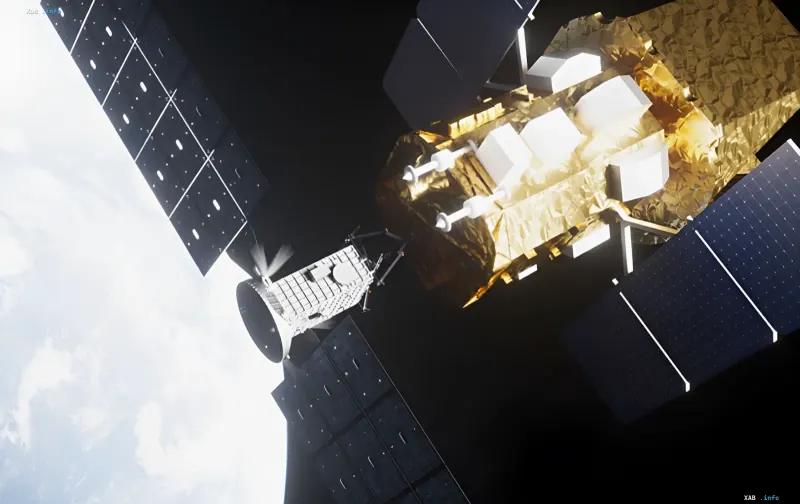
The spacecraft was launched on July 3 using a Pegasus XL launch vehicle. Its main task was to approach the 21-year-old Swift observatory, capture it, and gradually move it to a higher orbit.
Why is the Rescue of Swift So Urgent?
The Swift observatory, operating in low Earth orbit, is not equipped with its own propulsion system for long-term altitude maintenance. Even the rarefied layers of the atmosphere create drag that gradually slows the satellite. However, the situation has recently worsened due to high solar activity.
Intensified solar storms led to atmospheric expansion and increased drag, accelerating the observatory's descent significantly faster than predicted. This is what forced NASA to sign an urgent contract for the development and launch of the rescue tug LINK in a compressed timeframe.
What's Next?
The top priority for specialists right now is to stop the rotation of LINK. Only after stabilizing the spacecraft will it be possible to conduct a full diagnostic and update the navigation system software. The fate of the mission to save one of the most important tools of astrophysics will be decided during these procedures. If engineers succeed in regaining control, the approach to the observatory will continue. Otherwise, the unique scientific station may burn up in the atmosphere prematurely.