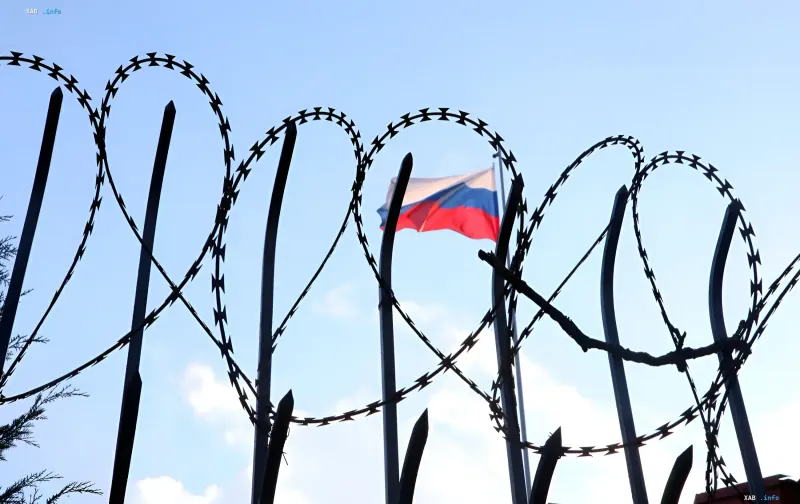
The British government has announced a sweeping new package of sanctions against the Russian Federation, targeting 31 individuals and legal entities. The new restrictions are designed to significantly limit Moscow's ability to circumvent existing international embargoes, as well as to punish those involved in gross human rights violations in temporarily occupied territories.
Persecution, Torture and Propaganda
Special attention in the sanctions list is paid to those directly involved in repression against civilians. British authorities have imposed personal restrictions on eight individuals accused of illegal detentions and torture of Ukrainian citizens in occupation zones. Another seven figures on the list were sanctioned for actively imposing Russian state propaganda and the forced militarization of illegally deported Ukrainian children.
Combating Russia's "Shadow Fleet"
A significant part of the new package aims to curb Russia's attempts to transport energy resources bypassing international restrictions. A group of vessels that joined the Kremlin's so-called "shadow fleet" and are involved in maintaining export revenues from gas sales was hit by sanctions. According to official data from the British side, some of these ships were put into operation quite recently — in July 2026, which indicates Moscow's ongoing attempts to create new logistics schemes.
Contradictory Data
While the British government is stepping up pressure on Moscow, disagreements persist in the international arena regarding the effectiveness and future vector of sanctions policy. Kremlin official spokesman Dmitry Peskov recently stated that new initiatives by US President Donald Trump's team regarding a possible easing of anti-Russian measures were formulated incorrectly. At the same time, a bipartisan group of US congressmen is urging the White House to do the opposite — significantly tighten pressure and apply harsh levers provided for by the Graham Act.
International Scope of Restrictions
In addition to Russian officials and entities, London has expanded the sanctions list to include propagandists operating outside the Russian Federation. In particular, sanctions hit seven people accused of spreading disinformation, including four Georgian citizens. According to London, they justified the Kremlin's occupation policy and cooperated with illegal administrations created in the occupied territories of South Ossetia.