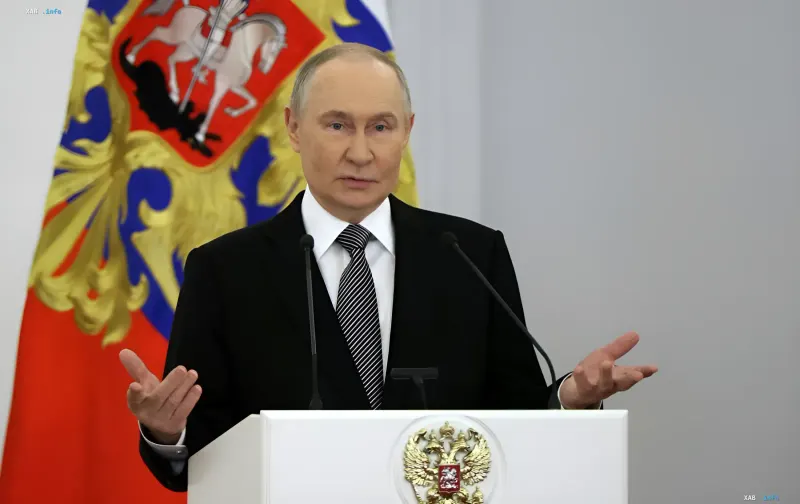
British Prime Minister Andy Burnham announced that Vladimir Putin will not receive an invitation to the G20 summit, which will be held in Manchester in November 2027. According to The Economist, this was reported by journalist Hugo Guy, as cited by RBC-Ukraine and several other publications. When directly asked whether the Russian leader would be invited to the meeting, the head of the British government replied briefly and unequivocally: "No." According to Burnham, Putin's presence at the summit is ruled out due to existing sanctions against the Kremlin, and Russia will only be able to be represented at the international meeting by lower-ranking officials.
"No": London's Unequivocal Answer
The position of the UK marks a notable departure from the traditional protocol of G20 organizers, who usually invite all block representatives to annual meetings. London has, in effect, solidified Russia's status as a limited participant: Moscow's formal membership in the "Group of Twenty" remains, but the Russian president will be absent from the Manchester summit, which will be held in Burnham's hometown (he was previously the mayor of Manchester). The official justification for the refusal is the existing sanctions against the Kremlin, which, in the view of the British Prime Minister, makes the participation of the Russian head of state on equal terms with other leaders impossible.
Difference with Washington: Miami vs. Manchester
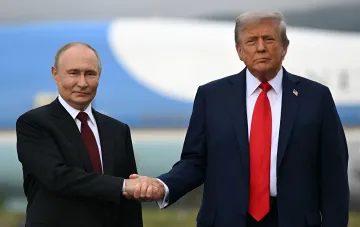
Burnham's statement came against the backdrop of an opposing move by the US administration. This year, the G20 presidency belongs to the United States, and Washington has already sent Putin an invitation to the summit in Miami, scheduled for December 2026. US Secretary of State Marco Rubio publicly defended this decision, stating that the United States must maintain contact with Moscow, as achieving a peace agreement is otherwise impossible. Thus, on the issue of Russia's participation in the G20 format, two key Western capitals have adopted different approaches: the US is inviting Putin to the December meeting in Florida, whereas the UK has preemptively excluded him from the November 2027 summit in Manchester.
Ukraine, Peacekeepers, and "Autumn Diplomacy"
Commenting on the summit, Burnham also confirmed that the UK would provide military and financial aid to Ukraine until the end of the war with Russia. Furthermore, London declared its readiness to deploy its own troops as part of a peacekeeping force should a ceasefire agreement be reached. Hosting the G20 summit in Manchester, according to the British side, will be a key test of the government's international strategy, which Burnham calls "autumn diplomacy." As part of this course, London intends to renew relations with the European Union, the Middle East, and the Commonwealth of Nations, while economic cooperation and the development of Manchester could become a model for new inter-country relations.
AI and China: A Bet on Mediation
The main theme of the 2027 G20 meeting, as intended by the British organizers, will be the development of a "global set of standards" for artificial intelligence. The UK intends to act as an independent mediator between the US and China on this issue. Unlike with Russia, the British government seeks to host PRC President Xi Jinping at the summit, which highlights the selective nature of British diplomacy: isolation is not applied to all "problematic" capitals, but is used surgically in accordance with London's sanctions and strategic logic.
What About Ukraine at the G20?
A separate context involves Ukraine's participation. It is worth noting that Ukraine has not yet received an official invitation to the G20 summit taking place next month (December 2026, Miami). Ukrainian President Volodymyr Zelenskyy has previously spoken about participating in the G20 summit, noting that "there were certain signals." Against this backdrop, different assessments have emerged in Europe: EU foreign policy chief Kaja Kallas opposed Putin's participation in the Florida summit, while German Chancellor Friedrich Merz stated that if Putin is present, Ukraine must also be involved in the discussions. Thus, the question of who will attend the G20 meetings in 2026–2027 remains an active element of diplomatic confrontation.