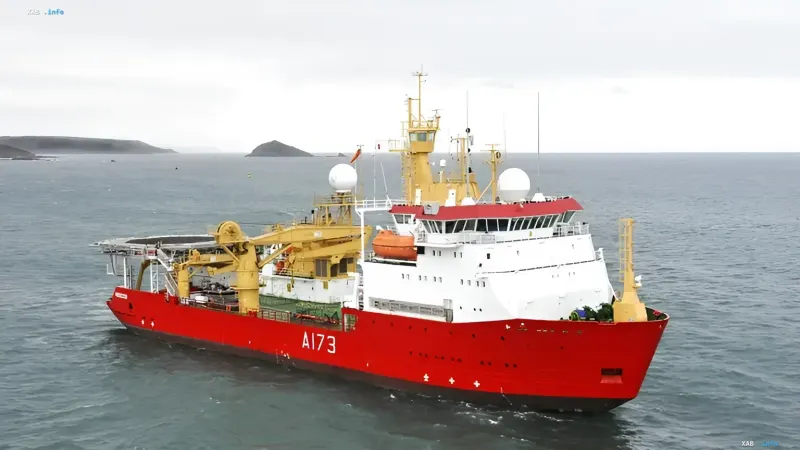
The British Royal Navy is facing a serious logistical and operational crisis after the fleet's only icebreaker, HMS Protector, sustained critical propulsion damage. According to reports published by The Telegraph, shortly after departing from a British port, two of the ship's engines failed, forcing the command to tow the vessel back to the Devonport naval base in Plymouth for expert assessment and repairs.
Background and technical characteristics of the vessel
Built in Norway in 2001, the icebreaker HMS Protector plays a crucial role in maintaining London's strategic presence in remote regions of the globe. The ship's crew of approximately 88 personnel is regularly deployed to the South Atlantic and Antarctica, where it performs vital tasks such as conducting detailed hydrographic surveys, supporting British research stations, and transporting personnel for inspections under international treaties. Although it lacks heavy weaponry, the ship is capable of carrying machine guns and transporting Royal Marines.
Contradictory data
While preliminary reports point to potential negligence during routine maintenance as the primary cause of the engine failure, the exact scale of the damage remains unclear. Sources within the military establishment have described the incident as a "catastrophic failure," yet official representatives of the Royal Navy have refrained from providing detailed timelines for the vessel's restoration. Experts note that if repairs prove impossible, a full replacement icebreaker may not become available to the British fleet until the 2030s.
Geopolitical consequences and impact on the British fleet
The loss of the icebreaker significantly weakens Britain's position and soft power in Antarctica, where London's territorial claims traditionally overlap with those of Argentina and Chile, despite claims being effectively frozen under the 1959 Antarctic Treaty. The situation is exacerbated by a wider crisis within the Royal Navy. The incident with HMS Protector comes on the heels of the recent decommissioning of two Type 23 destroyers, leaving the fleet with only five destroyers and six frigates in service. Former First Sea Lord Admiral Lord West characterized the current state of the fleet as the worst in history, while the head of the Royal Navy, Admiral Sir Gwyn Jenkins, previously admitted the fleet is not yet ready for war.
Expert assessments and budget crisis
The expert community views the prospects of restoring the combat readiness of the British Navy with alarm. Former HMS Endurance captain Tom Sharp emphasized that such specialized vessels account for only a small fraction of the defense budget, but have an enormous impact in terms of presence and soft power. Against this backdrop, the UK Treasury is struggling to secure funding for its multi-year 4.7 billion pound military investment strategy, threatening the modernization of the entire fleet.