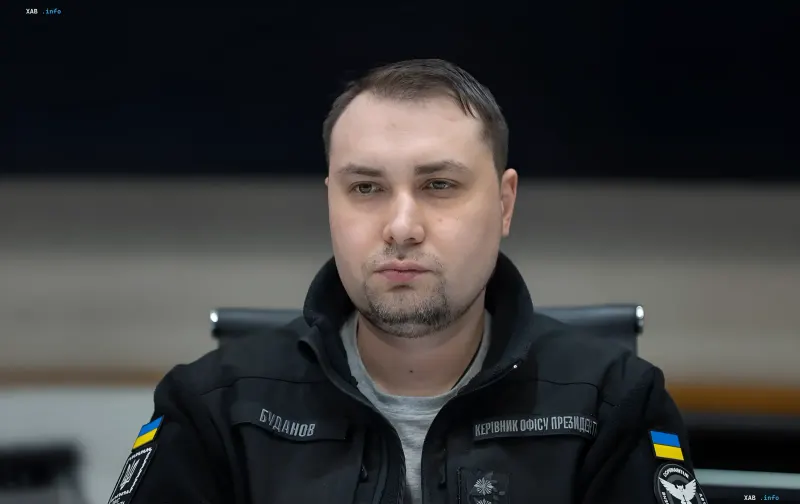
Kyrylo Budanov, Head of the Office of the President of Ukraine, delivered a detailed statement at the YES Annual Meeting 2026 conference, organized by the Viktor Pinchuk Foundation. In his speech, he addressed key issues of external support for Kyiv, the effectiveness of sanctions pressure on Russia, and what he described as the most important factor — preserving the internal unity of Ukrainian society. According to RBC-Ukraine, Budanov emphasized that American aid remains critically important, yet "no one is going to do anything for us," and that success depends on a combination of factors: allied support, cohesion within the country, and consistent sanctions pressure on Moscow.
'Believe in America, believe in Europe, and believe in Ukraine'
The central theme of Budanov's speech was a call for optimism toward Western partners, underpinned by a sober assessment of reality. "Let us all believe in America. We definitely need its help. And the fact that the situation has changed somewhat with regard to Ukraine — that is indeed the case. I hope it has changed for the better. At the very least, I would like to believe that," stated the Head of the President's Office. He did not deny that Washington's course toward Kyiv has undergone certain changes, but he urged these shifts to be viewed as potentially positive. At the same time, Budanov stressed that sustained support for Ukraine must be combined with maintaining internal unity and sanctions pressure on Russia — a triad he called a necessary condition for achieving strategic goals.
Sanctions pressure: the EU's 21st package and the question of effectiveness
A separate section of the speech was devoted to work on the sanctions regime. Budanov noted that the European Union has already introduced 21 packages of sanctions against Russia, but, in his assessment, "new and new packages are coming, which means that, to put it mildly, this work is still not fully done." The Head of the OP posed a direct question: do partners truly intend to use sanctions as a tool to compel Moscow to make specific decisions, or is the process of imposing restrictions turning into an end in itself — "some kind of process" devoid of clear strategic logic. "I want to believe that this is still a mechanism, not just a process," he summed up, thereby gently but unambiguously pointing to the need to revise the approach to sanctions policy.
'The Swan, the Pike and the Crab': a metaphor for internal unity
Concluding his speech, Budanov resorted to the well-known metaphor from Krylov's fable to describe the risks associated with division within Ukrainian society. "Together we are strong. If we are united, well, no one can do anything to us. If we become 'the Swan, the Pike and the Crab,' well, excuse me, the result will be commensurate," he stated. This passage, in essence, became the main political message of the speech: even with powerful external support and an effective sanctions regime in place, internal disunity is capable of nullifying all efforts. In the context of current domestic political debates and social tensions, such a formulation from the top of the President's Office carries particular weight.
Context: 'hellish sanctions' and protracted negotiations in the US Congress
Budanov's speech came against the backdrop of active advancement in the US Congress of so-called "hellish sanctions" against Russia. According to available data, this sanctions package was drafted by Republican Senator Lindsey Graham, who, reportedly, was close to US President Donald Trump. At the time of Budanov's speech, the document was under review in Congress, with the adoption process noticeably dragging on. Recently, Ukrainian President Volodymyr Zelenskyy, in emotional terms, urged American lawmakers to expedite the vote on this package. Thus, Budanov's words about the need to "believe in America" were spoken at a moment when the key sanctions instrument remained at the discussion stage rather than in force.
Broader diplomatic context
The speech at the YES Annual Meeting 2026 conference was not an isolated event in Kyiv's diplomatic activity. In parallel, as Ukrainian media report, Budanov and other representatives of the President's Office are involved in negotiation processes with the US on a peace plan, as well as in discussions of specific forms of European assistance — from licenses and technologies to the construction of factories on Ukrainian territory. The question of how domestic political scandals affect the perception of Kyiv by Western partners also remains in the focus of public discussion. In this multi-vector diplomatic work, Budanov's statement about the need to combine external support with internal unity reads as a systemic reminder that Ukraine's diplomatic capital is built not only on external fields but also in the society's ability to speak with one voice.