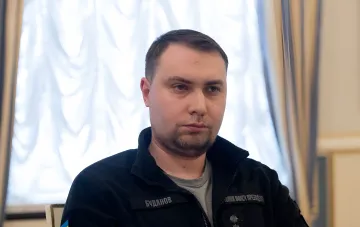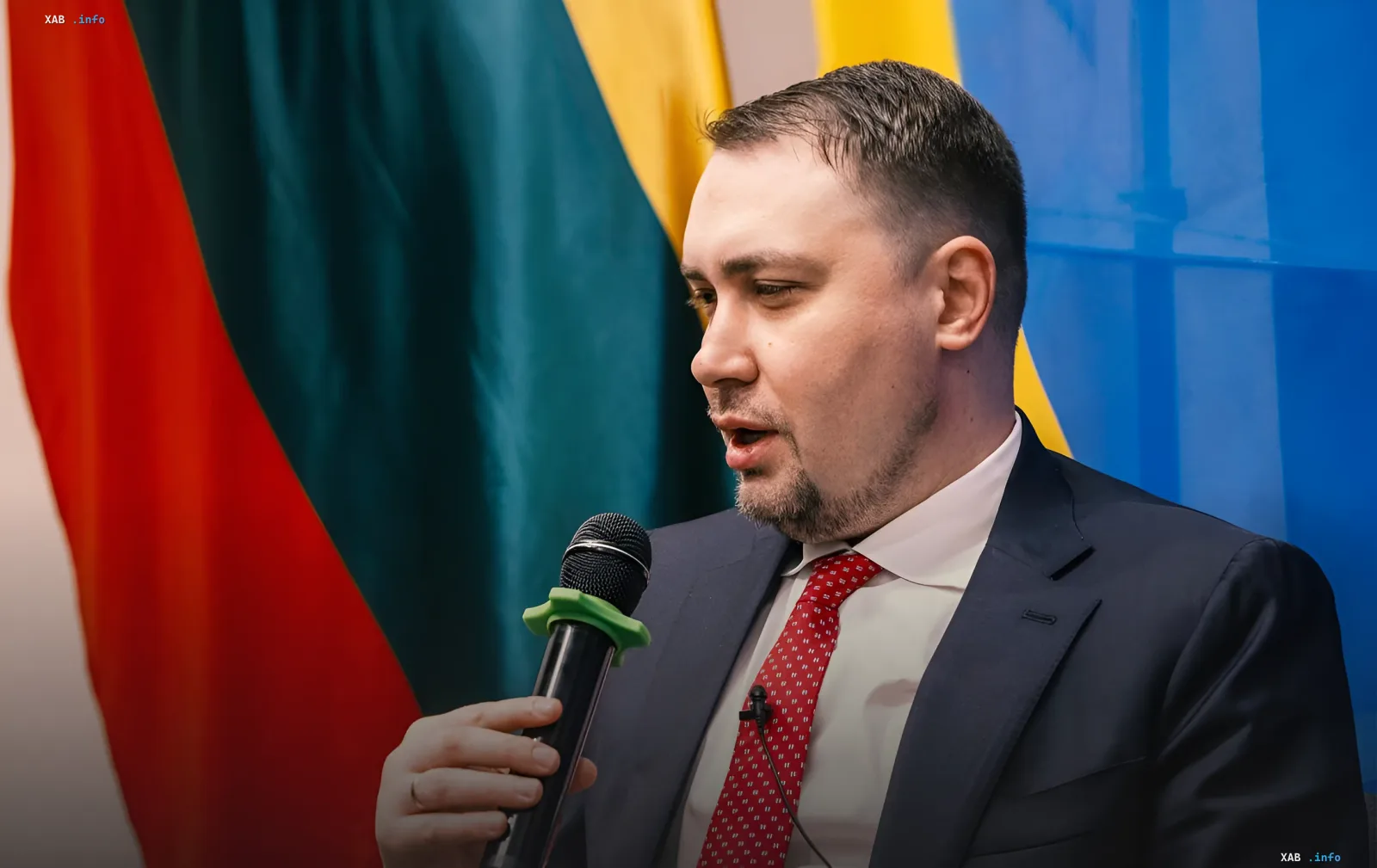
In an interview on the telethon, Head of the President's Office of Ukraine Kyrylo Budanov revealed details of negotiations with the Russian side that, according to him, took place last summer. He said that at the time, his counterparts in Moscow essentially considered the conflict resolved and began the conversation with the phrase that “the war is over” and “there is nothing to discuss.” In Budanov's assessment, this was a consequence of the Russians misinterpreting events inside Ukraine.
“The War Is Over”: How Moscow Got It Wrong in 2025
Budanov recalled that during one of the negotiation rounds, the Russians openly declared the war to be over. “I remember, a year ago, when there were the first cardboard protests, the topic was completely different — just an interesting fact. I was holding negotiations with the Russians on one of the days. And they started the conversation by saying that, well, the war is over, there is basically nothing to discuss,” RBC-Ukraine quotes him. Thus, according to the head of the President's Office, in 2025 the Russian side was building into the negotiation agenda a scenario in which the Ukrainian conflict had already effectively lost its meaning.
Protests as a “Coup”: Moscow's Version
When Budanov asked what exactly his counterparts meant, they, according to him, called the protests in Ukraine a “coup.” “They say, we all know, the Western backers have invested, everything will work out now, we basically met well, but we will talk about other terms now. You will have a different country,” he recounted the Russian side's words. The second argument, according to his recollection, was the claim that “the Western agents have already done everything” at the protests. Budanov emphasized that on this basis, in his assessment, Moscow was counting on a change of terms and even on a “different country.”
Budanov's Response: “You Don't Understand Ukraine”
Reacting to these statements, the head of the President's Office, according to his own retelling, replied: “Well, what agents? Stop wasting useless resources on people who are feeding you open disinformation or simply mistaken views. You simply don't understand what is happening. You don't understand Ukraine and you never will.” He added that after these events “everything calmed down, the corresponding decisions were made, and everything became fine.” Budanov also noted that subsequently the Russians admitted: “we were wrong,” although they expressed regret that “such a chance” had been missed.
Contradictory Data
Here it is important to distinguish between two versions of events. The Ukrainian side, represented by Budanov, characterizes the events of 2025 as peaceful protests with homemade (“cardboard”) slogans, which subsided on their own and did not lead to a change of power. The Russian side, according to the same Budanov's recollections, interpreted the same events as an organized “coup” with “Western investment,” capable of changing the state. These two interpretations of the same episode fundamentally diverge: for Kyiv it was a local protest, for Moscow — an alleged systemic scenario. There is no independent confirmation of either version in open sources as of the time of publication; both sides describe the situation through the prism of their own negotiation expectations.
Current Context: Why the War Cannot Be Stopped Now
Beyond the retrospective, Budanov outlined the current position in the same interview. As reported by 24 Channel, Pravda.Ru, and Korrespondent, the head of the President's Office stated that stopping the war now is impossible and unrealistic. This directly echoes his own words that in 2025 Moscow mistakenly believed the conflict was over: by his logic, neither then nor now do external events determine the actual course of hostilities and the negotiation track.
September Negotiations: What Comes Next
Against the backdrop of these statements, Budanov announced a new meeting of the Ukrainian and Russian delegations within the framework of negotiations on ending the war. According to available data, it will most likely take place in September 2026. Earlier, according to RBC-Ukraine, the head of the President's Office also mentioned that during CIA Director John Ratcliffe's visit to Moscow, the war in Ukraine was one of the topics of discussion, and he called the idea of mobilizing women in Ukraine, which appeared online, strange. The totality of these signals indicates that the negotiation track is being maintained, but its participants, in Kyiv's assessment, still diverge in their basic understanding of what is happening.