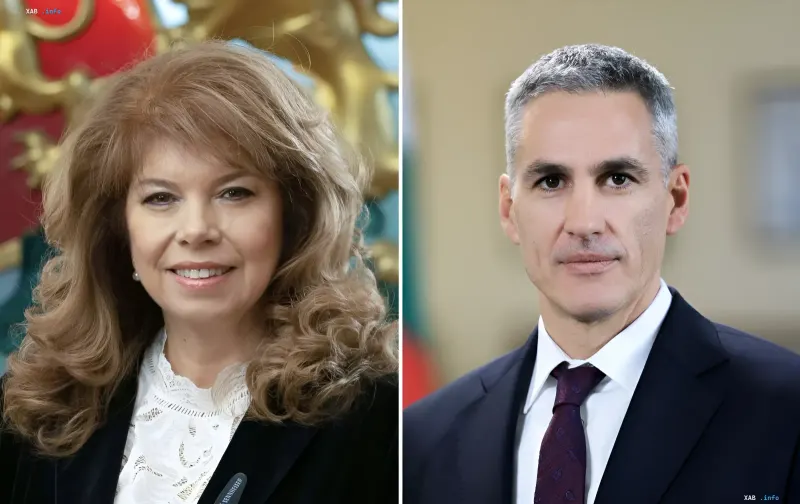
On Sunday, November 1, 2026, Bulgarian citizens are deciding the country's president in a runoff vote. About 6.6 million voters have the right to cast a ballot, with polling stations open from 7:00 AM to 8:00 PM local time, and hours can be extended if necessary, but no later than 9:00 PM — the same rules apply to polling stations abroad. The runoff features incumbent Head of State Iliana Yotova and former interim Prime Minister and ex-central bank deputy governor Andrey Gyurov. The Central Election Commission must announce the final results of the presidential and vice-presidential elections within three days after the vote.
First Round: Low Turnout and Two Frontrunners
The first round of the presidential election took place on October 25, 2026, featuring 27 pairs of presidential and vice-presidential candidates. According to the voting results, the Iliana Yotova and Kiril Valchev ticket won 34.76% of the vote, while their closest competitor, Andrey Gyurov running with Georgiy Kandev, secured 31.95%. Since neither ticket obtained the required majority to win in the first round, the race moved to a second round. According to French radio station RFI, turnout in the first round was extremely low at around 22%, which itself became one of the campaign's notable features.
Two Candidates and Two Political Orbits
Iliana Yotova is 62 years old, a journalist by training, a former Member of the European Parliament, and served for nine years as vice president under President Rumen Radev. Her political trajectory is closely tied to Radev himself, who took over the government after winning the April parliamentary elections; a convincing result for Yotova in the elections could strengthen the prime minister's position. Andrey Gyurov is 50 years old, a former lawmaker backed by an alliance of pro-Western parties running on an anti-corruption platform. In February, the incumbent president appointed him interim prime minister, tasking him with organizing the general elections.
Main Divergence: Position on Ukraine and Russia
The key difference between the candidates lies in their approach to Moscow and the war in Ukraine. Rumen Radev, with whom Yotova is aligned, opposes providing military aid to Ukraine and imposing sanctions on Russia, while calling on the EU to resume relations with Moscow. Yotova herself refused to blame the Kremlin for recent drone attacks in the Black Sea, citing a lack of evidence, and called for a moratorium on such attacks without specifying how to enforce it. Gyurov, by contrast, consistently supported Ukraine during his tenure as interim prime minister and signed a ten-year security cooperation agreement with Kyiv — a step that became one of the campaign's most prominent markers.
What the Outcome Will Change: Ceremonial Role and Political Balance
The role of the Bulgarian president is predominantly ceremonial: the head of state holds veto power, but parliament can override it with a majority vote. Therefore, the outcome of the runoff does not mean an automatic shift in the country's foreign policy course, but it could influence the domestic political balance and public discussions on support for Ukraine. The voting results will be announced within three days after November 1, when the Central Election Commission tallies the final results.