Russian company "Bureau 1440" has completed testing of a broadband satellite communications system on board the nuclear icebreaker "Ural". The check was carried out during the vessel's actual voyage from Murmansk to Dickson, making it possible to evaluate the solution's performance under Arctic navigation conditions. According to the developer, throughout the entire transit the crew maintained a stable communications channel with the shore: voyage participants held video conferences, consulted with specialists in Moscow, and transmitted medical data in near real-time.
Testing under Arctic voyage conditions
A key test scenario was video communication with the management of Atomflot. The icebreaker captain held a video conference with enterprise representatives in Murmansk and reported on the completion of the voyage assignment. This scenario demonstrates the possibility of using a satellite channel for operational management and reporting in conditions where traditional terrestrial communications are unavailable or limited. The transit from Murmansk to Dickson takes place across the waters of the Northern Sea Route, where terrestrial network coverage is absent, making the satellite channel the primary means of communication.
Medical scenarios and data transmission
Particular attention during the tests was paid to medical tasks. Medics on board the icebreaker held an online consultation with specialists from the A.I. Burnazyan Biophysical Center in Moscow. In addition, the results of medical examinations of one of the crew members were transmitted from the ship to the capital to clarify the diagnosis. According to the developer's statement, the system made it possible to transmit bulky information directly during the voyage without waiting for the ship's return to port, which is important for prompt decision-making regarding the crew's health condition far from shore.
Technical architecture of the solution
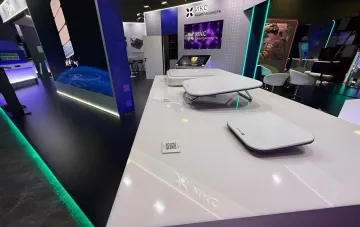
The "Bureau 1440" complex includes its own low-Earth orbit satellite constellation "Rassvet", ground infrastructure, and the 1440.ULTRA subscriber terminal. It is precisely the combination of low-Earth orbit satellites, ground stations, and the onboard terminal that provides a broadband channel sufficient for video communications and the transmission of voluminous medical data. The company views northern shipping as one of the promising areas for applying the technology, where the need for reliable broadband communications is especially high due to the lack of ground infrastructure.
Context: the "Rassvet" constellation in the sights of intelligence
The industrial base of the "Rassvet" project has previously come to the attention of foreign intelligence services: according to the Main Directorate of Intelligence of the Ministry of Defense of Ukraine, a list of 49 Russian and Belarusian enterprises involved in creating the constellation was published. This information does not directly relate to the described tests on the icebreaker "Ural", but underscores the strategic significance of the low-Earth orbit satellite segment in which the "Bureau 1440" system operates.