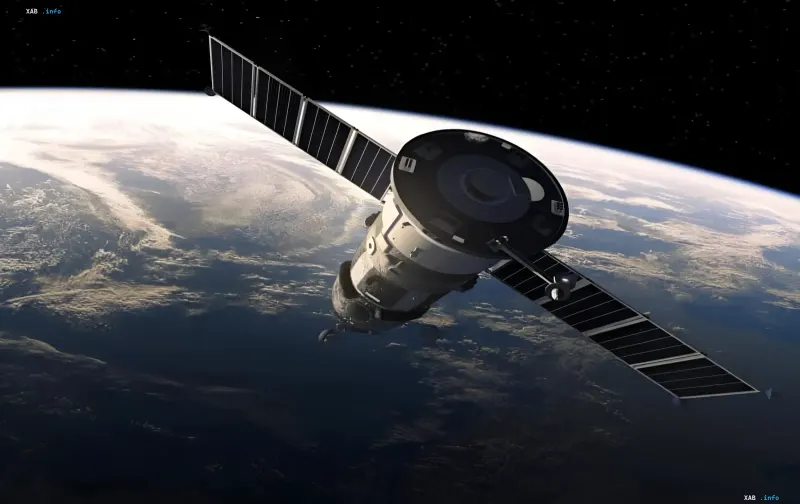
On October 30, Russia lost another spacecraft of its 'Rassvet' low-orbit satellite internet system. The satellite deorbited and burned up in the dense layers of the Earth's atmosphere after spending no more than three months in space following its launch. This was reported by RBC-Ukraine, citing data from the American Aerospace Corporation and the Defense Express publication.
What happened to the spacecraft
The lost spacecraft — Rassvet-3 No. 17 — was launched on July 19, 2026, from the Plesetsk cosmodrome as part of the second batch of serial satellites. According to Defense Express, it likely failed to activate its propulsion system, which is necessary for orbit correction. Due to the resistance of the residual atmosphere, the spacecraft gradually lost altitude until it burned up upon entering the dense layers of the Earth's atmosphere.
Second case within a year
This is already the second serial satellite of the Russian 'Rassvet' constellation that Moscow has lost since launch. The first spacecraft — Rassvet-3 No. 4 — deorbited on June 6; it had been launched on March 23 as part of the first batch. Thus, two spacecraft have been withdrawn from the constellation within a few months of operation, indicating a recurring nature of the failure.
Not all spacecraft are losing altitude
At the same time, not every satellite in the system demonstrates similar dynamics. The Rassvet-3 No. 23 spacecraft also initially began losing altitude and dropped to about 220 km, but in late October it resumed maneuvers to raise its orbit. According to the Latitudinal monitoring project, on October 29 it was at an altitude of about 296 km and continued to gain altitude.
Project context
'Rassvet' is a Russian low-orbit satellite internet system developed by the 'Bureau 1440' company. Moscow positions it as an alternative to the American Starlink network and plans to use it for communications, including for military purposes such as drone control. In 2026, Russia conducted two launches of serial satellites: on March 23 and July 19, 16 spacecraft were launched into orbit each time, totaling 32. Previously, authorities announced plans to create a constellation of 350 satellites with the prospect of expansion to 900, and commercial operation was announced for 2027. Reminder: On September 1, it was reported that the second batch of 'Rassvet' satellites failed to climb to the required altitude.
What this means for the project
The repeated loss of satellites indicates technical difficulties that the Russian project is facing at the stage of deploying the orbital constellation. For a system scheduled for commercial operation in 2027 and intended to be used for military tasks among others, the reliability of maintaining spacecraft in a given orbit is a critical parameter, and current incidents point to problems precisely in this area.