Roscosmos head Dmitry Bakanov, at a meeting with heads of diplomatic missions, put forward an initiative aimed at creating an alternative global broadband satellite internet infrastructure. According to him, Russia is building its own low-orbit broadband internet segment and is inviting all partner countries to connect to it. Bakanov identified a key difference from existing Western counterparts, particularly Starlink: the ability to ensure information security at the level of each individual state by placing system stations and segments directly within participating countries, under the control of their own national security agencies.
Technological Architecture of the 'Rassvet' Constellation
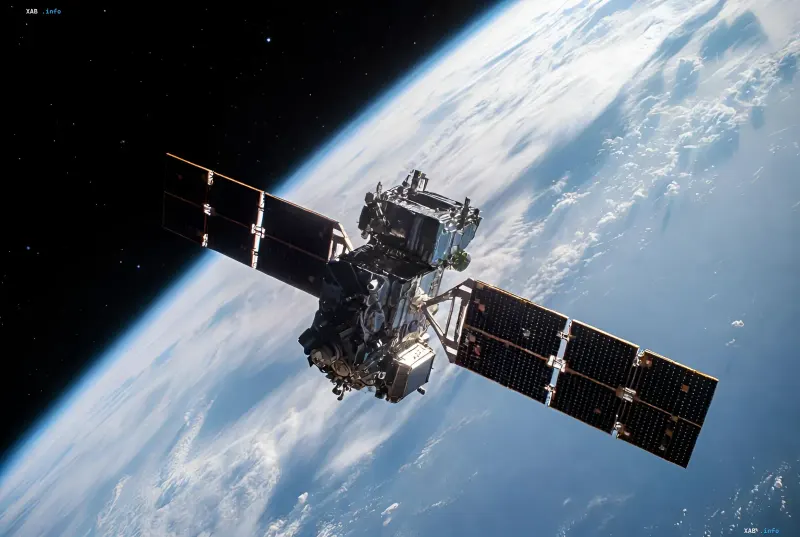
The foundation of the announced system is the 'Rassvet' low-orbit satellite constellation, being developed by the company 'Bureau 1440'. According to Roscosmos, the first two batches of satellites were successfully launched into orbit in 2026. The satellites are built on 5G NTN (Non-Terrestrial Networks) communication architecture, which ensures compatibility with fifth-generation terrestrial mobile infrastructure. The vehicles are equipped with an upgraded power system, next-generation inter-satellite laser communication terminals, and plasma thrusters, which are expected to extend the satellites' operational life and provide flexibility in constellation management.
Deployment Phases and Stated Characteristics
According to previously published information, the development of the 'Rassvet' constellation is planned in two phases. In the first phase, it is planned to launch 300 satellites to create basic global coverage. In the second phase, the number of vehicles is expected to be expanded to 950. The stated throughput of the system is up to 1 Gbps, which, according to the developers, will provide high-speed internet access anywhere on Earth. For comparison, the Starlink constellation already has several thousand vehicles, and its target architecture is designed for tens of thousands of satellites.
Information Sovereignty as a Key Argument
A central thesis in Bakanov's rhetoric is the "complete information security" of the system. As he states, the stations and network segments will be controlled exclusively by the national security agencies of each participating country. Thus, Russia positions 'Rassvet' not just as a technical product, but as a tool of digital sovereignty that is an alternative to the American model, where Starlink infrastructure is under the jurisdiction and control of a single corporation. This argument will likely be aimed primarily at countries that view dependency on Western telecommunications platforms as a geopolitical risk.
Military Context and Western Observer Assessment
Interest in creating a Russian satellite internet project has spiked amid ongoing combat operations, in which Starlink has become, according to many observers, a critical communication element for both Ukrainian and Russian forces. Although Starlink is not officially sold or operational in Russia, BBC reports indicate its terminals have been supplied via "grey imports" and that Russian bloggers have publicly raised funds to acquire them. In this context, the 'Rassvet' program is perceived by Western analysts primarily as a military project. The BBC notes that 'Rassvet' will be "much smaller" than Starlink and, based on available data, is aimed primarily at military needs. The company 'Bureau 1440', entrusted with the development, remains a closed structure about which very little is publicly known.
Prospects and Open Questions
As of November 2026, only the first two batches of 'Rassvet' satellites are in orbit, and there is a long way to go to reach the 300 satellites planned for the first phase. Experts point out that while plasma thrusters and inter-satellite laser links are technologically advanced solutions, they require validation under long-term orbital conditions. Furthermore, the question of which countries will express readiness to host the infrastructure of the Russian satellite network and hand over control to their national security agencies remains open for now. Nevertheless, Bakanov's initiative confirms Russia's strategic course toward creating an independent global telecommunications infrastructure capable of competing with the American model on both technical and geopolitical levels.