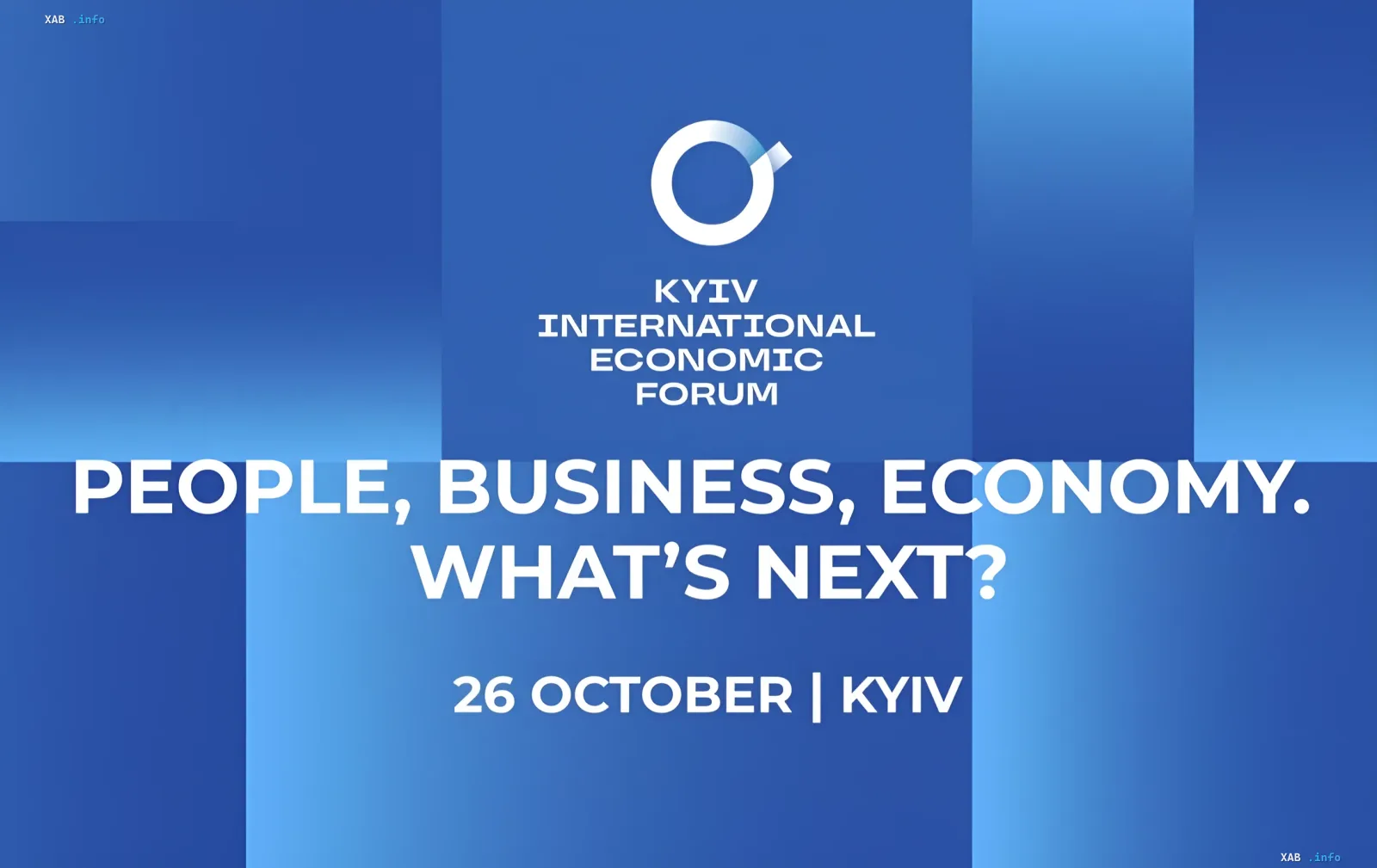
On October 26, 2026, Kyiv will host the 12th Kyiv International Economic Forum (KCEF), bringing together over 500 participants, including owners and top executives of Ukrainian and international corporations, government officials, investors, diplomats, and leading experts. The main theme of this year's large-scale event will be the conceptual question 'People. Business. Economy. What's next?', reflecting the deep challenges of the current historical moment.
New Economic Realities and Challenges
In the fifth year of the full-scale war, pressure on Ukraine's economic system is multiplying. Production facilities, critical infrastructure, the energy sector, ports, railways, and logistics hubs remain under constant attack. According to estimates by the Ministry of Economy of Ukraine, direct damage from destruction can reach about 10 billion US dollars annually, while cumulative losses from the blockade of sea routes and logistics have already cost the Ukrainian economy about 1.5 percentage points of GDP in 2026. World Bank experts in their October report revised macroeconomic forecasts, pointing to a slowdown in GDP growth to 1.2% this year and 1.5% in 2027, assuming active hostilities continue.
Strategy for Survival and Business Resilience
As noted by Vasily Khmelnitsky, initiator of KCEF and founder of UFuture holding, shifting the focus of discussions from post-war reconstruction to ensuring the current resilience of the economy has become a vital necessity. Businesses need applied solutions to protect assets, preserve production chains, and continue investment activities under extreme conditions. During panel discussions, participants will discuss in detail the adaptation of state industrial policy, energy security, international cooperation, and the deepening of European integration against the backdrop of ongoing threats.
Frontline Region Experience and Practical Cases
The Ukrainian economy has already demonstrated an unprecedented ability to adapt in crisis situations: from restructuring fuel logistics after the destruction of the Kremenchuk Oil Refinery in 2022 and large-scale enterprise relocation to launching an alternative grain corridor and actively implementing distributed energy generation. As KCEF CEO Yuriy Pivovarov emphasizes, the dialogue about the future is built on finding concrete steps that business, the state, and international partners must take immediately.