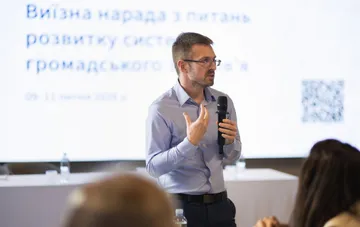
On October 15, 2026, the Cabinet of Ministers of Ukraine adopted a resolution that significantly updates the terms of the state mortgage program «eOselya». According to the press service of the Ministry of Economy and Environment, the key focus of the changes is on expanding lending for young families and introducing additional incentives related to having children. Deputy Minister of Economy and Environment Vitaliy Petruk emphasized that the program remains one of the most successful government initiatives in housing policy, as it offers «profitable and flexible housing loan conditions» and constantly adapts to the needs of the population.
New «Youth Model» and Tiered Rate
Among the main innovations is the creation of a separate target category of citizens, which the Ministry of Economy calls the «youth model» of lending. A tiered base interest rate is introduced for this category, which is additionally reduced by 2 percentage points for each child in the family. At the same time, a lower limit is set: the minimum rate cannot drop below 0.1%. According to Petruk, it is the combination of the tiered rate and the child discount that creates the main incentive for young families to apply for preferential mortgages. The resolution entered into force following its adoption by the government on October 15, 2026.
Expansion of Housing Selection Parameters
For participants of the «youth model», requirements for the purchased property have been significantly relaxed. The cost and area of housing purchased under this category can exceed the standard parameters set for the standard program by up to 40%. This means that young families get the opportunity to choose more spacious apartments or those located in more expensive locations without losing the right to preferential lending. Previously, such parameters were strictly limited, narrowing the choice in the secondary and new housing markets.
Frontline Regions and Changes in Suretyship
A separate block of changes involves stimulating mortgage lending in frontline regions. Preferential conditions for purchasing housing with an operation period of 20 years or more now also apply to the Mykolaiv region. In addition, the resolution clarifies the definition of a property surety: now it is «a third party who is not a debtor under the secured obligation, but provides their own property or property rights as collateral or a mortgage». Family members of the candidate or borrower can act as property sureties. A separate term has also been introduced for family members of internally displaced persons (IDPs) in whose favor property is purchased.
Digitalization Through Diia and Anti-Fraud Mechanisms
Significant attention is paid to strengthening digital tools. Now, a program participant who is an IDP is required to submit information about relatives and spouses in electronic form via the Diia platform. This simplifies verification and shortizes processing times. In parallel, the rules for checking the property status of candidates have been changed: the 36-month period for checking facts of real estate alienation is now calculated not from the date of application submission, but from the date of conclusion of the loan agreement. The Ministry of Economy explained that such a change «prevents abuses during the loan processing period» by closing the time window in which a candidate could formally alienate objects before the actual signing of the agreement.
Context: How eOselya Works in 2026
The «eOselya» program is implemented by the Ministry of Economy and Environment jointly with the Ministry of Digital Transformation and PJSC «Ukranfinzhytlo». Partner banks include Oщадбанк (Oschadbank), Приватбанк (PrivatBank), Укргазбанк (Ukrgasbank), Globus Bank, Sky Bank, Sense Bank, Bank Credit Dnipro, TASCOMBANK, BISBANK, and Radabank. According to data previously announced in open sources, the total volume of mortgage lending in Ukraine has reached 50 billion hryvnias, of which 93% of new loans come precisely from «eOselya». Recently, the Verkhovna Rada also supported in the first reading a bill allowing IDPs to use housing vouchers to mortgage housing, further expanding the toolkit for displaced persons in the real estate market.