Ukraine's Ministry of Economy and Environment has confirmed that it has prepared and submitted for government review amendments to Cabinet of Ministers Resolution No. 1541, which governs the mechanism for partial compensation of the cost of property and insurance premiums against military risks. The ministry said this in response to a request from RBC-Ukraine. According to the ministry, the updated version of the document may cover new regions — in particular, Kyiv is to be included in the program as a high-risk territory — and will also significantly expand support for the fuel sector, for which the rules for compensating losses are reportedly to be changed. At the time of writing, the document was still under government review; the official text of the approved amendments will be published on the Cabinet of Ministers' website after the corresponding resolution is adopted.
Kyiv as a High-Risk Territory
According to information obtained from several sources, a key innovation in the draft amendments to Resolution No. 1541 may be the recognition of Kyiv as a territory of heightened military risk. This means that the capital's businesses, which previously did not fall under the program's partial compensation terms, will be entitled to reimbursement of part of their losses from destruction and insurance premiums. For ordinary residents and entrepreneurs, this could mean access to financial support mechanisms that until now have been available mainly in frontline and occupied regions. However, experts emphasize that the specific parameters — the size of compensation, the list of covered risks, and the procedure for submitting applications — will be fixed only after the official signing of the resolution.
The Fuel Sector and Gas Stations: New Rules
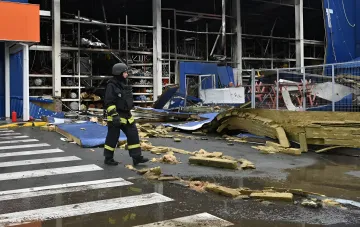
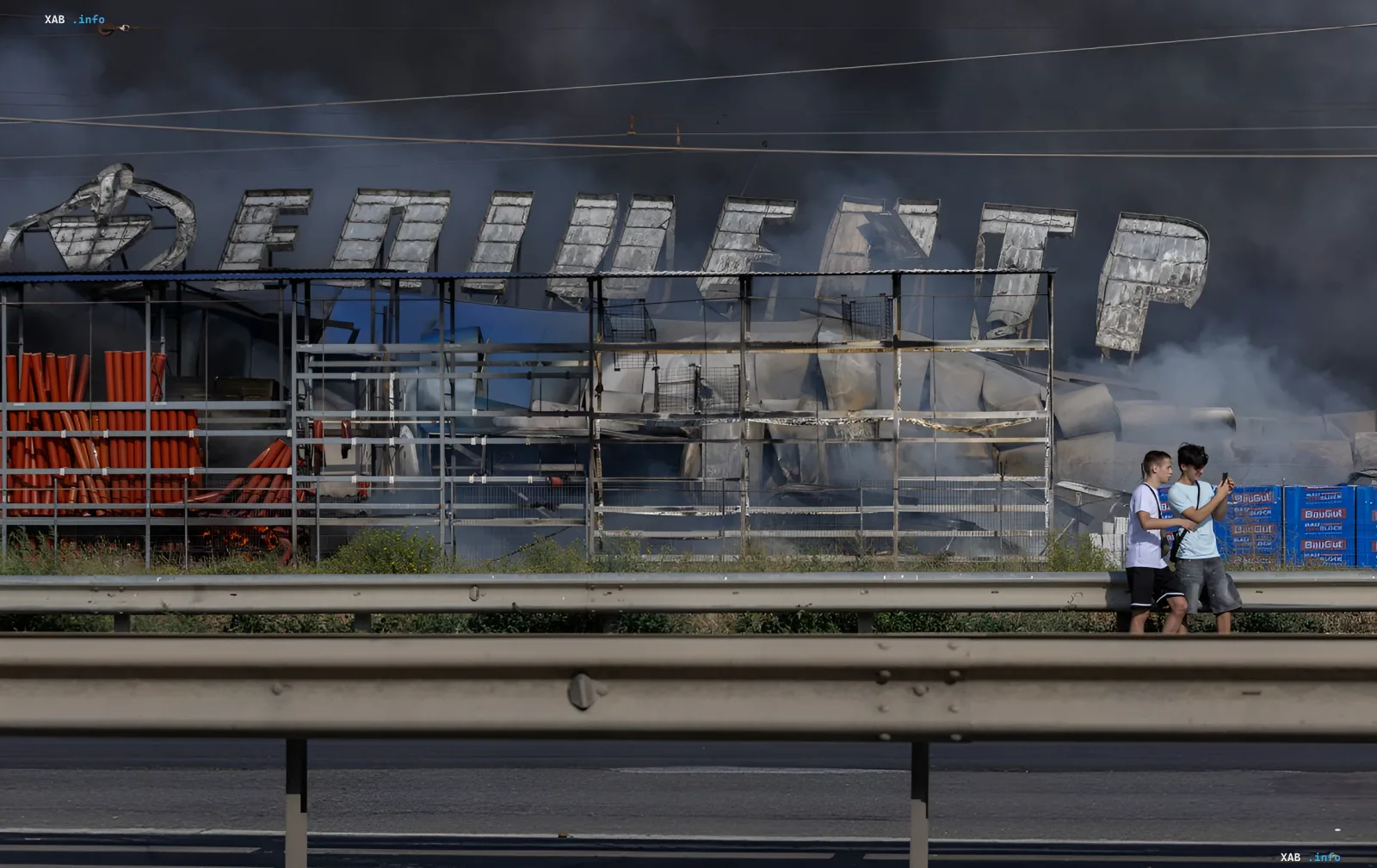
A separate block of amendments concerns the fuel sector. As follows from data obtained from the ministry, the terms of participation in the compensation program are planned to be reviewed for gas stations and other enterprises in the fuel segment. Against the backdrop of ongoing strikes on energy and fuel infrastructure recorded across the country, expanding support for this sector is seen as a measure to ensure the stability of logistics chains and prevent fuel shortages. The image of a destroyed facility with a distinctive sign and plumes of smoke, accompanying the news, vividly illustrates the scale of damage that infrastructure is subjected to in the conditions of armed conflict.
Special Insurance Fund and the Financing Question
In parallel with the refinement of Resolution No. 1541, the Cabinet of Ministers is considering the possibility of creating a special insurance fund to help businesses suffering from attacks by the Russian Federation. To fund this fund, sources say, it is planned, among other things, to increase the value-added tax rate. A likely VAT increase is already built into the draft state budget for 2027: the government proposes raising the rate to 21 percent. At the same time, implementing this measure will require amending existing legislation, which means an additional stage of parliamentary procedures. Economy Minister Alexander Kravchenko previously explained that, due to Russian strikes, Ukrainian businesses could incur total losses of around 10 billion dollars, making the question of systematic financing of compensation and insurance mechanisms critically important.
Contradictory Data
The provided sources contain no direct discrepancies in figures or dates, however, there are nuances that require attention. On the one hand, the Ministry of Economy states that the program "may cover new regions," which is formulated as a prospect rather than an already adopted decision. On the other hand, a number of specialized publications (zn.ua, my.ua) interpret the preparation of the amendments as a de facto intention to include specifically Kyiv in the list of high-risk territories, using more categorical rhetoric. In addition, the question of raising the VAT to 21 percent appears in the context of the 2027 budget draft, i.e., as a planned measure rather than an already effective rate. Thus, at the current moment, neither the expansion of the program's geography, nor the change of rules for gas stations, nor the creation of the insurance fund has entered into force and remains at the review stage. The difference between "a draft has been prepared" and "a resolution has been adopted" is significant and must be taken into account when interpreting the news.
What Comes Next
According to the Ministry of Economy and Environment, after the review by the Cabinet of Ministers is completed, the official text of the resolution with the approved amendments will be published on the Cabinet of Ministers' website. Until that time, businesses are advised to monitor publications on the government portal and not to build financial plans based on preliminary wording. The creation of the insurance fund and the VAT increase, in turn, will require approval by the Verkhovna Rada, which may take additional months. In conditions where, according to Minister Kravchenko's estimate, total military losses of businesses are approaching 10 billion dollars, the speed and completeness of implementing compensation mechanisms remain one of the key factors of the sustainability of the Ukrainian economy in 2026–2027.