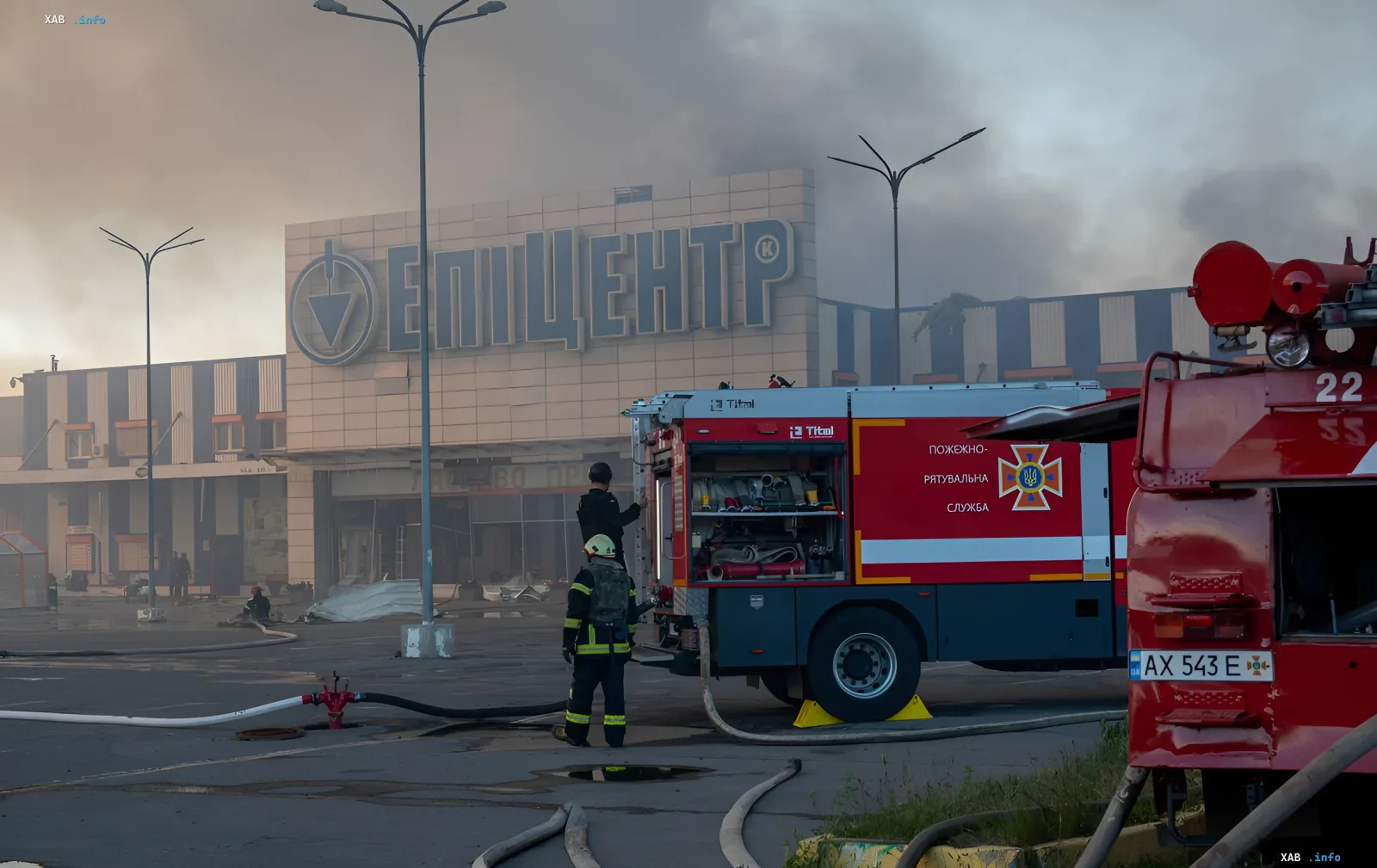
The Cabinet of Ministers of Ukraine has expanded the existing insurance program for military risks for businesses and simplified the procedure for obtaining compensation for property damaged or destroyed as a result of hostilities. According to RBC-Ukraine, this was announced by Prime Minister Serhiy Horytskyi in his Telegram channel. In his words, the draft state budget for 2027 includes a separate expenditure item for insuring military risks; however, given the acuteness of the situation, the decision to expand the existing mechanism was made already now — "business needs support today," the head of government emphasized.
What changed in the insurance mechanism
The key change concerns the simplification of the compensation procedure: entrepreneurs whose property was damaged or destroyed as a result of Russian strikes will be able to apply for reimbursement under more flexible rules. Previously, the Cabinet of Ministers had already considered adjustments to the mechanism for partial compensation of property value and insurance premiums against military risks; however, this time it is a matter of a decision that has been effectively adopted, rather than a stage of discussion. Economy Minister Oleksandr Khrachenko had earlier estimated the potential losses of Ukrainian business from Russian attacks at $10 billion, which makes the expansion of insurance coverage one of the most in-demand support instruments.
Preferential loans for the fuel sector, logistics, and processing
In parallel with the insurance expansion, the government this week expanded state support for large projects in the fuel sector, logistics, trade, and processing industry. Preferential loans can now be used for the restoration of fuel and warehouse infrastructure, the modernization of processing enterprises, and the replenishment of working capital in wholesale and retail trade. The state will compensate 5.5% per annum of the bank's base rate, and the maximum financing limit for a group of related companies is 1 billion hryvnias. "We are making these decisions under conditions of limited financial resources. But supporting entrepreneurs is necessary so that Ukrainian business can continue to operate, preserve jobs, and pay taxes," Horytskyi stated.
Financial context: budget deficit and likely VAT increase
The expansion of insurance and loan programs is taking place against the backdrop of tight budget constraints. A likely increase in the VAT rate is already built into the draft state budget for 2027: the government proposes to raise the tax from the current 20% to 21%. Implementing this step will require a change in legislation, which means the procedure must be passed through the Verkhovna Rada. It is precisely the additional tax revenues, by design of the cabinet, that are to partially finance the expanded insurance program and preferential lending to business.
Special insurance fund: idea at the development stage
In addition to expanding the existing program, the Cabinet of Ministers is considering a more ambitious initiative — the creation of a special insurance fund for systematic support of businesses suffering from Russian attacks. To fill such a fund, sources report, additional revenues from the VAT increase are planned to be used, among other things. At present, the initiative is at the development stage and has no approved parameters; however, its discussion indicates that the authorities view insurance support for business not as a one-off measure but as a long-term institutional mechanism.
Contradictory data
The provided sources contain a certain inconsistency in wording: on the one hand, Horytskyi states that the insurance program has been "expanded" and the mechanism simplified, i.e., the decision has been made. On the other hand, the same material mentions that the Cabinet of Ministers is "considering changes to the mechanism for partial compensation of property value and insurance premiums." This may mean that the expansion affected certain elements of the program (for example, the list of covered risks or the procedure for submitting applications), while other aspects — in particular, the formula for calculating partial compensation and the size of insurance premiums — are still at the discussion stage. The exact boundary between changes already adopted and those still under development is not fully disclosed in open sources at the time of publication.