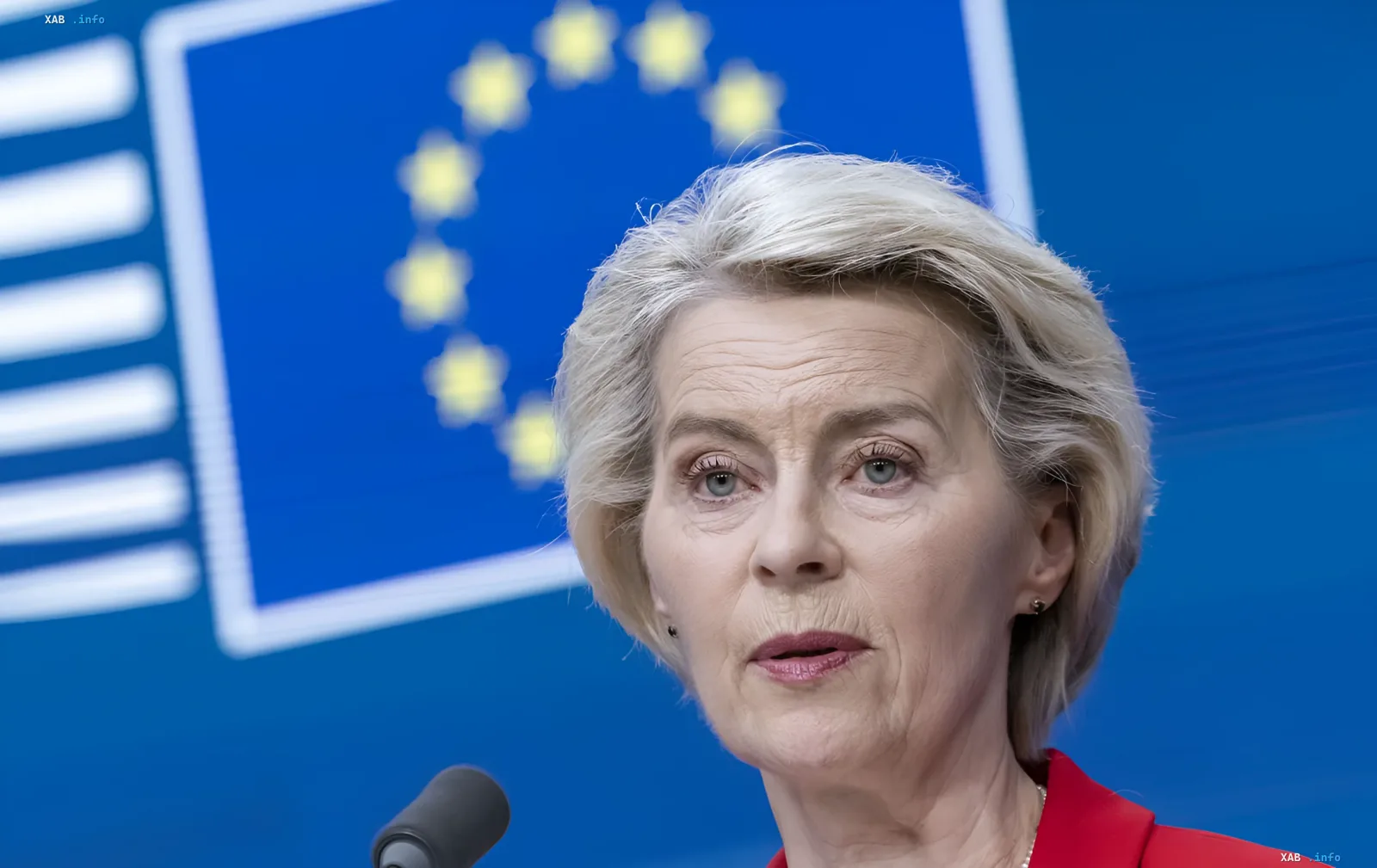
European Commission President Ursula von der Leyen publicly declared the intention to offer Canada the status of the first-ever associated member of the European Union. She announced this during her annual address to the European Parliament in Strasbourg, calling for a rethinking of traditional alliance formats amid rising global tensions. In the words of the head of the European Commission, "in the cold fragility of the modern world, new partnerships are needed," and it is precisely for this reason that Brussels is ready to "open the doors to Canada" so that it can become the first associated member of the bloc.
Statement in Strasbourg and the reaction in the hall
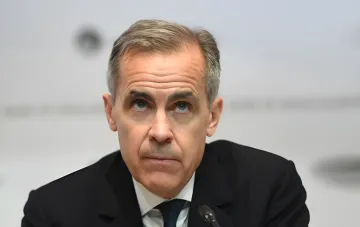
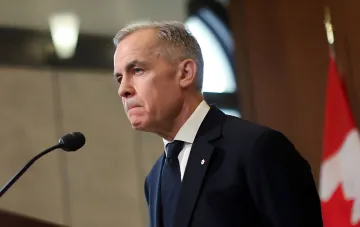
The speech was delivered as part of the traditional annual address to Members of the European Parliament, which lends the initiative significant political weight: it was voiced not in backroom negotiations but on the main podium of the EU's legislative body. Canadian Prime Minister Mark Carney was present in the hall and, according to reports, was greeted with applause from the MEPs. It is important, however, that the European Commission President's statement in itself is not a legal act: the decision to grant such a status must in any case be agreed by all EU member states, which means a lengthy and non-linear process of coordination at the level of national capitals.
Shared values and the declared areas of cooperation
Von der Leyen emphasized that Europe and Canada share a number of common values — from support for democracy and Ukraine to cooperation in the defense sector, raw materials issues, and ensuring the resilience of supply chains. In her words, the two sides plan to work together in the areas of technology, integration of defense-industrial bases, and Arctic development. Thus, the initiative is framed not as an economic project but as a broad political-strategic alliance covering security, energy, and technological cooperation.
Contradictory data
There is a notable gap between the political signal and the legal reality, which diplomats and analysts stress above all. On the one hand, the European Commission President publicly signaled readiness to "open the doors" to Canada, which the media interpret as a concrete proposal. On the other hand, historically the European Union has resisted flexible alliances without a clear legal status, and the specific mechanism for such associated membership, according to diplomats, has not yet been developed. In other words, there is a considerable distance between the loud statement on the podium and a working legal construct: the status exists for now only as a political idea, not as a formalized treaty instrument. This mismatch between public rhetoric and the absence of a mechanism is the key contradiction in the current picture.
Trade barriers and diplomatic caveats
Trade issues remain an additional barrier. Canada continues to protect its sensitive sectors — telecommunications and dairy — which traditionally complicates any deepened trade agreements with the EU. It is precisely these "red lines" of Ottawa that could become a stumbling block in the attempt to build a full associated status, which implies closer integration than that of an ordinary trade partner. Thus, even with the political will of Brussels and Ottawa, the practical implementation of the initiative runs into specific sectoral restrictions.
Context: Ottawa's pivot away from Washington
The initiative unfolds against the backdrop of Russia's protracted war against Ukraine and the deterioration of trade relations between both the EU and Canada on the one hand and the administration of U.S. President Donald Trump, as well as China, on the other. Mark Carney himself had earlier stated the desire to create a "unique alliance" with the European Union without Canada's full accession to the bloc; this came after trade negotiations between Canada and the United States became more complicated and mutual tariffs were introduced. According to The Wall Street Journal, the Canadian government is considering options for creating a special status for the country within the EU and is seeking to strengthen its presence in European financial and defense initiatives, including developing a role in the mechanism for providing Ukraine with a loan secured by frozen Russian assets. Notably, in May Germany had offered Ukraine a similar status of associated membership as an intermediate step toward full EU accession, which makes the Canadian initiative part of a broader trend in the search for flexible formats of integration.
What's next: the summit in Montreal
More substantive discussions of this issue are expected to begin at the Canada–EU summit in Montreal at the end of October. It is there, most likely, that the specific parameters of the future status, trade caveats, and the roadmap for defense-technological cooperation will be discussed. Until that moment, the initiative remains at the level of a political intention voiced by the European Commission President, rather than a formalized treaty decision. Nevertheless, the very fact of the public proposal already changes the optics of the relationship between the two sides and locks in a course toward deepening ties in a situation where both Brussels and Ottawa are looking for ways to reduce their dependence on Washington.