The Government of Canada has announced a new package of restrictive measures against Russia. As reported by RBC-Ukraine citing a cabinet press release, an additional 38 organizations and 24 individuals have been added to the sanctions lists. Canadian Foreign Minister Anita Anand stated this, emphasizing that Ottawa "steadily supports Ukraine" and will continue to increase pressure on the Russian Federation until it stops its aggression and respects the sovereignty and territorial integrity of Ukraine.
Priority: Reducing Missile Capabilities
According to Anita Anand's statement, the key objective of the new package of restrictions is to weaken Moscow's ability to launch missile strikes on Ukrainian cities. The press release explicitly states that Canada is taking measures aimed at reducing Russia's missile potential. This means that the sanctioned list likely includes enterprises and individuals involved in the production, supply of components, or maintenance of missile systems. This approach aligns with the overall strategy of Western partners, who have systematically targeted supply chains for the Russian military-industrial complex since 2022.
Targeting Financial Instruments and Crypto Exchanges
In addition to direct restrictions on specific organizations and individuals, the new package aims to increase Russia's economic losses by targeting financial instruments. Notably, the press release mentions cryptocurrency exchanges which, according to the Canadian government's assessment, help sustain the so-called "war economy." This indicates that Ottawa views crypto infrastructure as one of the channels through which Russia bypasses traditional sanctions barriers and finances military expenditures. While a similar approach has been applied by several other jurisdictions, this is one of the first times Canada has explicitly named crypto exchanges in an official sanctions document.
Cumulative Effect: Over 3,500 Sanctions Since 2014
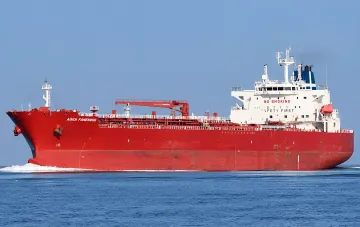
The new package is not an isolated step. According to the Canadian government, since 2014 Ottawa has imposed sanctions on more than 3,500 individuals and legal entities, as well as over 700 vessels. The grounds for these restrictions are violations of Ukraine's sovereignty and territorial integrity, as well as gross and systematic human rights violations. Thus, each new package builds cumulative pressure, narrowing the maneuvering room for Russian companies and individuals linked to the state machine.
Broader Context: Alliances, Loans, and Technological Dependence
The announcement of the new sanctions coincides with a period of intensified multilateral cooperation between Canada and Western partners. It was previously reported that Ottawa and the European Union created the "Alliance for the Future," aimed at deepening economic and technological cooperation and jointly countering global threats. In addition, Canada will join a €90 billion loan to Ukraine. Against the backdrop of these steps, Prime Minister Mark Carney separately stated serious risks associated with manipulations of the Starlink satellite system during the war in Ukraine, highlighting the danger of excessive dependence on US technologies. The combination of these statements paints a picture in which Canada is simultaneously intensifying sanctions pressure, deepening financial support for Kyiv, and rethinking its own technological strategy.