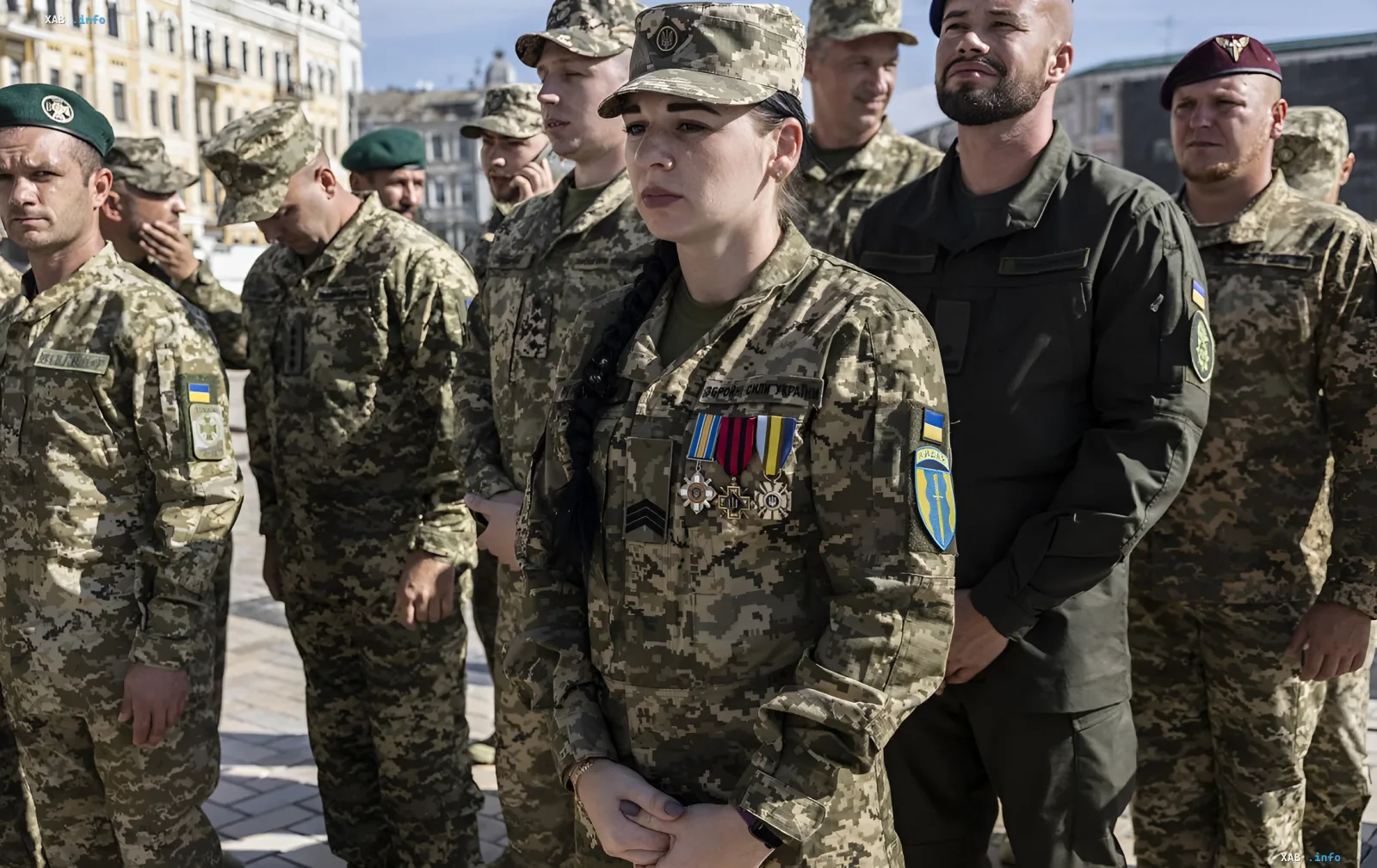
In Ukraine, a resonant statement by U.S. Presidential Special Envoy Keith Kellogg—that women should be mobilized for military service—has been commented on. Head of the Center for Countering Disinformation (CCD) at the National Security and Defense Council (NSDC), Andriy Kovalenko, made an unambiguous point in his Telegram channel: no mandatory mobilization of women is being carried out in the country, nor is it planned, and enlistment in the Defense Forces of Ukraine is possible exclusively on a voluntary basis. This is reported by RBC-Ukraine, citing the CCD head’s publication.
The American representative’s position
Kellogg was asked whether he considered the mobilization of women in Ukraine necessary. The American diplomat answered affirmatively: “Do I think women should be mobilized? My answer is yes. Because they fight no worse than men. It is very important that women, as part of society, go into service. I see no problem with this, either on a personal or on a professional level.” As an argument, he added that his wife and daughter themselves are serving in the military. It was precisely these words that prompted an official clarification in Kyiv.
The CCD’s response: voluntary only
Andriy Kovalenko emphasized that there are no decisions on the mobilization of women in Ukraine, and there will not be any. According to him, Ukrainian women may enlist in the military exclusively on a voluntary basis, and no coercion into service is applied. The CCD head also warned that the Russian side is actively using the topic of women’s mobilization to spread disinformation, including against the backdrop of similar public statements by Western officials, which are then taken out of context and presented as “confirmation” of allegedly impending restrictions.
Context: petition and debate over “hidden mobilization”
The topic remains sensitive against the backdrop of several parallel stories. An electronic petition was registered on the website of the Cabinet of Ministers of Ukraine proposing to introduce mandatory mobilization for women without children; the CCD at the NSDC has already reacted to this initiative. Separately, the thesis of so-called “hidden mobilization” of female medical workers and pharmacists is being discussed in the public sphere, appearing in a number of publications and requiring a separate fact-check.
Contradictory data
Here it is important to honestly separate two lines. On the one hand, U.S. Special Envoy Keith Kellogg publicly spoke in favor of women being mobilized, arguing this with their combat contribution and his family’s personal example. On the other hand, Ukraine’s official representative—CCD head Andriy Kovalenko—stated outright that no forced mobilization of women is being carried out in the country, is not planned, and will not happen, and that service is possible only on a voluntary basis. Thus, Washington’s position (recommendatory, in the spirit of “women should go into service”) and Kyiv’s position (the absence of mandatory mobilization) are not identical and should not be conflated. Additionally, the debate features a petition on the mandatory mobilization of women without children and claims of “hidden mobilization” of medical workers, which contradict the thesis of the exclusively voluntary nature of service and have not yet been confirmed by official decisions.