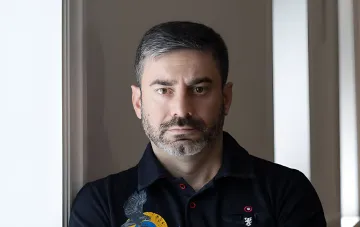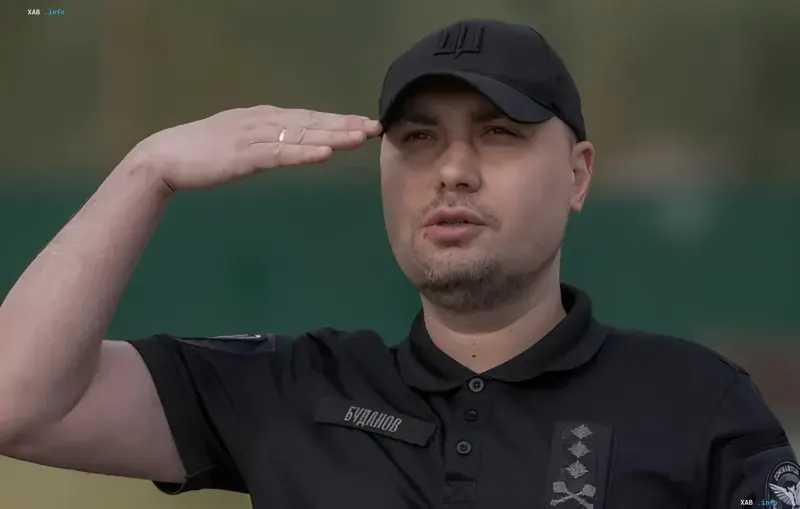
The topic of mobilization and the activities of the Territorial Centers for Recruitment and Social Support (TRC) remains one of the most sensitive in Ukrainian society. The latest trigger for a wide-ranging discussion was the recent public statement by Kyrylo Budanov, Head of the Main Intelligence Directorate of the Ministry of Defense of Ukraine, who commented to journalists on the likelihood of introducing conscription for women in the Defense Forces. The wording chosen by the official to refute the rumors was interpreted by some citizens as a hint at the phased nature of mobilization measures, which gave rise to a wave of discussion in the media space.
What Exactly Budanov Said
In response to a question about the likelihood of conscripting women, Budanov emphasized that, in his words, there is no need for such measures. "I don't see any such need, let's be blunt... There is absolutely no such need. Well, how can you mobilize women when not all men have been mobilized, for example. That is rather strange," he stated. By the speaker's intent, the phrase was meant to be a "cutting" remark designed to put the topic of possible female conscription to rest; however, in the perception of part of the audience, the logic of the statement was read as an indication of a sequence: first the mobilization of the male population, and then, if necessary, the female one.
Official Position of the Authorities
The relevant bodies reacted promptly to the resonance. The Verkhovna Rada Committee on National Security and the Center for Countering Disinformation confirmed that a bill on the mandatory mobilization of women is not under consideration, and that service for women remains voluntary; according to available data, tens of thousands of female volunteers are already serving in the Defense Forces. No official legislative initiatives on introducing mandatory conscription of women had been published as of the time of publication. Thus, at the level of regulatory acts, the state's position remains unchanged: female service is exclusively voluntary.
Why the Statement Triggered a Public Reaction
In a situation where notification activities and document checks under the TRC's work are carried out on a daily basis in a number of cities, any public rhetoric around mobilization is perceived particularly acutely. Some citizens saw in the official's words an acknowledgment that the mobilization process has not yet been exhausted with regard to the male population, which raised questions about the demographic and economic consequences of such a course. According to observers, the public expects from the authorities not speculations about "queues" for conscription, but a clear strategy for preserving human capital and transparent communication about the limits of mobilization measures.
Contradictory Data
The provided materials record an inconsistency in the attribution of the speaker's position: in one fragment he is identified as the Head of the President's Office, in another as the Head of the Main Intelligence Directorate of the Ministry of Defense. According to official data, Kyrylo Budanov holds the post of Head of the MIA, which has been taken into account in the text. In addition, there are two interpretations of the same statement: the official one — as a categorical refutation of female mobilization, and the public one — as an indirect indication of the phased nature of conscription. Both versions are presented, and the final assessment of the phrase's meaning remains a matter of debate.
Conclusion
The case of Budanov's statement once again exposed the gap between the wording customary for military and bureaucratic discourse and its perception by a society weary of war. Regardless of interpretation, the key demand of the audience remains transparency: a clear explanation of the legal grounds, limits, and timelines of mobilization measures, as well as guarantees of the voluntary nature of service for women, which should alleviate the accumulated anxiety and reduce the informational tension around the topic.