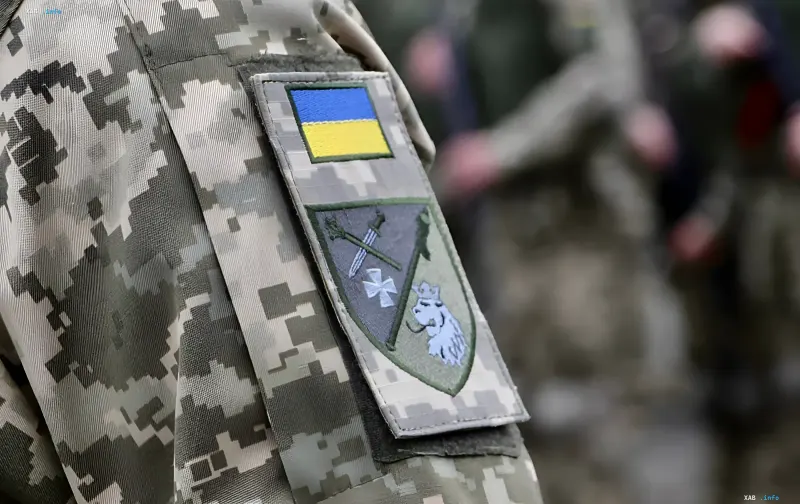
On the evening of September 8, in Lviv, a conflict broke out during mobilization notification activities, involving military recruitment center (TCC) personnel, a police officer, and a civilian woman. A video spread across social networks showing a man in military uniform grabbing and shaking a woman, while a police officer standing nearby tried to stop the serviceman by touching his shoulder and saying: 'Don't touch the woman.' The incident occurred around 5:00 p.m. The following day, on September 9, the Lviv Regional Police announced the start of an internal investigation into the law enforcement officer who was part of the notification team.
The TCC's version: 'manipulation' and an out-of-context clip
In a statement on Facebook, the Lviv Regional TCC called the circulated video 'manipulation,' claiming that only a fragment had been released online, one showing the aftermath and reactions rather than the beginning of the dispute. According to the military commissariat, during a document check a man subject to military service refused to provide his documents and ran into the entrance of a residential building. After that, the woman who was nearby, according to the TCC, began obstructing the notification team, blocked the entrance, and used tear gas against the servicemen. 'In other words, the public is being shown not the cause, but the consequence — not the start of the conflict or the citizen's flight or obstruction of lawful actions, the use of tear gas against the military, but only the moment that is convenient to present as "a serviceman used force against a woman,"' the agency emphasized. It also noted that no reports of the incident had been received on the special '102' hotline, and that the dispute was settled on the spot without further escalation.
Police launched an internal investigation
On September 9, the Lviv Regional Police confirmed the start of an internal investigation into the law enforcement officer who was part of the notification team. The special review is meant to assess any possible unlawful actions or inaction by the police officer during the conflict. Appropriate measures are promised following the review. Notably, while the TCC's statement spoke of openness to reviewing 'the actions of all participants in the incident,' the officially launched procedure currently concerns the police officer, not the serviceman.
Contradictory data
There are significant discrepancies between the versions offered by the parties. On the one hand, the viral video captures the moment when a man in military uniform physically acts against a woman — grabbing and shaking her. On the other hand, the TCC insists that this is only the 'aftermath,' not the start of the conflict, and points to the prior flight of the man subject to military service and the woman's use of tear gas against the military. The descriptions of the action itself also differ across outlets: RBC-Ukraine uses the wording 'pushed,' TSN — 'tugged and threw her to the ground,' Strana — 'strangled and threw her to the ground.' None of the versions has been confirmed by an independent investigation: the police are investigating the police officer's actions, not the serviceman's, while the TCC limits itself to a statement about 'manipulation' without providing its own video materials or evidence of the use of tear gas. Thus, the full picture of the incident remains unclear until the internal review is completed.
Context: a series of incidents involving the TCC
The Lviv case is not isolated. Recently, a military TCC officer in Chernihiv Oblast was charged with the brutal detention of a civilian, during which the man's arm was broken. In Odesa Oblast, a district TCC driver ran over a two-year-old boy during notification activities; the child was hospitalized, and the police opened a criminal case over the accident. These precedents are shaping a sustained public demand for transparency and accountability of military commissariat staff, especially given that notification activities are carried out in residential areas and are often recorded on the cameras of passersby.