The heating of a smartphone, tablet, or laptop charger during operation is a common physical phenomenon that does not always indicate a breakdown. During the charging process, the power adapter performs the complex task of converting alternating current from the electrical grid into direct current needed to power the gadget's battery. According to the laws of physics and technical specifications from leading manufacturers, part of the consumed energy is inevitably released as heat, which leads to an increase in the temperature of the charger housing. Official recommendations from companies like Samsung confirm that moderate heating of the smartphone and adapter during energy replenishment is an absolutely normal process.
Permissible Heating and Technical Nuances
Nevertheless, there is no single universal temperature threshold for all chargers on the market, as permissible values depend on the component base, housing materials, power, and engineering features of a specific model. The British electrical safety organization Electrical Safety First advises users to regularly inspect the condition of cables, plugs, and sockets. If the adapter becomes hot but retains the integrity of the plastic, emits no foreign odors, and does not melt, the device is generally functioning within normal limits. Modern electronics are equipped with multi-level protection systems; for example, if the smartphone temperature exceeds safe limits, the built-in controller automatically slows down or temporarily pauses the charging process.
Dangerous Signs of Malfunction
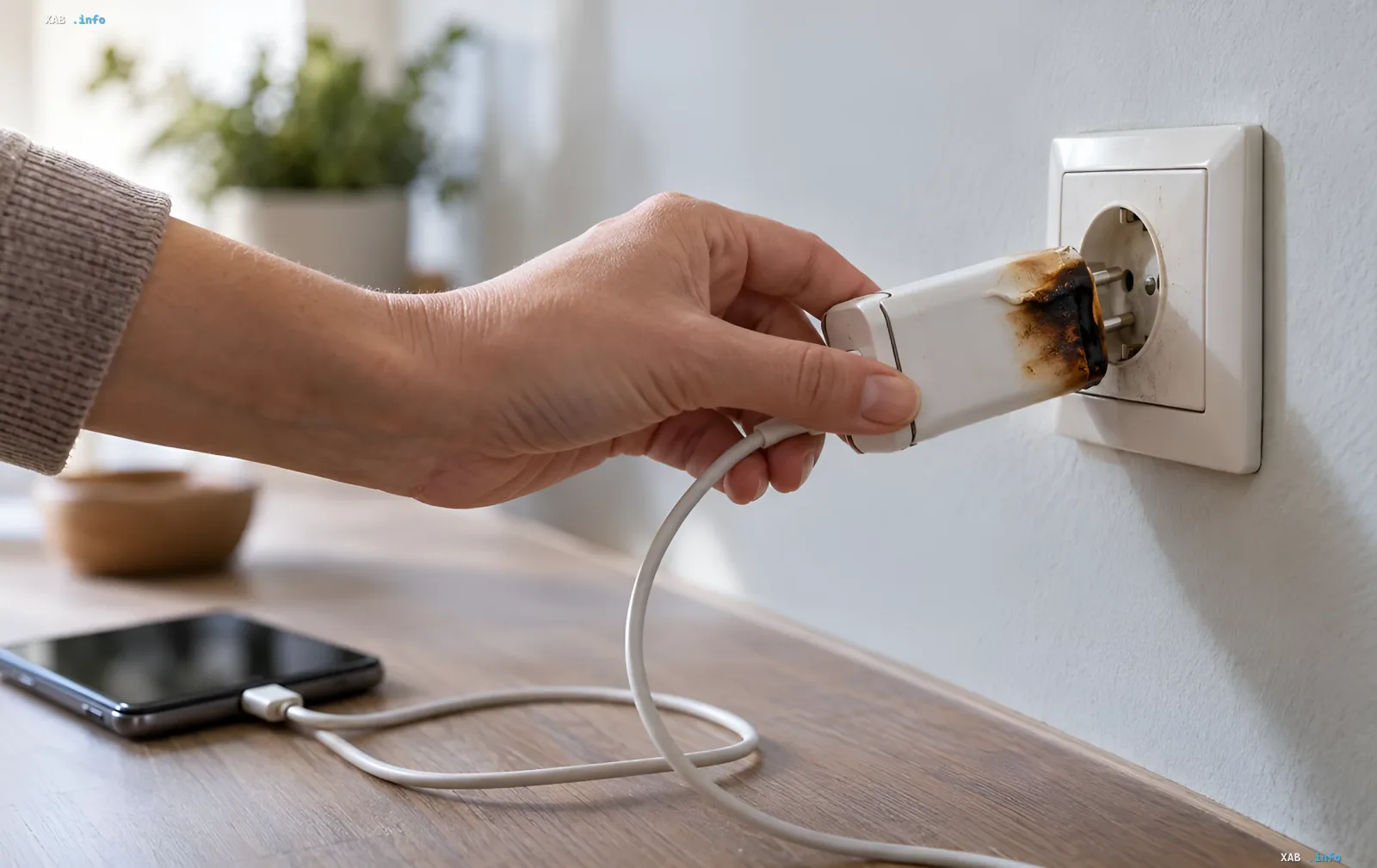
It is extremely critical to be able to distinguish routine heating from critical symptoms of malfunction, ignoring which can lead to a short circuit, damage to expensive equipment, or a fire. Alarm signals include a strong chemical burning smell, the appearance of smoke, melting of the housing, or visible sparking outside the plug contacts. According to Apple, a short-term spark when inserting the plug into the outlet is permissible, but regular sparking during operation or the tripping of circuit breakers in the panel requires immediate disconnection of the device from the mains. Specialists also emphasize the danger of using damaged wires with exposed insulation or charging devices if moisture is detected in the connector.
Contradictory Data
In the expert community and among users, there are certain discrepancies in opinion regarding how powerful universal power supplies are safe for older or low-power gadgets. The USB Implementers Forum states that the USB Power Delivery standard allows intelligent negotiation of current and voltage parameters, eliminating the supply of excessive power. On the other hand, independent tests by specialized publications (for example, analytics of GaN-based devices like Essager 65W) show that high-power compact adapters under prolonged maximum load can exhibit extremely high local heating, causing concern among consumers and requiring strict adherence to ventilation conditions.
Safe Operation and Ventilation Rules
To prevent dangerous overheating, proper organization of the space around the charging equipment is critically important. According to Google's safety instructions for the Pixel device line, adapters and charging gadgets must be operated exclusively in well-ventilated areas on hard, flat surfaces. It is strictly forbidden to cover charging blocks with blankets, pillows, clothing, or leave them on soft furniture, as this blocks natural heat dissipation. Electrical Safety First experts strongly recommend not leaving gadgets to charge unattended or at night during sleep, and purchasing certified accessories from trusted manufacturers.