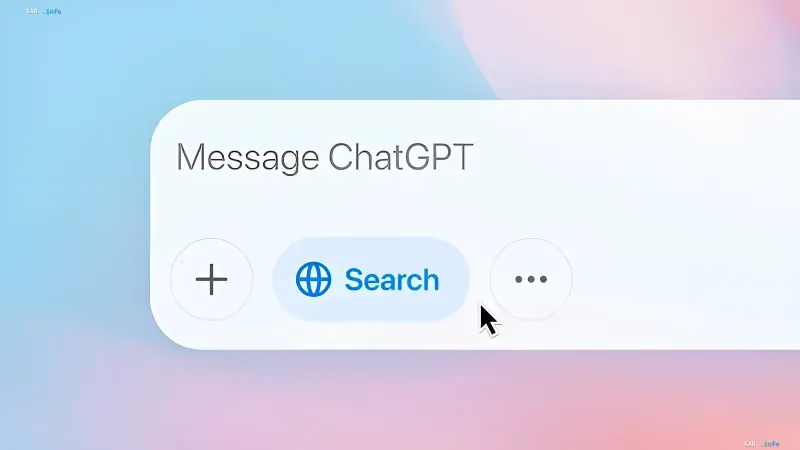
At a private dinner hosted by OpenAI in New York, Adam Fry, head of consumer products for ChatGPT, shared a series of fresh metrics regarding the service's growth. According to him, the volume of search queries users direct to ChatGPT now stands at approximately one-fifth of Google's search query volume. The conversation with journalists took place on Monday evening, marking the first time the company has publicly linked the scale of its search traffic to that of the world's largest search engine.
How OpenAI Counts a «Search Query»
Fry clarified the counting methodology: every question prompting ChatGPT to consult internet search is counted as a separate search query, meaning there can be multiple queries within a single extended dialogue. By his description, these queries are close in character to those users pose to traditional search engines—finding information about people, places, and objects, as well as finance and health questions where up-to-date and reliable facts are critical. At the same time, the company did not publish its underlying data, so the comparison with Google relies exclusively on OpenAI's own information rather than independent measurements.
Personalization as the Main Difference from Classic Search
Fry cited personalization as the key differentiator from conventional search. Unlike standard search engines that process each query in isolation, ChatGPT can correlate a question with information it already holds about the user—such as details about an upcoming trip. According to the executive, this contextual linkage makes the search interaction inside the chatbot qualitatively different from a classic web search.
Audience Growth: From 1 to 1.2 Billion Weekly Users
Separately, Fry reported on audience momentum: over the past 60 days, ChatGPT's weekly active users grew from 1 to 1.2 billion, translating to roughly 100 million new users every 30 days. The 1.2 billion milestone was first disclosed by the company in late September. «Growth is happening very rapidly,» an OpenAI representative stressed, without disclosing detailed geography or the demographic structure of the new users.
Merging Chat and Work Modes and the Outlook for the Dots Agent
At the same meeting, it was confirmed that separate ChatGPT modes—Chat and Work—will be merged into a unified interface: the system will automatically determine whether the user needs a quick answer or the execution of a more complex task involving an AI agent. According to Fry, the update will roll out «shortly,» aligning with OpenAI's announcement this week regarding the merging of modes for subscribers. As for Dots—a personal, always-on AI agent—Fry acknowledged that it requires significant computational power, and a definitive timeline for availability to users without the $100-per-month subscription is not yet set. In the future, OpenAI plans to lower the cost by utilizing more efficient models.
Limitations of the Assessment
It is important to note that all cited figures—both the share of search traffic relative to Google and audience growth—originate from OpenAI itself and are not backed by independent measurements. The company has not disclosed raw data or methodological details beyond the verbal description, leaving external observers to rely on corporate statements. Nevertheless, the order of magnitude—one-fifth of Google's search traffic and over a billion weekly users—highlights, even with caveats, a massive shift in user search behavior toward chat interfaces.