According to the monitoring organization NetAskari, a big data analysis software system built on artificial intelligence technologies is operating in Beijing. It is designed to collect information about ethnic Chinese living abroad and, as documents reviewed by NetAskari indicate, is used to develop influence operations and identify individuals of interest to Chinese authorities.
Diaspora Surveillance System
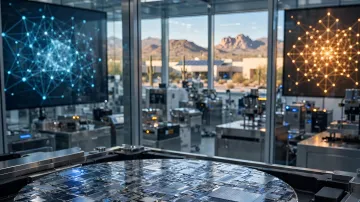
Information processing is carried out by a specialized laboratory spanning about 500 square meters, housing server racks and workstations for at least one hundred employees. The system processes massive volumes of internet data concerning Chinese diasporas worldwide. Based on this, specific individuals, their connections, and public sentiments are identified; the results are converted into analytical reports submitted to management for decision-making. According to NetAskari estimates, a significant portion of the initial information comes from American and Chinese social media, while data collection typically relies on servers located outside China and hidden behind rotating proxy server networks.
From Propaganda Campaigns to Spy Detection
In some cases, the collected data is used to conduct targeted propaganda campaigns reminiscent of Cambridge Analytica's practices. In others, the system helps identify individuals of political or economic interest to Beijing, including those who could potentially become agents or become covertly involved in intelligence activities. The scope of the CCP Central Committee's United Front Work Department includes tracking and shaping media narratives, interacting with Chinese diasporas, and attempting to establish control over influential or useful individuals and organizations for Beijing both domestically and abroad. One document mentions the executives of the Taiwanese AI development company Skymizer and the director of a Microsoft research center, outlining strategies for rapprochement with such individuals, including through informal structures.
How the Data Pipeline Works
Once collected, the data is transferred to China for processing: translation from foreign languages into Chinese is performed, keywords are extracted, and significant relationships are mapped. The United Front Department compares the obtained information with open-source databases containing details on prominent figures in media, science, and politics, as well as blacklisted individuals. These two sources form the basis of the so-called "management system," which generates conclusions about public sentiments and operation outcomes. Reports may concern public relations trends or strategies for engaging influential ethnic Chinese—Taiwanese engineers, popular bloggers, and representatives of other fields—to promote Beijing's interests.
Connection to the Nvidia Case
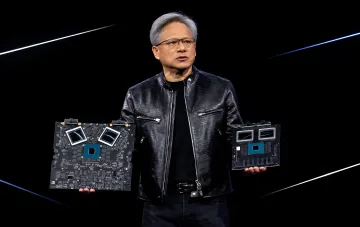
Additional context to the topic is provided by a statement from Nvidia CEO Jensen Huang, who on November 8 sent an email to company employees reporting a romantic relationship with Singaporean entrepreneur Alice Huang. According to reports, she is suspected of working for Chinese intelligence and allegedly organized the supply of Nvidia equipment to China in defiance of Washington's ban. In the same vein, it is noted that the United Front Department acts less demonstratively but pursues a similar goal—penetrating Taiwan's semiconductor industry.
Automation and the Role of Large Language Models
The United Front Department has engaged in similar activities previously, but without automation tools, its work was significantly slower. Notably, the documents available to NetAskari date back only to 2021, so it is possible that the system has significantly strengthened since then through the integration of large language models. The published information has not received official confirmation from Chinese authorities.