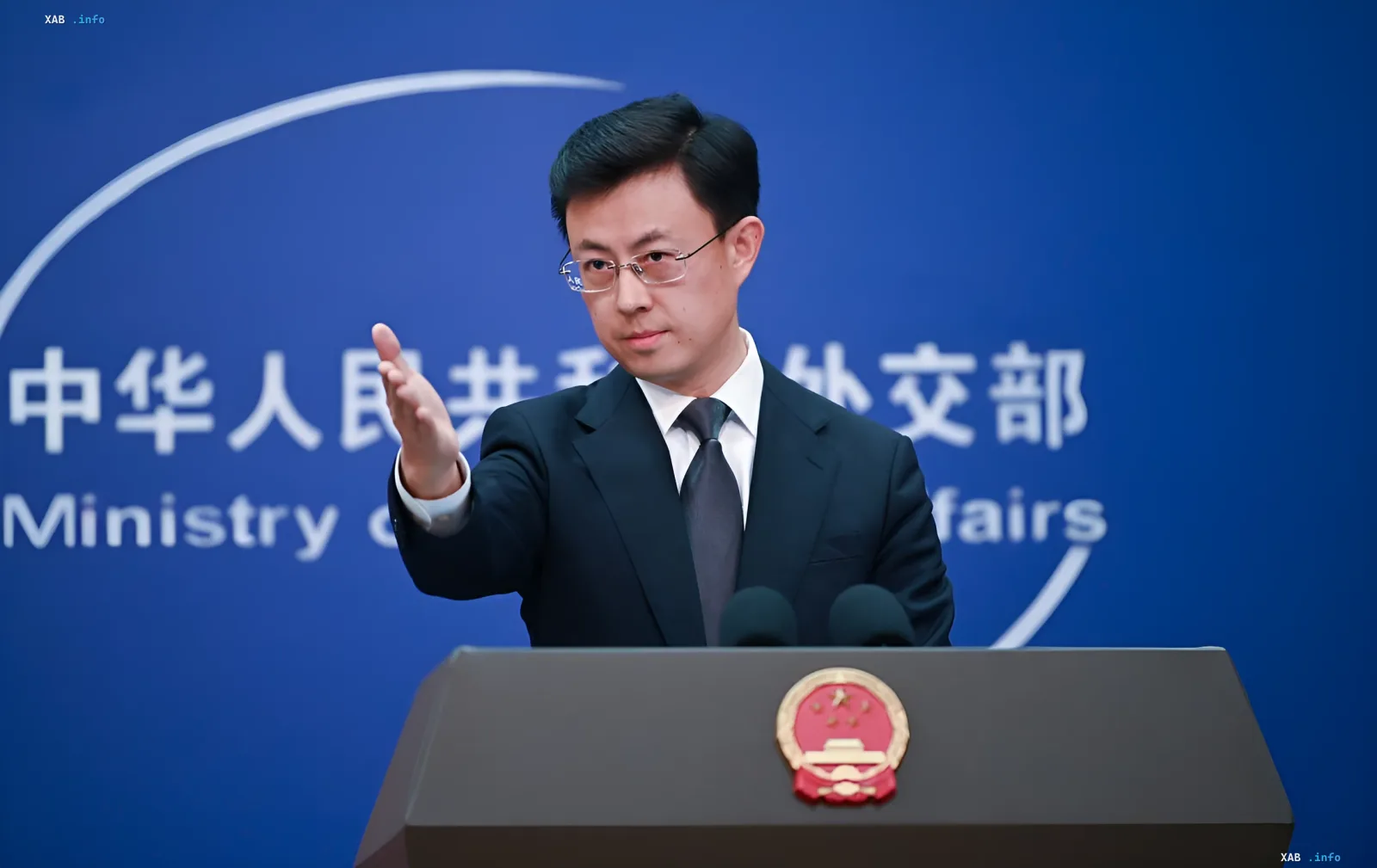
On Thursday, September 17, 2026, Gao Jiekun, the official spokesperson for the Chinese Ministry of Foreign Affairs, made a sharp statement directed at Washington during a regular briefing in Beijing, criticizing a bill adopted by the U.S. Congress on new sanctions against Russia. In his words, the adopted document "has no basis in international law and no mandate from the UN Security Council." Gao Jiekun emphasized that China "opposes extraterritorial jurisdiction and unilateral sanctions," and that Beijing's trade cooperation with other countries "is based on equality and mutual benefit" and "is not aimed at any third party and should not be disrupted under the pressure of any third party," according to the Anadolu agency, citing the press service of China's Foreign Ministry.
The Content of the 'Hellish' Bill and Its Path Through Congress
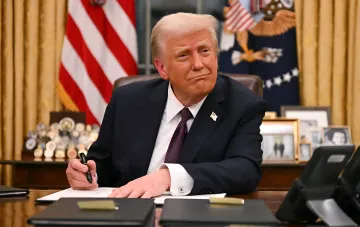
The document in question was authored by Senator Lindsey Graham, who passed away before its final adoption. The U.S. House of Representatives voted to pass the law by 252 votes to 154, while the Senate had already backed the document in August 2026. A key provision of the law grants U.S. President Donald Trump the right to impose tariffs of up to 100 percent against countries that continue to purchase Russian energy or facilitate the circumvention of existing sanctions. In addition, the document provides for personal restrictions against Vladimir Putin, a number of Russian officials, banks, and the so-called "shadow fleet," and extends the existing restrictions against Iran. At the time of publication, the law is at the stage of being signed by the head of state.
Who Will Be Hit Hardest First: China and India
Analysts and diplomatic sources agree that the heaviest blow from potential tariffs of up to 100 percent could be felt by China and India — the two largest buyers of Russian oil. From the very first days of the full-scale conflict in Ukraine, Beijing has been cushioning the impact of Western restrictions on Moscow, purchasing Russian oil and supplying dual-use goods. In turn, Moscow, according to Western and Russian sources, depends on Chinese supplies of components for drones and other military equipment. India, for its part, publicly warned Washington that potential U.S. tariffs "could damage bilateral relations" and pledged to continue protecting its own trade and energy interests.
Moscow's Reaction and the Diplomatic Context
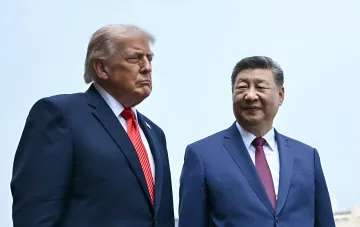
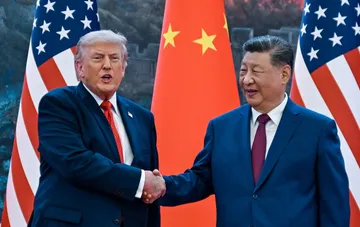
In the Kremlin, the adoption of the bill was commented on in the characteristic manner of the office. Russian President's Press Secretary Dmitry Peskov called the Congress's decision an "unfriendly step" and stated that the new sanctions "will complicate the search for a peaceful settlement" of the conflict in Ukraine. Notably, Beijing's harsh statement came at an extremely sensitive moment for U.S.–China relations: next week, a summit between Chinese leader Xi Jinping and U.S. President Donald Trump is expected in Washington. Experts do not rule out that the sanctions issue could become one of the key items on the negotiation agenda, and Beijing's position, articulated by Gao Jiekun, effectively sets the "red lines" for the Chinese side ahead of the leaders' meeting.
Contradictory Data
The provided sources present a consistent version of events: all four verified publications (RBC-Ukraine, Inosmi, TASS, Focus) confirm the fact of Gao Jiekun's statement on September 17, the voting result of 252:154, and the authorship of the bill. The only semantic clarification concerns the legal status of the document: in some materials it is referred to as an "enacted law," whereas formally, until the president signs the act, it remains a bill adopted by Congress. This is not a substantive contradiction but a difference in journalistic terminology; however, for accuracy, this article uses the phrasing "a bill adopted by Congress, awaiting the president's signature."