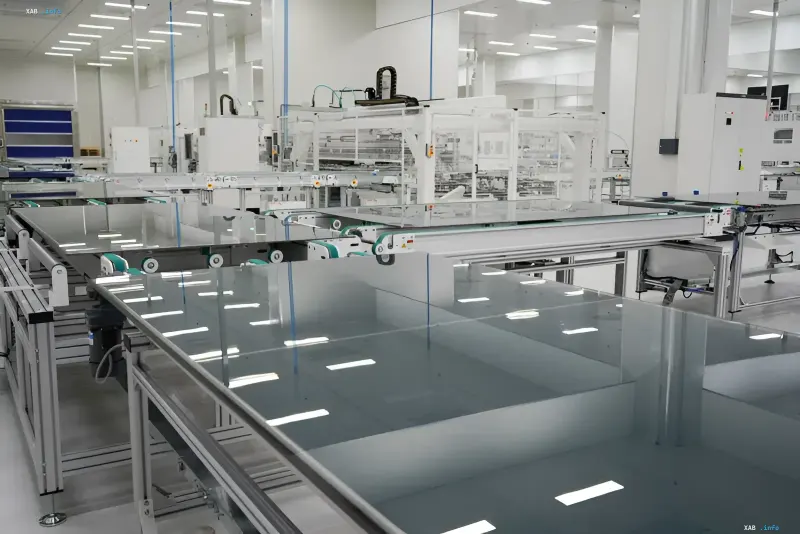
China's Ministry of Commerce (Mofcom), together with the Ministry of Science and Technology, has submitted a draft of export restrictions for public discussion, affecting, among other things, advanced photovoltaic manufacturing technologies. A key feature of the initiative is that the restrictions apply not to finished solar panels, but specifically to the technologies and equipment used to manufacture them. According to the departments, next-generation solar cells will form the basis for the development of the aerospace and defense sectors, and their uncontrolled export would pose a threat to China's national interests. The public consultation period for the project will run until November 15, 2026.
What Exactly is Proposed for Restriction
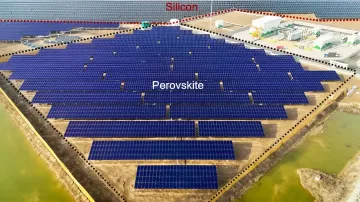
The project affects 12 key technological categories in the solar energy sector and is part of a broader package of 40 categories that includes, in particular, artificial intelligence and biotechnology. One of the central categories is the production of tandem solar cells, which combine a silicon layer with a perovskite layer, enabling the capture of photons across a broader spectrum and increasing cell efficiency. The sale of equipment and transfer of technology for producing cells larger than 182 mm with a light-to-electricity conversion efficiency of over 30% are proposed for prohibition or strict state control.
Threshold Parameters and Production Stages
The project includes technologies for applying the perovskite layer using slot-die coating with a coating width of 1.1 m or more. Separate thresholds are set for large modules: an area of 1 m² or more and an efficiency of at least 18% for single-layer perovskite modules, or at least 28% for tandem ones. The restrictions also cover intermediate production stages: the production of trichlorosilane by cold hydrogenation in a fluidized bed at lines with a capacity of 250,000 tons per year or more, and the production of silane in a fluidized bed with a capacity of 20,000 tons per year or more. These are intermediate substances required for the mass production of polysilicon. The list also includes technologies for manufacturing silicon wafers no thicker than 70 µm, certain methods for edge passivation of thin cells, the design of polysilicon production facilities, and processes for manufacturing back-contact and heterojunction cells.
Status and Implications for the Global Market
Formally, the export ban on the listed technologies has not yet been introduced—the document is in the discussion stage. At the same time, related companies are already required to begin registering relevant products and technologies on the responsible ministries' websites. Once the restrictions take effect, advanced products will continue to flow to the global market, but buyers will become completely dependent on Chinese suppliers, which is estimated to slow down the development of promising photovoltaic areas outside of China. Thus, the initiative does not block trade in finished panels, but significantly raises the technological barrier for independent production of next-generation solar cells in other countries.