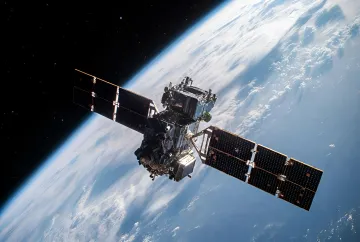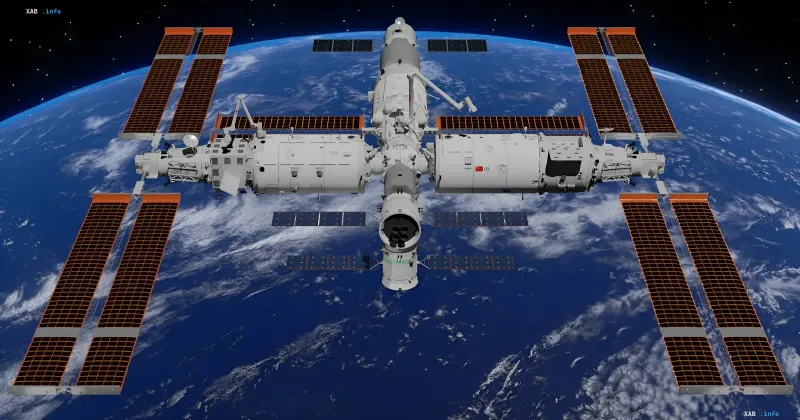
On October 26, the U.S. Defense Intelligence Agency (DIA) published a report titled "Security Challenges in Space"—the third document in a series assessing China's and Russia's military space programs, which also examines new capabilities of Iran and North Korea. The key finding of the document: in addition to its existing ground-based laser systems, Beijing is developing directed-energy weapon systems capable of operating directly in space and could deploy them in orbit by the end of the current decade. According to the report's authors, this will pose an additional threat to American military satellites amid the two powers' growing competition for orbital dominance.
What is Directed-Energy Weapons
Directed-energy weapons (DEW) use focused electromagnetic energy—powerful lasers or high-power microwaves—to disrupt, disable, or destroy targets without the direct physical impact characteristic of traditional missiles. According to the DIA, China currently possesses numerous ground-based laser systems capable of jamming, degrading, or destroying satellites in low Earth orbit. By the end of the decade, the agency assesses, Beijing may not only deploy directed-energy weapons in orbit but also build ground-based lasers powerful enough to damage U.S. satellites.
Expansion of China's Anti-Satellite Arsenal
Intelligence data indicates that DEW systems will complement China's existing counterspace arsenal, which includes interceptor missiles, electronic warfare capabilities, cyberattack tools, and maneuverable satellites designed to reach targets. In August 2026, U.S. Space Command chief General Stephen Whiting warned that China possesses anti-satellite missiles, ground-based lasers, electronic warfare assets, and maneuverable multi-role satellites that, he said, could undermine Washington's space superiority and give Beijing an advantage in orbital maneuverability and logistics. U.S. Space Operations Chief General Chance Saltzman added that Chinese ground-based lasers can disrupt or damage satellite sensors: low-power systems can temporarily blind optical sensors, while more powerful versions are potentially capable of irreversibly destroying individual satellite components.
Washington's Position and Beijing's Response
In September 2026, U.S. Air Force Secretary Troy Meink stated that Washington possesses orbital space-weapon command systems capable of protecting U.S. and allied forces, though the type and technical characteristics of this weaponry were not disclosed. China rejected the U.S. warnings, stating that Washington is exaggerating the threat while simultaneously pursuing its own military space programs, including the "Yellow Dome" missile defense initiative. Beijing subsequently accused the U.S. of preparing for war in space, warning of the risk of turning the orbital environment into a battlefield and triggering a new arms race.
Why Space Lasers Change the Balance of Power
Compared to ground-based systems, space-based laser weapons can compensate for atmospheric, weather, and visibility limitations: they can maintain a focused beam on a target longer, reach satellites in higher orbits, and engage multiple targets along successive orbital trajectories. An additional advantage is the absence of the large amount of space debris generated by kinetic anti-satellite missile intercepts, which persists for years and threatens satellites on both sides. The U.S. military relies heavily on satellites for navigation, reconnaissance, surveillance, missile warning, and communications, meaning their disruption could undermine Washington's ability to coordinate operations. According to intelligence estimates, China could use DEWs to disrupt low-Earth-orbit constellations such as Starlink and strike targets in higher orbits, making it harder to identify the source of an attack, assess damage, and choose a response.