Over the past 11 years, the zone of weakening of the Earth's magnetic field has demonstrated alarming growth rates, expanding by an area comparable to half the territory of Europe. This vast weak region, known as the South Atlantic Anomaly, now stretches for thousands of kilometers, covering the space from southern Africa to South America. Scientists and researchers are recording unprecedented changes in our planet's structure that require constant monitoring by leading space agencies.
Dynamics and Causes of the Anomaly
According to research by Professor Chris Finlay, the epicenter of the lowest magnetic intensity is constantly shifting westward. Moreover, starting from 2020, the zone located southwest of Africa has begun to lose its protective properties significantly faster than previously assumed. Our planet's magnetic field is generated by complex vortices of molten iron located in the outer liquid core at a depth of several thousand kilometers. Modern data from Swarm satellites clearly show that areas with reversed magnetic field lines have already formed at the boundary between the core and the mantle. Leading geophysicists suggest that the main cause of such processes is temperature fluctuations in the lower mantle, which cause powerful turbulences in the molten metal flows.
Risks for the Orbital Fleet
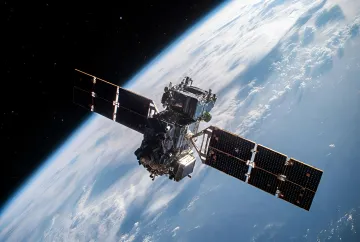
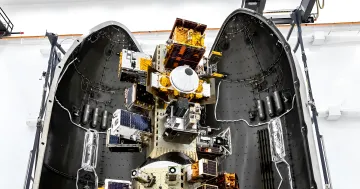
The magnetic field plays a fundamental role as Earth's natural protective shield, deflecting aggressive solar wind and hazardous cosmic ray streams. Due to a significant reduction in the protective barrier over the South Atlantic, high-energy radiation particles now penetrate much deeper into the low Earth orbit region. Modern satellites and spacecraft regularly passing through this dangerous zone face serious risks: they can experience critical glitches in onboard electronics, system errors in navigation sensors, and hardware equipment damage. This is why space mission operators proactively switch sensitive instruments to a safe operating mode. The elevated radiation level in this region has also repeatedly provoked technical malfunctions aboard the International Space Station and during the maintenance of the legendary Hubble telescope.
Contradictory Data
Despite the scale and expansion speed of the South Atlantic Anomaly, the expert community urges avoiding panic and apocalyptic scenarios. Official data confirm that directly at the Earth's surface, the magnetic field still retains sufficient strength to protect the biosphere, and the expansion of the anomaly does not affect radiation levels on land or in the ocean. At the same time, some independent researchers express concerns that the weakening of the shield could be a precursor to a global geomagnetic pole reversal. However, geological studies of ancient rocks refute these fears, proving that the South Atlantic has already experienced similar periods of field weakening in the distant past, and current processes fit entirely within natural planetary cycles.
Expert Assessments and Outlook
Further study of the South Atlantic Anomaly will not only protect expensive space infrastructure but also provide a deeper understanding of the dynamics operating deep within the Earth. Experts continue to compare satellite monitoring data with mathematical modeling results. Although there is no direct threat to the planet's inhabitants, the technological sector is forced to adapt to new space realities by developing radiation-resistant microchips and onboard protection algorithms.