According to the latest September 2026 issue of NASA Orbital Debris Quarterly News, 34,054 man-made objects are officially tracked in low Earth orbit. The data is current as of August 4. The report notes that over the course of just three months, the total number of such objects increased by 956 units, highlighting the accelerating intensity of space exploration and the growing debris problem.
Structure of the Orbital Grouping and Spacecraft
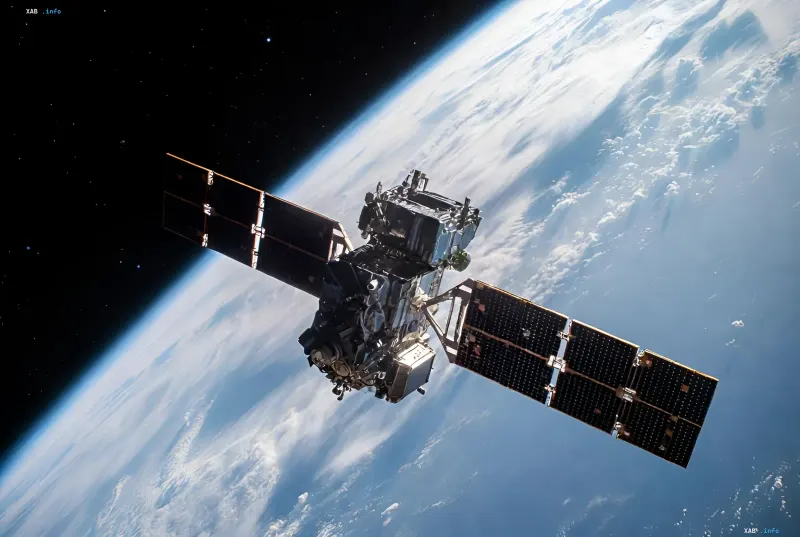
Out of the total array of recorded objects, the vast majority—specifically 19,154 units—belong to spacecraft, including both operational satellites and those already decommissioned. Over the past quarter, this figure grew by 965 units. Meanwhile, the category of rocket stages, structural elements, and various fragments numbers 14,900 objects, showing a slight statistical decrease of nine units in this segment.
Leaders in the Number of Space Objects
The scale of presence among leading space powers varies significantly. The undeniable leader in the number of tracked objects is the United States with 18,323 units (a quarterly increase of 783 objects, of which 13,635 are spacecraft and 4,688 are rocket stages and debris). Russia holds second place with 6,575 objects, having decreased by 11 over three months. China rounds out the top three, controlling 5,737 objects, which is 104 more than the previous quarter.
Controversial Data and Limitations of NASA Statistics
It is important to consider that official NASA statistics do not capture the entire volume of material in space. The report includes exclusively large enough objects that can be technically detected and continuously monitored via ground and space observation means. Smaller fragments capable of causing catastrophic damage to active spacecraft upon collision at hypersonic orbital speeds are significantly more numerous, creating long-term risks for future missions.
International Distribution and Prospects
Beyond the top three leaders, a significant number of objects belong to other countries and organizations. The United Kingdom accounts for 727 objects, France for 649, Japan for 322, and India for 191. The European Space Agency (ESA) reports 132 objects, while other countries and entities account for 1,398 objects with a quarterly growth of 64 units.