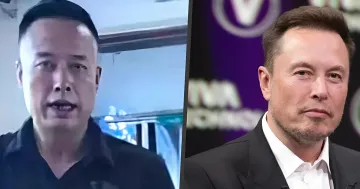
The world of neural interfaces is experiencing a historic moment. The Chinese company Neuracle has officially entered the market with the NEO device — the world's first invasive implant to receive a license from a state regulator for commercial use. This event not only changes the landscape of medical technology but also threatens the business plans of its main competitor — Elon Musk's company, Neuralink.
Technology Controlled by the Power of Thought
The NEO device is a compact implant the size of a small coin, equipped with eight electrodes. Its mechanism of operation is based on direct interaction with the sensorimotor cortex of the brain — the area responsible for planning and executing movements. During surgery, the device is placed directly on the surface of this area.
The process of controlling the prosthesis looks as follows:
- Signal Reading: When the patient concentrates on the thought of clenching or unclenching their hand, neurons generate micro-currents that the implant detects.
- Data Processing: Information is transmitted to an external computer, where artificial intelligence algorithms decipher electrical patterns and translate them into digital commands.
- Physical Action: The received signal activates servomotors and actuators on the robotic glove, causing the fingers to move in exact accordance with the user's intention.
Victory Over Regulatory Barriers
Neuracle's main achievement lies not so much in the physical device as in a bureaucratic victory. China's National Medical Products Administration (NMPA) has already issued a license for the NEO device. This made it the first invasive BCI implant approved for release onto the open commercial market.
The situation with the American competitor, Neuralink, looks less optimistic. Despite Elon Musk's startup successfully performing implantation surgeries as early as 2024 and currently having more than two dozen test participants, it has not yet received FDA (US Food and Drug Administration) approval. Without this certificate, Neuralink is not allowed to sell its services to a wide range of paying patients, which jeopardizes their commercial ambitions.
Technology Race and Alternative Paths
Parallel to the development of invasive technologies requiring complex surgical intervention, global tech giants are actively investing in non-invasive solutions:
- Meta (Brain2Qwerty project): Developed a system using large language models (LLM) to convert brain activity waves into text. The technology is designed to help people with ALS and other paralysis regain communication.
- BrainCo: Created a bionic hand prosthesis based on electromyography. The device reads signals from the remnants of forearm muscles using AI, without the need to implant devices into the brain.
Geopolitics in the Field of Neurotechnology
Neuracle's success is not just a victory for private business, but the result of a state strategy. Neurotechnologies have officially been recognized as one of the main priorities of China's latest five-year development plan. The commercialization of BCI technologies receives significant direct support from the PRC government, on par with quantum computing and nuclear fusion.
This state support makes the technological race between Beijing and Silicon Valley increasingly intense, and the license for the NEO device has become a powerful signal that leadership in the field of neural interfaces may change hands.