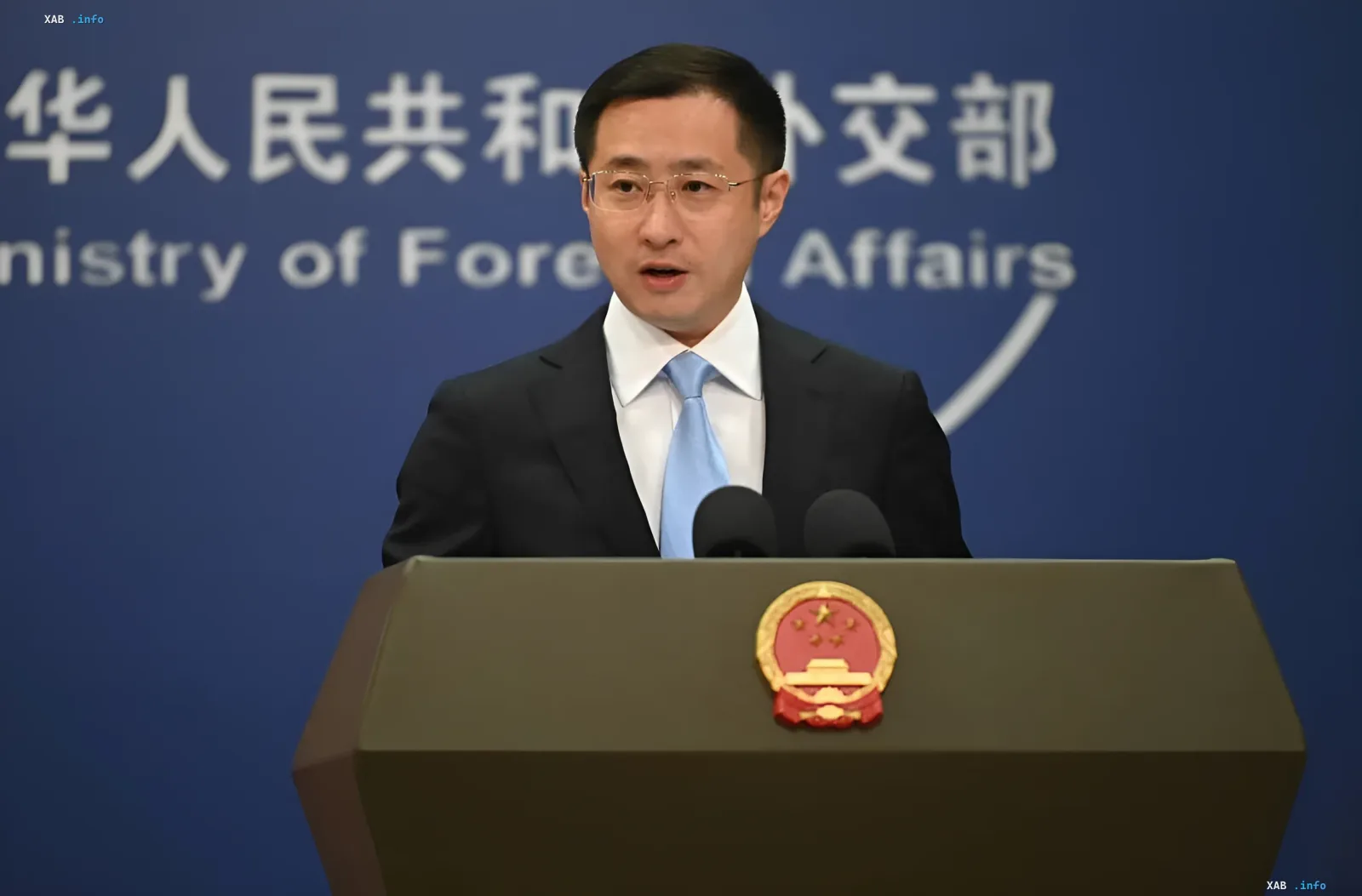
Lin Jian, the official spokesperson of the PRC Ministry of Foreign Affairs, categorically rejected Washington's demands to halt the purchase of energy resources from Iran on August 26, 2026. In his words, the trade and economic cooperation between China and Iran within the framework of international law is fully legitimate and does not violate any United Nations Security Council resolutions. Beijing called the American restrictions illegal and stated that the policy of "maximum pressure" is incapable of solving the existing problems and only intensifies tensions in the region.
Beijing's Position: Unilateral Sanctions Are Unacceptable
The statement by China's foreign policy body sounded as a direct response to public threats from the United States, which, as part of a campaign to tighten measures against Iranian oil export channels, threatened secondary sanctions against Tehran's partners. Lin Jian emphasized that unilateral extraterritorial restrictions aimed at third countries have no legal basis. China, he said, will take all necessary measures to protect its own interests and will not allow the disruption of normal economic interaction with Iran.
Legal Shield: The Law on Countering Foreign Sanctions
A key element of Beijing's response was its readiness to invoke the PRC Law on Countering Foreign Sanctions, adopted in 2021. This mechanism allows the state to prohibit Chinese companies and financial institutions from complying with the directives of foreign authorities, as well as to compensate them for the losses incurred. Thus, China has effectively declared a shift to a strategy of "active state resistance": if Washington attempts to impose secondary banking sanctions against Chinese banks or oil refining enterprises, Beijing will apply countermeasures provided for by domestic legislation.
Energy Context: Who Buys Iranian Oil
The confrontation has a concrete economic backdrop. According to available data, up to 90% of Iran's total crude oil exports are directed to China, with a significant portion of this volume meeting the needs of independent private oil refineries — so-called "teapot refineries," primarily in Shandong Province. It is these enterprises, rather than state giants, that are the main target of American restrictive measures. For Tehran, maintaining this channel is critically important, while for Beijing it is a matter of protecting its private investors and the stability of the domestic fuel market.
Contradictory Data
There is a significant discrepancy in the assessments of the parties involved. The American side characterizes its measures as "the toughest sanctions in history" and insists that they are aimed at cutting off the supply of Iranian hydrocarbons and the financing of associated structures. China, by contrast, interprets the same restrictions as illegal interference in internal affairs and a violation of the principles of international law. The views on the scale of the consequences also differ: Washington emphasizes the threat of isolation for any state that continues to make purchases, while Beijing asserts that its trade and economic activity with Iran is legal and does not contradict the decisions of the UN Security Council. Both positions are recorded in official statements and have not been refuted by independent sources.
What Comes Next
The diplomatic and sanctions confrontation between the two largest economies in the world is reaching a new level. Experts expect that, in the event of an escalation, Beijing may consider additional pressure tools, including restrictions on the export of strategic resources, however, as of the time of publication, no official confirmation of such steps had been received. The coming weeks will be a test of whether Washington can carry out its threats without a direct conflict with China, and whether Beijing is ready to bring its legal countermeasures to practical application.