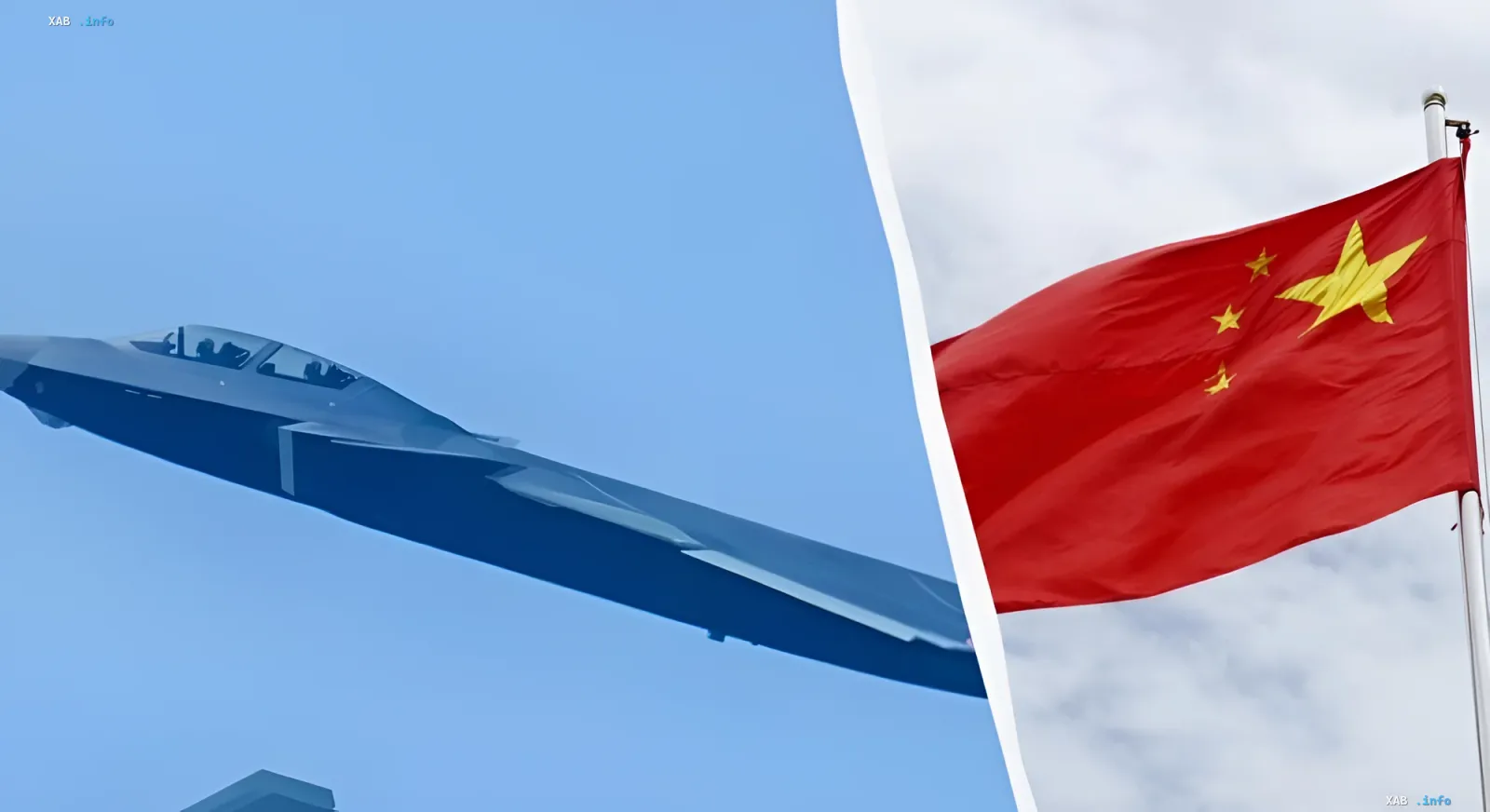
China's aviation industry is demonstrating unprecedented rates of capacity expansion. If just a few years ago the J-20 'Mighty Dragon' was perceived as an experimental project, today it has become the backbone of the People's Liberation Army Air Force. According to the latest estimates, by mid-2026, Beijing will have received around 500 such aircraft, placing the fighter on par with the leaders of global aviation.
From Single Units to Thousands of Aircraft
The history of the J-20 began in 2011 with its first flight, and its full entry into service occurred at the end of 2016. This event marked China's entry into the elite club of countries possessing fifth-generation fighters, alongside the USA (F-22 Raptor and F-35 Lightning II). However, the main difference in the Chinese program lies not so much in stealth technology as in the speed of its mass production.
Experts from the RUSI think tank note that by the end of 2025, Chinese factories were already producing around 120 fighters annually. While Western analogues are produced in hundreds of units over decades, Beijing demonstrates the ability to scale. Military expert Andreas Rupprecht predicts that by mid-2026, the fleet will reach the mark of 500 aircraft. Maintaining current rates, by 2030 China could possess a fleet of 1,000 J-20 fighters of various modifications.
Technical Evolution and New Roles
Over the years of operation, the J-20 has evolved from a machine with Russian engines to a fully autonomous model with its own powerplants. Chinese engineers have not only improved the avionics and armament but have also developed a two-seat modification, designated J-20S or J-20B.
The appearance of the two-seat variant was a logical step in the development of fifth-generation fighter tactics. Experts believe that the second crew member will be responsible for managing unmanned aerial vehicles (UAVs) and conducting electronic warfare. Such a distribution of functions will reduce the cognitive load on the pilot and increase the effectiveness of the aircraft in complex combat scenarios.
Strategic Significance of Scale
Today, J-20s serve in at least 14 combat air units of the Chinese Air Force, as well as in training and test centers. Some squadrons have already received the upgraded J-20A version. Analysts emphasize that Beijing's ability to rapidly produce hundreds of high-tech aircraft has strategic significance no less than their combat characteristics.
While public attention often shifts to prospective sixth-generation projects, it is the J-20 that remains the key element of current modernization. Large-scale production allows China to significantly strengthen its air forces, creating a serious challenge for the US and other countries' air forces in the context of a changing geopolitical landscape.