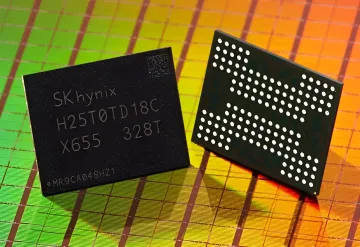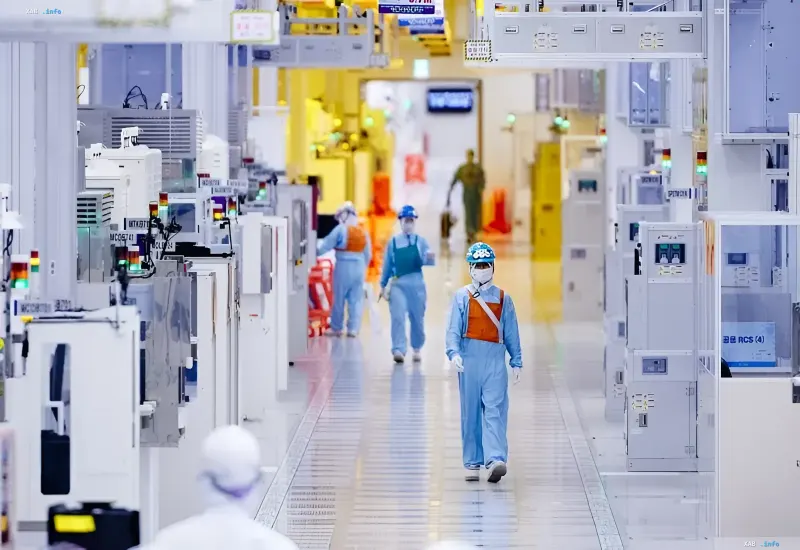
Major Chinese cloud companies Alibaba, Tencent, and ByteDance have sent requests to South Korean memory manufacturers Samsung Electronics and SK hynix to revise the terms of long-term memory supply agreements. The proposal involves extending the maximum duration of contracts from the current five years to ten. According to Korean media reports, this initiative is backed by concrete figures: SK hynix acknowledged in its last quarter's report that over 50% of memory production volumes planned for 2027 and 2028 have already been allocated under long-term contracts, while Samsung has reportedly secured up to 80% of its 2027 volumes through this scheme and is prepared to sell over 70% of its products via long-term agreements going forward.
Shortage as a Strategic Factor
The drive by Chinese cloud giants to 'lock in' supplies over a ten-year horizon is not merely commercial optimization, but an acknowledgment that the memory shortage will not be resolved in the foreseeable future. China has 24 GW of computing power in data centers, second only to the United States. If the current pace of cloud infrastructure expansion continues, server memory consumption volumes will grow non-linearly. According to available data, negotiations specifically concern long-term supplies of server DDR and LPDDR chips—components critical for the server segment and AI workload infrastructure.
Benefits for Suppliers and Their Limits
For memory manufacturers, ten-year agreements offer a tangible competitive advantage. They allow for highly accurate production planning, predictable sales forecasting, and, importantly, large advance payments from customers. These funds can be directed toward expanding production capacities and upgrading technological lines. Thus, long-term contracts transform into a tool for financing capital expenditures without external borrowing.
Market Cyclicality as the Primary Risk
However, a ten-year planning horizon in a market historically characterized by pronounced cyclicality and regular price fluctuations entails significant risks for both parties. Manufacturers mitigate the impact of price waves, but buyers lose the opportunity to save money if spot market prices happen to fall below contract prices at some point. Over ten years, it is impossible to accurately predict all factors, ranging from the pace of technological transition to new memory generations to macroeconomic shocks and geopolitical restrictions. This means that contract terms require much more thorough elaboration, including indexation mechanisms, force majeure clauses, and volume review options.
Micron Out of the Game
A significant contextual factor is that US-based Micron Technology cannot participate in these negotiations. Since 2023, Chinese authorities have banned the use of Micron products in critical national infrastructure facilities, and Chinese Big Tech cloud facilities certainly fall under this definition. Moreover, in 2025, Micron itself announced the cessation of server memory supplies to the Chinese market. Consequently, Chinese buyers are effectively limited in their choice between the two South Korean suppliers, which strengthens their negotiating position while simultaneously increasing the strategic importance of each agreement concluded.