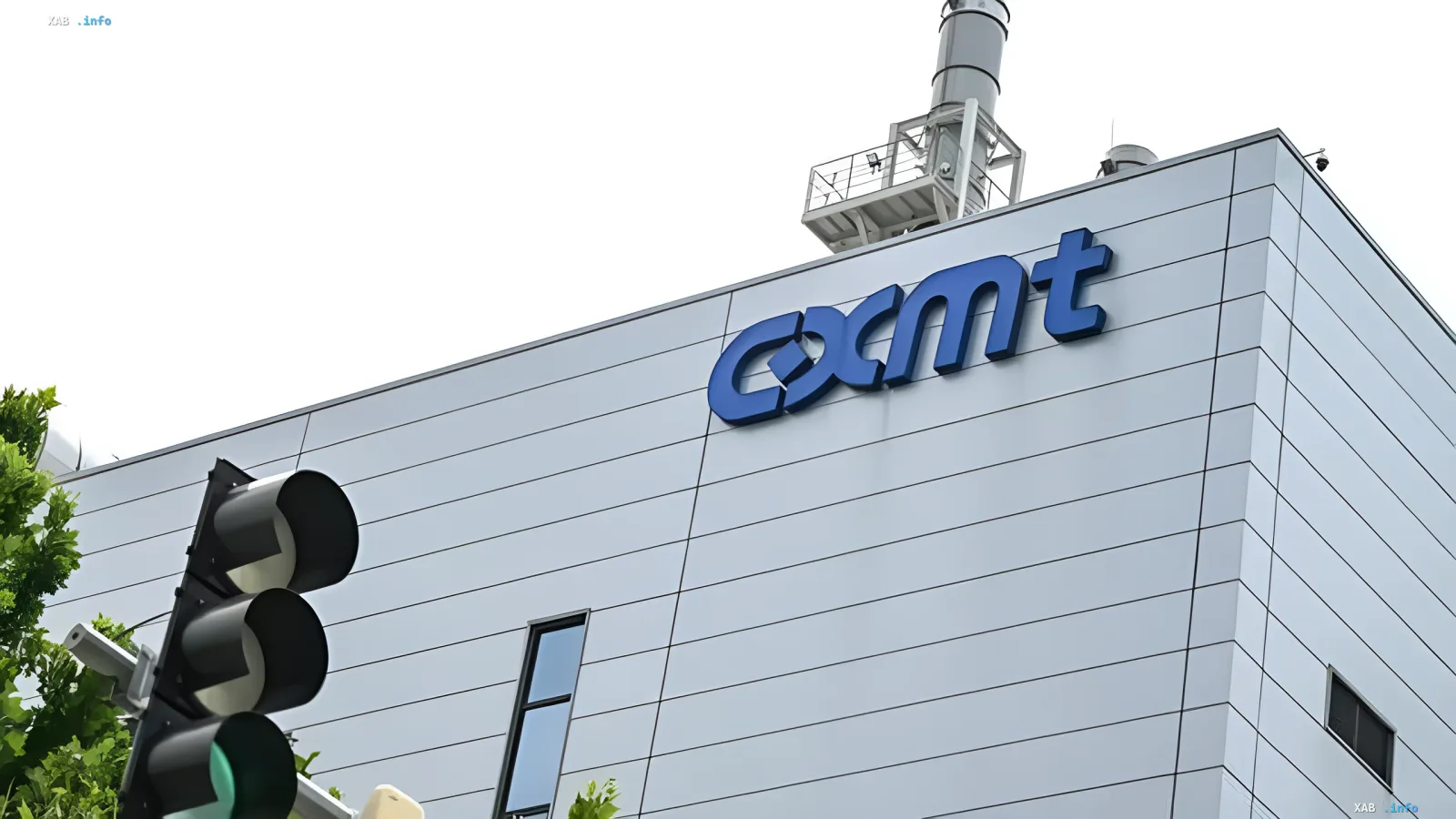
Against the backdrop of an acute shortage of DRAM memory in the global market, leading laptop manufacturers — HP, Asus, and Acer — have begun integrating chips from the Chinese company ChangXin Memory Technologies (CXMT) into their devices. According to sources, this decision is driven less by cost savings and more by the need to guarantee component availability amidst supply instability.
Switching to an Alternative Supplier
According to information published by Nikkei Asia and republished on portals ixbt.com, zoom.cnews.ru, and 3dnews.ru, major PC manufacturers have successfully completed compatibility testing of CXMT chips and have begun their limited use. This concerns several laptop lines intended primarily for markets outside the United States.
It is important to note that CXMT is the only DRAM manufacturer in China capable of competing with global giants. However, its share of the global market remains insignificant, and its technological level currently lags behind Samsung, SK Hynix, and Micron.
Diversification Strategy, Not Cost Saving
Acer confirmed that it cooperates with several global memory suppliers to manage component costs and enhance supply chain stability. However, specific manufacturer names are not disclosed. Nikkei sources emphasize: the use of CXMT memory is not necessarily linked to its lower price. The primary motivation is to ensure guaranteed access to memory volumes that may be unavailable from traditional suppliers.
Contradictory Data
On the one hand, sources point to the successful integration of CXMT into HP, Asus, and Acer products. On the other hand, the companies themselves do not directly confirm the use of specifically Chinese chips, citing "multiple suppliers." This creates uncertainty: how extensive is the transition, and is it a temporary measure or a long-term strategy?
Furthermore, there are concerns that active use of CXMT could cause tension with traditional suppliers controlling over 95% of the DRAM market. Samsung, SK Hynix, and Micron may perceive this as a threat to their positions and restrict supplies or raise prices.
Geopolitical Context
The decision to use CXMT also has a geopolitical dimension. Amidst sanctions pressure on the Chinese technology sector, Western companies are forced to balance component availability against the risks of violating export restrictions. Using CXMT in devices not intended for the US allows for minimizing these risks.
Development Prospects
If the DRAM shortage persists, one can expect an expansion of CXMT usage by other manufacturers. However, the success of this strategy depends on CXMT's ability to scale production, improve chip quality, and maintain competitive prices. For now, the discussion revolves around targeted solutions aimed at overcoming current difficulties in supply chains.