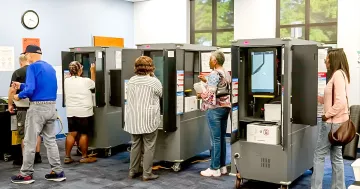
On the day of the US midterm congressional elections, November 3, preliminary data from the CNN Voter Poll recorded persistent voter dissatisfaction: about 60% of voters disapprove of President Donald Trump's job performance, and roughly three-quarters view the situation in the country negatively. This was reported by RBC-Ukraine based on the poll, which replaced traditional exit polls at polling stations.
Scale of Dissatisfaction
According to preliminary data, nearly four in ten respondents say they feel angry. About six out of ten voters disapprove of the president's job performance, and about half of them express this categorically. Dissatisfaction is observed even among supporters: roughly one in five who voted for Trump in the 2024 election now evaluates his work negatively.
Economy as a Driver
Analysts attribute the dissatisfaction to two factors — negative attitudes toward Trump and the economic situation. The share of Americans whose lives have been made harder by inflation has changed little compared to 2024, but this time many hold the president himself responsible. About two-thirds of voters are convinced that he worsened the economic situation, and the majority link price increases to his policy rather than to external circumstances beyond his control.
What This Means for Congress
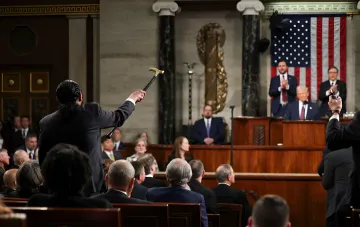
How exactly this will affect the outcome remains unknown — in particular, in traditionally Republican states, the Senate race has unexpectedly heated up. In the elections, Americans were choosing all 435 members of the House of Representatives and 35 of the 100 senators. A House majority requires at least 218 seats, while in the Senate, Democrats need 51 votes and Republicans only 50, as ties are broken by the Vice President. According to NYT estimates, Democrats have better chances of taking back the House, while the battle for the Senate will be tougher.
Methodological Limitations
It is important to bear in mind that the CNN Voter Poll is a survey with a margin of error, not an exact count. It combines polling at stations on election day with tens of thousands of interviews conducted across the country in the preceding weeks. The early data has not yet been adjusted for final election results, so it should be treated as a preliminary assessment of sentiment rather than a final tally.