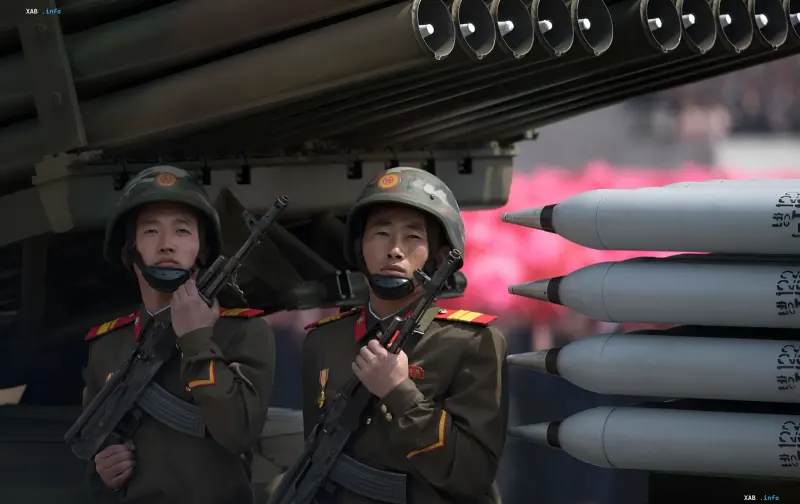
Participation in the Russo-Ukrainian war has become a unique proving ground for North Korea, allowing it not only to test missile systems in real combat conditions but also to gain critically important experience in modern warfare. This was stated by Lieutenant General Scott Winter, Deputy Commander of the United Nations Command (UNC), emphasizing that Pyongyang's alliance with Moscow is radically changing the security architecture in the region. According to the Australian general, North Korea is using the conflict in Europe as an opportunity to deeply study tactics and technologies that will now be applied against the US-South Korea alliance.
New Challenges for the 'Ulchi Freedom Shield' Exercises
The experience gained by Pyongyang is already directly influencing military planning in the region. Annual large-scale 'Ulchi Freedom Shield' (UFS) exercises are set to begin on Monday, involving 70 military personnel from 11 UNC countries. According to command statements, exercise scenarios have been revised to account for threats identified during the war in Ukraine. The focus has now shifted to countering GPS jamming, repelling cyberattacks, and neutralizing mass drone attacks. General Winter noted that these threats have become global, and ignoring them is unacceptable.
Escalation of Missile Tests
Against the backdrop of preparations for the exercises, tensions on the peninsula have increased. A few days before the start of the maneuvers, North Korea launched ballistic missiles, which the UNC interpreted as a direct provocation. The UNC emphasized that such actions increase the likelihood of errors and incidents that could trigger uncontrolled escalation. One of the key tasks of the UNC remains monitoring the observance of the armistice, although the effectiveness of this work is being questioned due to the complexity of investigating incidents.
Contradictory Data
There is a significant gap between public statements and the actual status of investigations within the UNC. In particular, the command has yet to release the results of the investigation into Seoul's allegations of sending military drones to Pyongyang in October 2024. General Winter declined to confirm whether this case, which has been ongoing for nearly two years, is concluded. He explained that such investigations are 'incredibly complex' and not all reports are made public. This creates an information vacuum that the parties to the conflict can use to their advantage, interpreting the UNC's silence in various ways.
Global Consequences of Military Cooperation
Military cooperation between Moscow and Pyongyang has reached a qualitatively new level following the start of Russia's full-scale invasion of Ukraine. North Korea not only regularly supplies Russian troops with ammunition but also sends its own contingents and new batches of ballistic missiles. Ukrainian President Volodymyr Zelenskyy recently reported that Russia received a new shipment of missiles from North Korea, creating additional risks for global security. According to Ukrainian intelligence, Russia plans to deploy up to 50,000 North Korean soldiers, whose combat experience on Russian territory will allow Pyongyang to significantly improve its missile and tactical potential.